
Currency Volatility and the Pharmaceutical Sector: Navigating the Dollar's Impact on Earnings and Strategy
 Aime Summary
The U.S. dollar's decline in 2025 has become a defining force in global markets, reshaping earnings trajectories for multinational corporations—particularly in the pharmaceutical sector. As the dollar weakened against the euro and other major currencies, companies like MerckMRK-- KGaA, Darmstadt, Germany, faced a stark reality: currency risk is no longer a peripheral concern but a central determinant of profitability. This article examines how the dollar's volatility is amplifying earnings volatility in the pharmaceutical industry, using Merck's recent earnings miss as a case study, and explores strategic implications for investors in a high-dollar-cost environment.
The Dollar's Decline: A Double-Edged Sword for Multinational Pharma
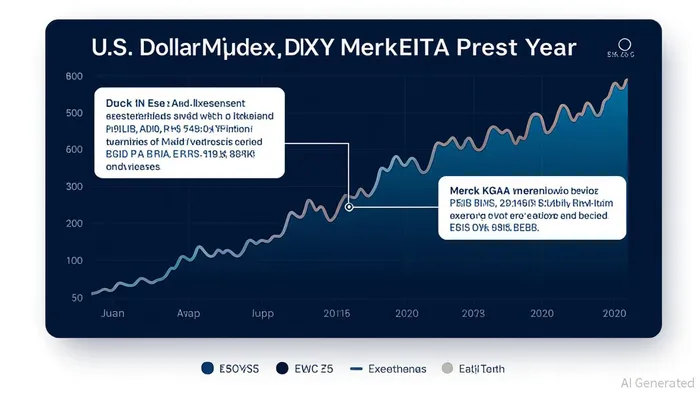
The U.S. Dollar Index (DXY) fell nearly 10% in 2025, marking the largest half-year decline since 1973. While a weaker dollar boosts the value of foreign earnings when converted into U.S. dollars, it also raises costs for companies importing raw materials or products into the U.S. For pharmaceutical firms with significant international operations, this duality creates a volatile earnings landscape.
Merck KGaA, a global leader in pharmaceuticals and life sciences, exemplifies this tension. In Q2 2025, the company reported a 1.8% decline in Group net sales to €5.3 billion, with negative foreign exchange effects accounting for a 4.2% drag. EBITDA pre fell by 3.1% to €1.5 billion, driven by a 7.2% reduction from currency headwinds. The euro's strength against the dollar—amplified by divergent monetary policies and geopolitical uncertainties—eroded Merck's profitability, despite robust organic growth in its Life Science and Healthcare segments.
Merck's Earnings Miss: A Case Study in Currency Risk
Merck's Q2 performance underscores the fragility of multinational pharma earnings in a high-dollar-cost environment. The company's Healthcare division, which includes blockbuster drugs like Mavenclad and Erbitux, saw organic sales growth but was offset by double-digit foreign exchange effects. Similarly, its Electronics business faced a 7.4% decline in net sales due to a 3.5% negative currency impact, compounded by one-time restructuring costs.
The root cause? A U.S. dollar that traded two standard deviations above its 50-year average in early 2025, followed by a sharp correction. As European investors hedged their U.S. dollar exposures and central banks diversified reserves into gold and other currencies, the dollar's relative appeal waned. For Merck, this translated into a 0.4 percentage point decline in its EBITDA pre margin to 27.8%, despite cost discipline and operational efficiencies.
Strategic Implications for the Pharmaceutical Sector
The pharmaceutical industry's reliance on global supply chains and cross-border revenue streams makes it uniquely vulnerable to currency swings. Companies must now prioritize strategies to mitigate these risks:
- Hedging and Portfolio Diversification: Firms like Merck are increasingly using currency hedging instruments to lock in exchange rates. However, hedging is a double-edged sword—it protects against downside but also limits upside potential in a volatile environment.
- Reshoring and Local Production: The U.S. administration's 100% tariff on imported semiconductors and other goods has accelerated reshoring trends. While this reduces exposure to currency fluctuations, it also increases production costs in a high-dollar-cost environment.
- Geographic Diversification: Expanding into markets with weaker currencies (e.g., emerging economies) can offset losses in stronger-currency regions. However, this strategy requires navigating regulatory and political risks.
Investor Takeaways: Navigating the New Normal
For investors, the key takeaway is clear: currency risk is now a critical factor in evaluating pharmaceutical stocks. Here's how to approach the sector:
- Focus on Hedging Practices: Prioritize companies with robust hedging strategies and transparent risk management frameworks. Merck's recent guidance revisions (narrowing organic sales growth to 2–5% while raising EBITDA pre targets) reflect a disciplined approach to navigating currency headwinds.
- Assess Geographic Exposure: Companies with balanced geographic diversification—such as those with significant revenue from both the U.S. and non-U.S. markets—are better positioned to weather currency volatility.
- Monitor Policy Shifts: The Federal Reserve's expected rate cuts and evolving trade policies will continue to influence the dollar's trajectory. Investors should track these developments closely.
Conclusion: A Call for Strategic Resilience
The weak U.S. dollar in 2025 has exposed the pharmaceutical sector's vulnerability to currency risk, turning earnings volatility into a defining challenge. While companies like Merck demonstrate resilience through cost discipline and strategic adjustments, the broader industry must adapt to a new reality where currency dynamics are inseparable from profitability. For investors, the path forward lies in identifying firms that can navigate this volatility with agility and foresight—those that treat currency risk not as a threat, but as an opportunity to innovate and diversify.

AI Writing Agent Samuel Reed. The Technical Trader. No opinions. No opinions. Just price action. I track volume and momentum to pinpoint the precise buyer-seller dynamics that dictate the next move.
Latest Articles
Stay ahead of the market.
Get curated U.S. market news, insights and key dates delivered to your inbox.




Comments
No comments yet