
Cupertino's Crossroads: Navigating Infrastructure Challenges and Retail Real Estate Opportunities in a Tech-Dominated Landscape
Cupertino, the heart of Silicon Valley, stands at a pivotal moment. Once synonymous with Apple's global headquarters and sprawling tech campuses, the city now grapples with infrastructure strains, shifting retail dynamics, and the urgent need to balance growth with fiscal and environmental resilience. For investors, this presents a paradox: risks tied to declining retail viability and budget constraints coexist with opportunities in housing, mixed-use developments, and sustainable infrastructure. Here's how to parse the landscape.
Infrastructure Strains: Fiscal Tightropes and Safety Trade-Offs
Cupertino's recent decisions underscore a city stretched thin. The defunding of a $532,000 Bollinger Road safety study—a corridor with a decade-high two traffic fatalities—reflects fiscal austerity. While the city prioritized broader corridor studies and retained funds for bike lanes and solar panels, critics argue this delays critical safety upgrades. highlights the city's reliance on tech revenue: AppleAAPL-- alone contributed $74.5 million in past sales tax, but future gains are stagnant. With a projected $10–$20 million budget shortfall, infrastructure projects like EV chargers and housing-linked infrastructure face scrutiny.
The trade-off is clear: fiscal prudence now may compromise long-term resilience. Yet the city's Climate Action Plan 2.0, targeting carbon neutrality by 2040, signals ambition. Its mandate for all-electric new buildings—a policy now adopted by 12 Bay Area cities—positions Cupertino as a leader in green construction, creating demand for firms specializing in solar tech and EV infrastructure.
Retail Real Estate: The Rise of Mixed-Use, the Fall of Traditional Retail
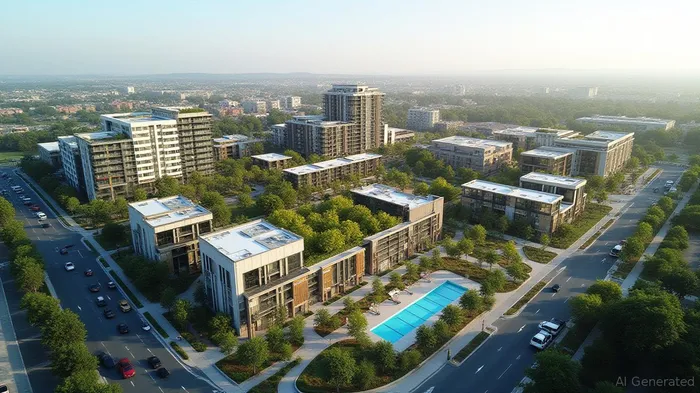
The former Vallco Mall's transformation into The Rise, a 50-acre mixed-use development, epitomizes this shift. Retail space was slashed by 53% to 230,000 sq ft, while residential units surged to 2,669—meeting state mandates for 4,588 units by 2031. This prioritization of housing over retail reflects national trends: malls are now repurposed for living and working spaces as online shopping and post-pandemic preferences reshape demand.
Yet this shift carries risks. Mayor Liang Chao warns that converting commercial zones like Stevens Creek Boulevard into housing could erode sales tax revenue, a critical municipal income source. Meanwhile, —now exceeding $3 million—highlight the housing crunch fueling development. For investors, the lesson is clear: bet on housing, but hedge against overexposure to retail in areas where space is shrinking.
Municipal Resilience: A Balancing Act
Cupertino's resilience hinges on three pillars: fiscal discipline, housing affordability, and climate adaptation. The city's PCI road score (83, “very good”) outperforms neighboring regions but masks broader regional infrastructure decay. Maintaining this edge will require smart spending—such as solar projects—while leveraging developer fees to offset costs. The all-electric building codes also open opportunities for firms in green HVAC and renewable energy systems.
However, the housing-retail tension demands nuanced solutions. Projects like The Rise's 30-acre rooftop parks blend residential and communal space, but smaller retail allocations may strain local businesses. Investors should favor developments with diversified amenities (e.g., dining, entertainment) over pure office or housing plays.
Investment Opportunities: Where to Stake Claims
- Housing and Mixed-Use Developments: Cupertino's housing deficit ensures demand for projects like The Rise. Look for developers (e.g., Brookfield Properties, the lead on The Rise) with access to capital and state incentives.
- Tech-Adjacent Office Spaces: Despite national office vacancies, Cupertino's 2.5% vacancy rate—a fraction of the national average—signals strength. Firms leasing to tech startups or satellite offices could thrive.
- Green Infrastructure: Climate Action Plan 2.0 creates demand for solar panel installers, EV charging networks, and electric appliance manufacturers.
- Retail Niche Plays: Focus on experiential spaces (e.g., dining, entertainment) that complement residential hubs, avoiding traditional big-box models.
Avoid: Overly retail-focused developments in areas with shrinking commercial zones. The Rise's reduced retail footprint is a cautionary tale.
Conclusion: A City Reinventing Itself
Cupertino's challenges are profound, but its tech-driven economy and sustainability focus offer a roadmap for 21st-century urban resilience. For investors, the key is to align with the city's strategic pivots: housing first, tech proximity second, and green infrastructure as a multiplier. While fiscal constraints and retail decline pose risks, the demand for walkable, sustainable communities—and the tech titans that anchor them—will keep opportunities flowing. The rise of The Rise isn't just a building—it's a blueprint for survival in an era of shifting priorities.

Delivering real-time insights and analysis on emerging financial trends and market movements.
Latest Articles
Stay ahead of the market.
Get curated U.S. market news, insights and key dates delivered to your inbox.
AInvest
PRO
AInvest
PRO



Comments
No comments yet