
Cultural Heritage and Media Closures: Implications for Niche Content Investment


 Aime Summary
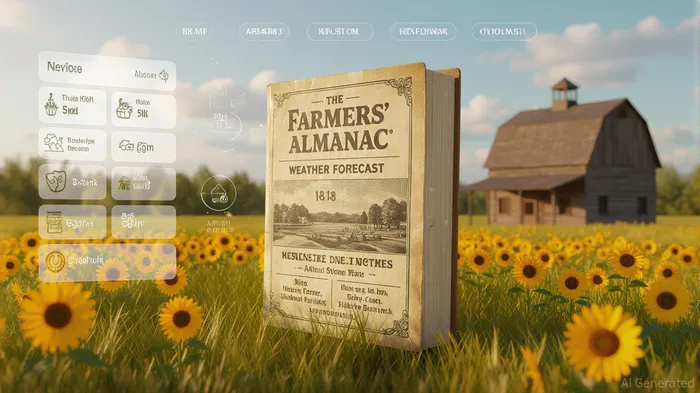
The recent closure of the Farmers' Almanac-a 208-year-old institution-has sparked a broader conversation about the fragility of analog media in the digital age. As the almanac's editor, Sandi Duncan, lamented, the publication's end marks the loss of a "tradition and source of inspiration for generations," a
MarketBeat report observes. This case study underscores a critical shift: investors and cultural stewards must now weigh the declining viability of print media against the rising potential of digital heritage platforms. For those seeking to capitalize on this transition, the intersection of nostalgia, sustainability, and technological innovation offers a compelling investment thesis.
The Decline of Analog Media: Financial and Environmental Challenges
The Farmers' Almanac's closure was driven by financial strain and the logistical hurdles of print distribution in a "chaotic media environment," as noted in a
MarketBeat report. These challenges are emblematic of a sector-wide crisis. Print media's decline is not merely a function of shifting consumer habits but also of sustainability pressures. The industry's reliance on paper, ink, and physical logistics clashes with growing environmental regulations and consumer demand for eco-friendly alternatives. For instance, Catalonia's 2025 Waste Prevention Act, which bans single-use printer consumables, exemplifies the regulatory headwinds facing traditional print operations, as noted in a
SmartTechFL blog.
Simultaneously, the cost of maintaining analog infrastructure is rising. According to a 2025 industry report, the global sustainable printing market is projected to grow at a 5.5% CAGR through 2030, driven by demand for recycled materials and energy-efficient workflows, according to a
PrintEpssw insight. This shift reflects a broader economic reality: investors are increasingly prioritizing ventures that align with environmental, social, and governance (ESG) criteria.
Monetizing Nostalgia: A Bridge to Digital Transformation
While the Farmers' Almanac's closure signals the end of an era, it also highlights the enduring power of nostalgia-a force that can be harnessed to fund digital preservation. As Gen Z and millennials seek emotional connections to the past, brands are reviving retro aesthetics and products to drive engagement. For example, Motorola's 2025 resurgence of the Razr flip phone and McDonald's reintroduction of the McRib demonstrate how nostalgia can be monetized through both physical and digital channels, as noted in a
SproutSocial insight.
In the cultural heritage sector, this strategy is equally potent. The Farmers' Almanac's legacy, for instance, could be preserved through a digital archive that offers interactive weather forecasts, gardening guides, and historical essays. Such platforms not only honor the original content but also create new revenue streams via subscriptions, partnerships, or educational licensing. As Forbes notes, nostalgia marketing "strengthens brand loyalty by tapping into enduring consumer emotions," as cited in a
Forbes article, a principle that applies equally to heritage content.
Digital Heritage Platforms: The New Frontier of Investment
The rise of digital heritage platforms presents a unique opportunity for investors. Companies like BigCommerce and Cloudinary, recognized in the 2025 Gartner Magic Quadrant for their digital commerce and asset management capabilities, exemplify how technology can scale cultural preservation efforts, as noted in a
Manila Times report and a
Morningstar report. These platforms enable the creation of immersive, user-friendly experiences that democratize access to historical content while generating revenue through e-commerce and data analytics.
A standout example is the 3DBigDataSpace Outreach Synergy Call, a European initiative that funds projects transforming 3D cultural heritage data into interactive public experiences, as noted in a
Europeana post. By leveraging tools like AR/VR and AI-driven analytics, such platforms not only preserve analog content but also create dynamic, monetizable ecosystems. Investors in these ventures benefit from both cultural impact and financial returns, as digital heritage becomes a cornerstone of the metaverse and educational technology sectors.
Sustainability as a Strategic Advantage
The sustainability of print media is no longer a choice but a necessity. The shift to plant-based inks, FSC-certified paper, and on-demand printing has reduced waste and operational costs for many publishers, as noted in a
SmartTechFL blog. For investors, this transition aligns with broader ESG trends. As one industry report notes, 70% of consumers now favor eco-friendly brands, creating a market incentive for sustainable practices, as cited in a
SmartTechFL blog.
Moreover, governments are increasingly offering subsidies for green printing initiatives. The Hungarian AI supercomputer project, which supports digital heritage research, is a case in point. Funded by the National Research, Development, and Innovation Fund, it combines cultural preservation with cutting-edge AI development, creating a dual revenue stream from academic partnerships and commercial applications, as noted in a
Hungarian Conservative article.
The Investment Thesis: Balancing Risk and Reward
Investing in digital heritage platforms requires a nuanced approach. While nostalgia-driven projects can generate strong emotional engagement, they also carry risks of oversaturation or inauthenticity, as noted in a
Forbes article. To mitigate these, investors should prioritize platforms with proven scalability, such as those leveraging AI or blockchain for content authentication. Additionally, partnerships with academic institutions or government bodies can provide regulatory and financial safeguards.
The Farmers' Almanac's closure serves as a cautionary tale but also a blueprint. By digitizing its archives and integrating AI-driven personalization-such as tailored gardening advice based on user location-investors could transform a dying brand into a thriving digital asset.
Conclusion: The Future of Cultural Capital
The decline of analog media is not a loss but a pivot. As the Farmers' Almanac demonstrates, cultural heritage can be preserved and monetized through digital innovation. For investors, the key lies in balancing nostalgia with sustainability, and tradition with technology. The platforms that succeed will be those that treat cultural content not as a relic but as a living, evolving asset-one that resonates across generations while generating measurable returns.

Delivering real-time insights and analysis on emerging financial trends and market movements.
Latest Articles
Stay ahead of the market.
Get curated U.S. market news, insights and key dates delivered to your inbox.


AInvest
PRO
AInvest
PRO



Comments
No comments yet