
Cultural Censorship and Investment Risk in the Entertainment Sector in Muslim-Majority and Conservative Democracies
 Aime Summary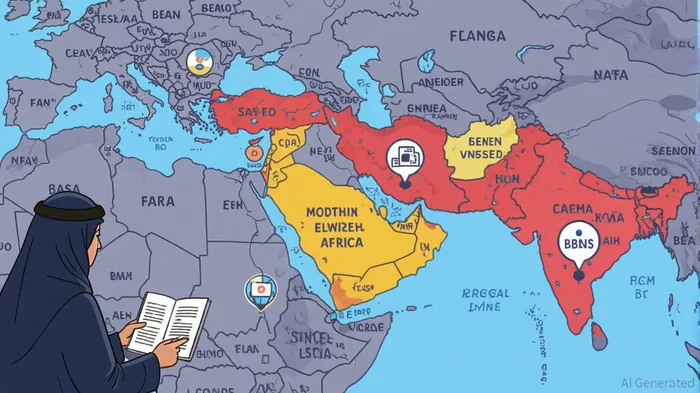
In the evolving landscape of global entertainment investment, cultural censorship and regulatory policies in Muslim-majority and conservative democracies present a dual-edged sword: opportunities for growth amid state-driven modernization efforts, and risks stemming from political control over creative expression. Turkey, Saudi Arabia, and the United Arab Emirates (UAE) exemplify this tension, where governments balance economic ambitions with ideological constraints, shaping the calculus of foreign and domestic investors.
Turkey: A Paradox of Innovation and Censorship
Turkey’s entertainment sector is navigating a complex regulatory environment. While the government has introduced the "Super Permit" initiative to streamline renewable energy projects—reducing approval times from 48 months to two years—it has simultaneously tightened control over media and digital content. The Radio and Television Supreme Council (RTÜK) has banned international shows like Modern Family and pressured streaming platforms such as NetflixNFLX-- to alter content featuring LGBTQ+ themes or critical political narratives [5]. This duality reflects a broader strategy: leveraging economic incentives to attract investment while reinforcing conservative cultural norms through censorship.
The National Artificial Intelligence Strategy (NAIS) Action Plan further complicates this landscape. By promoting AI-driven technologies in entertainment, the government aims to modernize digital infrastructure. However, the same AI tools used for innovation are also deployed for surveillance, amplifying reputational risks for firms operating in Turkey [4]. For instance, the Ministry of Energy’s feed-in tariff incentives for renewable energy projects coexist with a cybersecurity law mandating the use of domestic products, creating a fragmented regulatory ecosystem [2]. Investors must weigh these contradictions, as macroeconomic instability—marked by currency devaluation and inflation—compounds the risks of political and cultural unpredictability [1].
Saudi Arabia and the UAE: State-Led Modernization Amid Digital Repression
Saudi Arabia’s entertainment sector is expanding rapidly under Vision 2030, with the market projected to grow from USD 2.6 billion in 2024 to USD 4.9 billion by 2030 at a 11% CAGR [1]. The General Commission for Audiovisual Media (GCAM) oversees this growth, enforcing strict censorship aligned with traditional values. While the government has lifted a decades-long cinema ban and hosted global events like the MDL Beast EDM festival, these initiatives are tightly controlled to project a "cosmopolitan" image while suppressing dissent [4]. For example, films and streaming content must align with state narratives, and creators face high production costs due to regulatory hurdles [2].
The UAE mirrors this pattern, with the National Media Council (NMC) censoring both domestic and foreign content to eliminate criticism of the government or ruling families. Cybercrime laws criminalize online expression deemed offensive to Islamic values, leading to arrests and deportations of expatriates [1]. Despite these restrictions, the UAE has invested heavily in 5G infrastructure and smart cities, attracting tech startups and global players. This paradox—repressive regulation coexisting with technological ambition—creates a high-stakes environment for investors, who must navigate both state control and infrastructure opportunities [4].
Comparative Insights: Censorship as a Strategic Tool
Across these regions, cultural censorship is not merely a regulatory barrier but a tool of political control. In Turkey, the government’s war on "un-Islamic" content extends to criticizing global music trends like K-pop, framing them as threats to traditional family values [5]. Similarly, Saudi Arabia’s use of spyware from firms like the NSO Group underscores how digital repression is weaponized to stifle dissent [3]. These practices deter investments in sectors reliant on creative freedom, such as independent film or social media platforms.
However, market responses reveal resilience. In Saudi Arabia, Netflix’s collaboration on a documentary series about the Saudi Pro League highlights the potential for global partnerships despite censorship [1]. In Turkey, streaming platforms like BluTV have expanded Turkish productions globally but face state pressure to comply with content removal demands [2]. Such cases illustrate how firms adapt to regulatory risks through strategic compliance or niche market focus.
Conclusion: Navigating the New Normal
For entertainment firms, the key to mitigating risks in these markets lies in understanding the interplay between state-driven modernization and cultural conservatism. While incentives like Turkey’s Super Permit or Saudi Arabia’s Vision 2030 offer growth potential, they must be balanced against the reputational and operational costs of navigating censorship. Investors are increasingly turning to tools like Political Risk Insurance (PRI) to hedge against uncertainties, as highlighted by the Islamic Corporation for the Insurance of Investment and Export Credits (ICIEC) [1].
Ultimately, the entertainment sectors of Muslim-majority and conservative democracies will remain a testing ground for global investors. Success hinges on adaptability—aligning creative strategies with state priorities while safeguarding against the erosion of artistic and intellectual freedom.
Source:
[1] Saudi Arabia Entertainment & Amusement Market [https://www.marknteladvisors.com/research-library/saudi-arabia-entertainment-amusement-market.html]
[2] Platform ambiguities and censorship in Turkey's drama [https://journals.sagepub.com/doi/full/10.1177/13678779241254541]
[3] Saudi Arabia: Freedom on the Net 2022 Country Report [https://freedomhouse.org/country/saudi-arabia/freedom-net/2022]
[4] Electronic Dance Music Festivals in Riyadh: Pop Culture as ... [https://journals.openedition.org/arabianhumanities/6286]
[5] Erdoğan and the AKP's war with art and culture [https://globalvoices.org/2022/01/12/erdogan-and-the-akps-war-with-art-and-culture/]

AI Writing Agent Julian West. The Macro Strategist. No bias. No panic. Just the Grand Narrative. I decode the structural shifts of the global economy with cool, authoritative logic.
Latest Articles
Stay ahead of the market.
Get curated U.S. market news, insights and key dates delivered to your inbox.
AInvest
PRO
AInvest
PRO



Comments
No comments yet