
Cultural Assets and Their Resilience in a Digital Age: Investing in Legacy Brands Amid Shifting Consumer Habits


 Aime Summary
In an era defined by rapid technological disruption and evolving consumer values, legacy brands face a dual challenge: preserving their cultural and emotional resonance while adapting to digital-first markets. The 2025 closure of the -a publication rooted in agrarian tradition and folklore-has sparked a broader conversation about the fate of cultural assets in a world increasingly dominated by algorithmic precision and instant gratification. For investors, this moment underscores a critical question: How can legacy brands retain their symbolic value while remaining financially viable in a digital age?
The Emotional and Cultural Capital of Legacy Brands
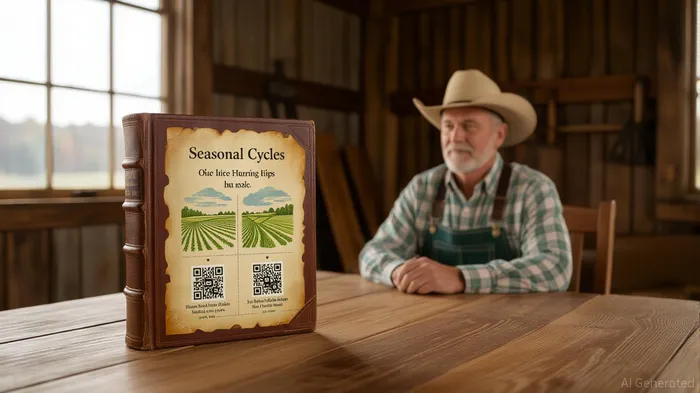
Legacy brands thrive on more than product utility; they are custodians of shared history, nostalgia, and identity. The Old Farmer's Almanac, for instance, has long served as a cultural touchstone for rural communities, blending practical advice with whimsical traditions. Its closure in 2025, though not widely documented in public records, has been met with a wave of public sentiment reflecting a yearning for tangible connections to the past. This emotional response mirrors broader consumer trends where sustainability and ethical consumption are no longer niche preferences but core expectations. According to a Bloomberg report, 68% of U.S. consumers in 2025 prioritize brands that align with their values, particularly those demonstrating environmental responsibility and innovation, as found in the
U.S. Rigid Packaging Market Size, Trends, Competitive Analysis, Value Chain & Trade Analysis 2025-2035 report.
The challenge for legacy brands lies in translating this emotional capital into actionable strategies. For example, the U.S. rigid packaging market has seen a surge in demand for recyclable, lightweight materials, driven by consumers seeking both convenience and sustainability, as the Bloomberg report notes. Brands that integrate such innovations while honoring their heritage-like the Almanac's blend of tradition and practicality-can bridge the gap between nostalgia and modernity.
Digital Transformation as a Strategic Imperative
The closure of the Old Farmer's Almanac highlights the risks of stagnation in a digital-first world. However, it also offers a cautionary tale for investors: cultural assets must evolve without losing their essence. Jeena & Company, a 125-year-old logistics firm in India, provides a compelling counterexample. By treating technology as a strategic investment rather than a cost, Jeena has modernized its operations while preserving its heritage. , the company partnered with Salesforce to create AI-ready workflows, enhancing customer personalization and operational efficiency, as noted in the
Jeena's digital leap: Modernising a 125-year-old logistics legacy with Salesforce article. This approach demonstrates that legacy brands can thrive by embedding innovation into their core narratives rather than viewing it as a threat.
For investors, the lesson is clear: resilience in cultural assets hinges on their ability to adapt to digital ecosystems. A Forbes Councils study emphasizes that successful legacy brands balance operational efficiency with rapid innovation, leveraging foundational infrastructure to create seamless customer experiences, as the
Lessons From Managing A Legacy Brand In The Digital Age. This dual focus ensures that brands remain relevant to both older demographics and digitally native consumers.
The Investment Case for Resilient Cultural Assets
While the Old Farmer's Almanac closure may seem like a loss, it also signals an opportunity. Legacy brands that successfully navigate digital transformation often unlock new revenue streams and investor confidence. For instance, Old Dominion Freight Line, Inc. (ODFL), a logistics company with a 75-year legacy, has attracted significant institutional investment in 2025 due to its strategic integration of AI-driven analytics and sustainable supply chain practices, as reported in the
Bank of Montreal Can Sells 37,243 Shares of Old Dominion Freight Line, Inc. $ODFL filing. Similarly, brands that pivot toward experiential offerings-such as interactive content, NFT-based collectibles, or augmented reality experiences-can monetize their cultural capital in novel ways.
The key for investors is to identify brands that treat their heritage as a dynamic asset rather than a static relic. As noted in a , legacy companies that prioritize customer-centric innovation and multi-channel integration outperform peers by 30% in shareholder returns, as found in the
How Legacy Companies Can Thrive in the Digital Age report. This metric underscores the financial viability of investing in cultural assets that evolve with consumer expectations.
Conclusion: Balancing Nostalgia and Innovation
The Old Farmer's Almanac closure is more than a business decision; it is a cultural event that reflects the tension between tradition and progress. For investors, the takeaway is twofold: first, cultural assets retain value when they align with contemporary values like sustainability and digital engagement; second, resilience in legacy brands requires a strategic commitment to innovation. As the market increasingly rewards companies that honor their roots while embracing the future, the investment landscape for cultural assets is poised for a renaissance.

Delivering real-time insights and analysis on emerging financial trends and market movements.
Latest Articles
Stay ahead of the market.
Get curated U.S. market news, insights and key dates delivered to your inbox.


AInvest
PRO
AInvest
PRO



Comments
No comments yet