
AInvest Newsletter
Daily stocks & crypto headlines, free to your inbox
 Aime Summary
Date of Call: Not specified in transcript
$53.2 million for the second quarter, a sequential improvement from $50.7 million in the first quarter and a decline from $55.7 million in the prior year period.Adjusted consolidated gross profit improved to 12.6% of sales compared to 12.1% in the prior year period, driven by cost and efficiency gains from restructuring initiatives.
Cost Savings and Efficiency Gains:
$11 million in annualized cost savings and efficiency gains from its restructuring project and an additional $3.5 million from the integration of its former divisions.These savings are attributed to the consolidation of operations, reduction in workforce, and rationalization of manufacturing and sourcing strategies.
Bedding Segment Growth:
10% sequentially and 2% year-over-year, reaching $30.8 million.This growth is attributed to market share gains, strong product demand in knit fabric and sewn cover product lines, and strategic pricing adjustments.
Challenges in Upholstery Segment:
12% year-over-year, amounting to $22.4 million.The decline is due to continued softness in the home furnishings market, tariff-related challenges, and weak consumer sentiment impacting residential sales.
Tariff Impact and Mitigation:
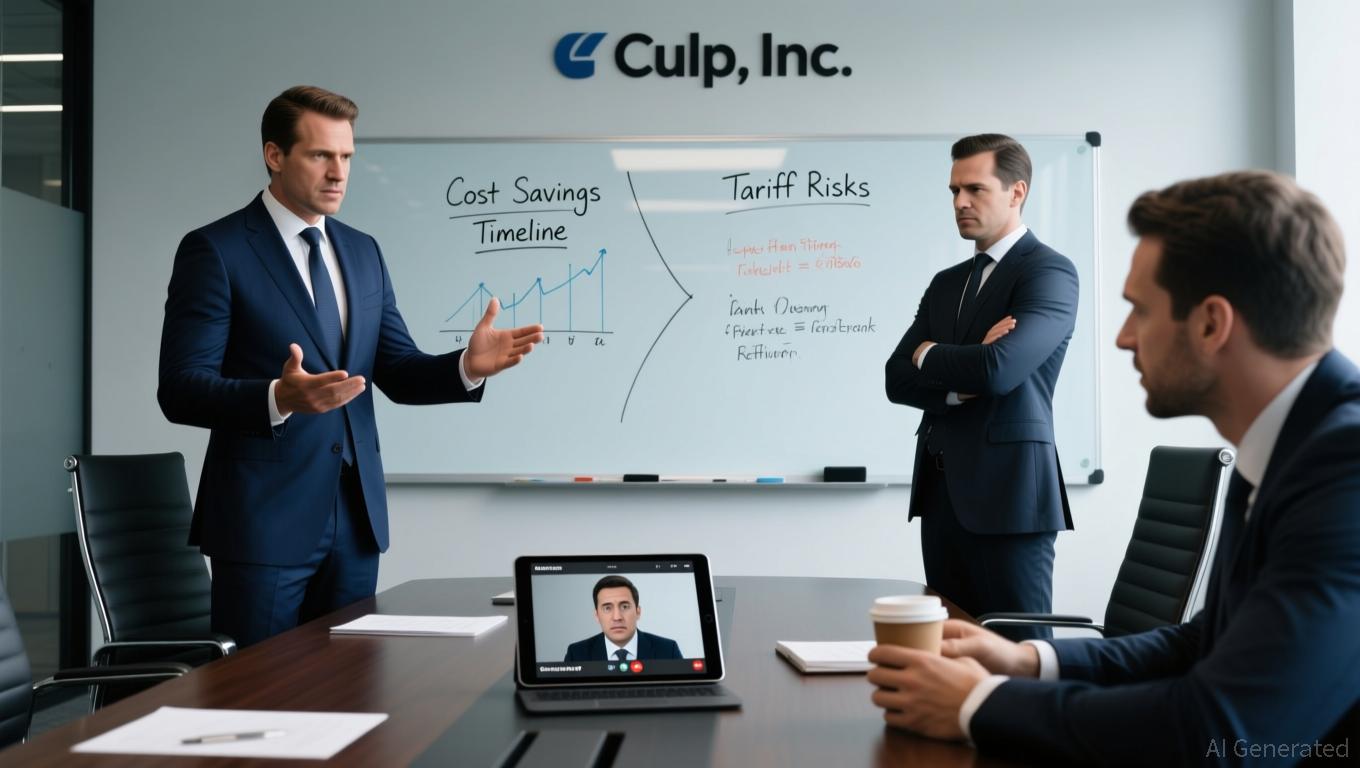
Overall Tone: Neutral
Contradiction Point 1
Status and Timing of Cost Savings Realization
This is a substantial contradiction regarding the **current status and phasing of a key financial initiative**. It directly impacts expectations for near-term earnings and cash flow. The shift from stating benefits are "fully implemented" and "across the full year" (Q1 2026) to stating major benefits "began in late Q2" (Q2 2026) creates confusion about the actual timing of value realization.
How far along are we in realizing the $18 million? And when will the $18 million annual run rate be fully realized? - Douglas Lane (Water Tower Research)
2026Q1: The $10–11 million from fiscal 2025 restructuring... is now fully implemented and should impact fiscal 2026, with benefits across the full year. - Robert Culp(CEO)
How much of the $20 million on Slide 11 has already been realized in the P&L, and how much remains to be realized? - Douglas Lane (Water Tower Research)
20251211-2026 Q2: The $20M+ in annualized cost savings is being realized in phases. Major benefits from Canada facility closure, restructuring, and price adjustments began in late Q2. - Robert Culp(CEO)
Contradiction Point 2
Tariff Environment and Its Impact
This is a substantial contradiction concerning **the current risk profile and management of a significant external headwind**. The shift from asserting tariffs are "no longer an immediate worry" and that the company can "grow margins" under them (Q1 2026) to describing new, disruptive tariff changes requiring adjustment (Q2 2026) indicates a material change in risk assessment and operational stability.
Have you accounted for all known tariffs and cost/pricing initiatives? Or are additional actions needed based on current news? - Douglas Lane (Water Tower Research)
2026Q1: However, the company has multiple supply chain options... As of now, the company is able to perform and grow margins under the current tariff environment, so tariffs are no longer an immediate worry. - Robert Culp(CEO)
Can you specify when the new tariffs in Turkey and Haiti were implemented and when you expect to see benefits from your mitigation efforts? - Douglas Lane (Water Tower Research)
20251211-2026 Q2: Tariff changes are disruptive. In Turkey, tariffs increased from 10% to 15% effective immediately on a recent date (not specified), requiring a ~60-day lag to adjust strategies/pricing. In Haiti, the 8-year duty-free agreement lapsed, leading to a 15% tariff implemented overnight. - Robert Culp(CEO)
Contradiction Point 3
Timing of Cost Savings Implementation
This is a substantial contradiction regarding the **specific timeline for operational and financial benefits from stated initiatives**. Moving the start of major benefits from "begin to impact performance in Q2" (Q4 2025) to "began in late Q2" (Q2 2026) creates a significant delay in the expected earnings impact, altering the forecast for the fiscal year.
How will the outlined cost savings impact the bottom line quarter-by-quarter? - Brian Gordon (Water Tower Research LLC)
2025Q4: Benefits from the completed restructuring plan are already flowing through. New initiatives... begin to impact performance in Q2 of fiscal 2026 and become fully effective in Q3 and Q4... - Robert Culp(CEO)
Regarding the $20 million cost savings on Slide 11, how much of that has already been realized in the P&L, and how much remains to be realized? - Douglas Lane (Water Tower Research)
20251211-2026 Q2: The $20M+ in annualized cost savings is being realized in phases. Major benefits from Canada facility closure, restructuring, and price adjustments began in late Q2. - Robert Culp(CEO)
Contradiction Point 4
Impact and Management of Tariff Changes
This is a substantial contradiction involving a **change in the narrative about the company's ability to manage a key operational risk**. The shift from describing tariffs as part of "broader market uncertainty" with a focus on "pushing price increases" (Q4 2025) to stating the company is "proficient at managing these changes" and the situation is "starting to settle" (Q2 2026) presents a conflicting picture of control and ongoing disruption.
How have tariffs impacted customer demand across your segments? - Brian Gordon (Water Tower Research LLC)
2025Q4: Tariffs are part of broader market uncertainty (inflation, interest rates) and are not the primary driver of consumer demand. The current focus is on pushing price increases through the supply chain to retail. - Robert G. Culp(CEO)
Could you clarify when the new tariffs in Turkey and Haiti were implemented and when the mitigation efforts will take effect? - Douglas Lane (Water Tower Research)
20251211-2026 Q2: ...The company can mitigate these impacts due to its global platform but emphasizes the timing lag between tariff changes and implementing compensatory actions." and "The situation appears to be starting to settle.... The company has become proficient at managing these changes and has strategies to mitigate their impact. - Robert Culp(CEO)
Contradiction Point 5
Nature and Scale of Cost Savings Initiatives
This is a substantial contradiction regarding the **definition and scope of the company's cost-saving program**. The move from specifying new, distinct initiatives ($1M in personnel savings) with clear start dates (Q4 FY25) to bundling them into a larger, already-annualized figure ($20M+) with a phased rollout (starting late Q2 FY26) obscures the program's composition and the timing of individual contributions.
Can you provide more detail on the incremental $1 million in annualized savings, including what it involves and when it will start impacting results? - Brian Gordon (Water Tower Research)
2025Q3: The $1 million in savings comes from personnel and professional fee reductions. These savings are expected to start in the fourth quarter of fiscal 2025 and carry through into fiscal 2026. - Robert Culp(CEO)
Of the $20 million in cost savings on Slide 11, how much has been realized in the P&L, and how much remains? - Douglas Lane (Water Tower Research)
20251211-2026 Q2: The $20M+ in annualized cost savings is being realized in phases. Major benefits from Canada facility closure, restructuring, and price adjustments began in late Q2. New initiatives like warehouse consolidations and window production moves will impact results in late Q3 and the remainder of H2 FY26. - Robert Culp(CEO)

Discover what executives don't want to reveal in conference calls

Jan.10 2026
Jan.10 2026

Jan.09 2026

Jan.09 2026

Jan.09 2026
Daily stocks & crypto headlines, free to your inbox





Comments
No comments yet