
Cuba Power Grid Collapse Explained: How Oil Shortages and Aging Infrastructure Affect the Island
 Aime Summary
The recent power grid collapse in Cuba has once again plunged the entire island into darkness, raising urgent questions for investors and analysts about the country's long-term economic resilience. With oil imports cut off due to U.S. sanctions and the nation's energy infrastructure in dire condition, the repeated blackouts have become a defining feature of Cuba's economic crisis. The latest collapse, reported on March 16, 2026, marks the third such event in the past four months and underscores the deepening challenges facing the country. As businesses, hospitals861199--, and households brace for extended outages, the implications ripple far beyond the island, affecting global geopolitical dynamics and the future of the Cuban economy.
Why Is the Cuba Power Grid Collapse Affecting the Entire Nation Right Now?
Cuba's power grid is a fragile system built around Soviet-era thermal power plants and a heavy reliance on imported oil. The country's National Electric System (SEN) is a network of independent generation islands, making it particularly vulnerable to cascading failures. When the grid experiences a complete disconnection—like it did on March 16—restoring power is a slow and delicate process. 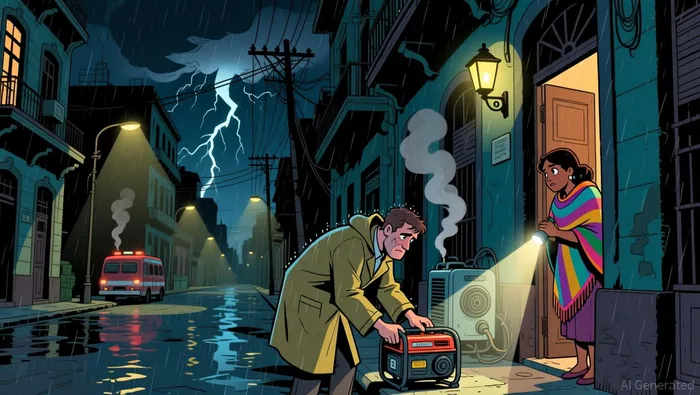 The Ministry of Energy and Mines has stated that full restoration could take days or even weeks, depending on the scale of the outage.
The root cause of the March 16 collapse was attributed to a boiler failure at the , . This shortage is largely due to the lack of oil, with no shipments arriving in over three months. The U.S. has tightened its sanctions against oil exports to Cuba, especially from Venezuela, which historically supplied about half of its oil needs. recently removed from power by the U.S., Cuba's access to fuel has been effectively cut off.
The resulting energy crisis has had severe consequences. Hospitals have had to delay surgeries, schools have reduced hours, and public transportation has been slashed. In some cases, residents have resorted to candles and generators to cope with the darkness. The U.S. administration has framed its sanctions as a means to pressure the Cuban government into political and economic reform, but critics argue that the impact on civilians is disproportionately high.
What Does a Power Outage Mean for Cuba's Economy and Social Stability?
The frequency and severity of power outages in Cuba have become a symbol of the country's broader economic struggles. Over the past two years, the Cuban economy has experienced , . The March 16 outage is expected to further strain the already weakened economy, as businesses face operational disruptions and daily life becomes even more difficult for ordinary citizens.
The government has taken some steps to mitigate the crisis, including promoting the use of solar power and natural gas865032--. However, these alternatives are not yet sufficient to meet the country's energy demands. President Miguel Díaz-Canel has stated that the government is exploring foreign investment opportunities to stabilize the economy. The move to allow Cubans abroad to invest in domestic businesses is a significant policy shift, but it remains to be seen whether it will be enough to reverse the trend of outmigration and economic decline.
Socially, the outages have led to increased unrest. Protests, including , have become more frequent, particularly in urban centers like Havana. These protests are not new; similar demonstrations occurred in 2021, 2022, and 2024. In July 2021, , raising concerns about the government's response to dissent. The current crisis may push more citizens to take to the streets, especially if restoration efforts are slow or if economic conditions worsen.
From an investor perspective, the situation in Cuba remains highly uncertain. While the government has signaled a willingness to engage with foreign investors, the ongoing energy and economic crises make it difficult to assess the long-term viability of such investments. Additionally, U.S. policy remains a wildcard, with President Donald Trump suggesting a potential "friendly takeover" of Cuba and pushing for the removal of President Díaz-Canel.
What to Watch as the Power Crisis Unfolds
As Cuba works to restore power and address its energy and economic challenges, several key developments will be worth monitoring. First, the pace of power restoration will be a critical indicator of the grid's stability. If full power is restored within a week, it may suggest that the grid is still functional despite its age. A slower restoration, however, would raise concerns about the long-term sustainability of the system.
Second, the Cuban government's response to the crisis will be important. Díaz-Canel has announced emergency measures to prioritize critical sectors, including hospitals and communication services861078--. The success of these measures will depend on the availability of resources and the cooperation of international partners.
Third, the U.S.-Cuba relationship will continue to evolve. While the Trump administration has made it clear that it wants to see Díaz-Canel removed from power, it is not yet clear what form the next steps might take. The possibility of a "friendly takeover" is still speculative, but it could have significant implications for both the Cuban economy and the broader region.
Finally, the impact on Cuba's international partnerships will be worth watching. China, Russia, and other countries may increase their involvement in Cuba's energy sector861070--, particularly if U.S. sanctions continue to restrict access to oil and other critical resources. The extent to which these partnerships develop could shape the island's energy future for years to come.

Stay ahead of the market.
Get curated U.S. market news, insights and key dates delivered to your inbox.


AInvest
PRO
AInvest
PRO



Comments
No comments yet