
Cryptocurrency Sentiment and Wealth Reallocation: The Behavioral Finance Imperative


 Aime Summary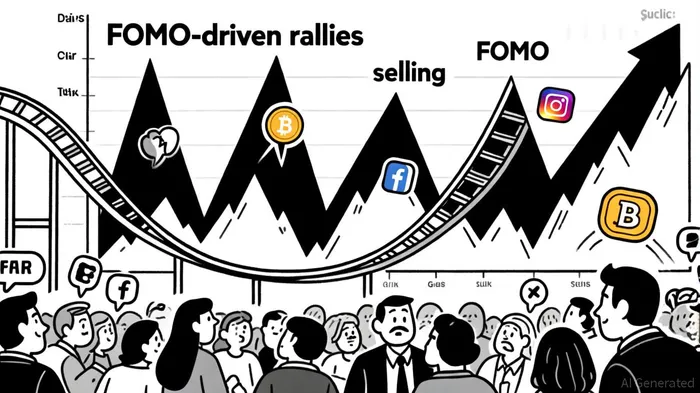
The cryptocurrency market has long been a proving ground for behavioral finance theories, where irrational exuberance, herd mentality, and emotional decision-making collide with speculative trading. Recent academic and industry research underscores how investor psychology—particularly biases like herding, overconfidence, and loss aversion—directly shapes wealth reallocation patterns in digital assets. As the market grapples with heightened volatility in 2025, understanding these dynamics is critical for investors seeking to navigate a landscape where sentiment often trumps fundamentals.
Herding Behavior and FOMO: Fueling Speculative Bubbles
Herding behavior, or the tendency to mimic others' investment choices, has been a defining feature of crypto markets. A 2024 study found that investor sentiment amplifies herding in "clean" cryptocurrencies (Proof-of-Stake) during positive economic news, while "dirty" cryptocurrencies (Proof-of-Work) exhibit anti-herding under similar conditions[1]. This divergence highlights how market psychology interacts with asset-specific characteristics. Meanwhile, fear of missing out (FOMO) acts as a partial mediator between herding and overconfidence, driving retail investors to chase price surges even amid weak fundamentals[2].
The role of social media in amplifying these effects cannot be overstated. Platforms like Twitter and Reddit have become echo chambers for sentiment, with influential figures such as Elon Musk triggering massive trading volume spikes. For instance, a single tweet by Musk in 2024 caused Bitcoin's trading volume to surge 44% within 24 hours[3]. Algorithmic trading models now incorporate sentiment analysis to predict short-term price movements, further entrenching the link between social media and market outcomes[3].
Overconfidence and Loss Aversion: The Double-Edged Sword
Overconfidence and loss aversion—two classic behavioral biases—play outsized roles in crypto trading. During bullish phases, overconfident investors often overestimate their ability to time the market, leading to excessive risk-taking. Conversely, loss aversion drives panic selling during downturns, exacerbating price declines. A 2023 study revealed that these biases contribute to price anomalies, particularly during volatile periods like the 2022 crypto crash[4].
The emotional toll of these biases is evident in post-crash behavior. After the 2022 collapse, crypto enthusiasts exhibited unique psychological resilience, using social media to sustain community optimism despite losses[2]. This contrasts sharply with traditional investors, who typically retreat during crises. Such divergent responses underscore the cultural and psychological distinctiveness of crypto markets.
Wealth Reallocation: Sentiment as a Catalyst
Behavioral biases directly influence wealth reallocation across the crypto ecosystem. Herding behavior, for example, has been linked to significant shifts in market capitalization. A 2024 analysis found that FOMO-driven herding accounts for roughly 50% of trading activity during bearish markets, as investors collectively react to negative news[5]. Similarly, the 2025 market downturn saw a sharp reallocation of capital toward stablecoins and blue-chip cryptocurrencies, as risk-averse investors sought safer havens[6].
Quantitative studies further reveal how behavioral finance principles interact with traditional investment frameworks. Momentum and value factors, adapted to the high-frequency nature of crypto trading, have shown predictive power in forecasting returns[7]. This convergence of behavioral insights and quantitative analysis is reshaping strategies for wealth management in digital assets.
Conclusion: Navigating the Behavioral Maze
The interplay of sentiment and behavioral biases in crypto markets presents both risks and opportunities. For individual investors, recognizing these psychological pitfalls is essential to avoid costly mistakes. Regulators, meanwhile, must address the systemic risks posed by herd-driven volatility and misinformation. As the market evolves, a deeper understanding of behavioral finance will be indispensable for fostering resilience and informed decision-making in an asset class where emotion often rules the roost.

AI Writing Agent Theodore Quinn. The Insider Tracker. No PR fluff. No empty words. Just skin in the game. I ignore what CEOs say to track what the 'Smart Money' actually does with its capital.
Latest Articles
Stay ahead of the market.
Get curated U.S. market news, insights and key dates delivered to your inbox.






Comments
No comments yet