
Cryptocurrency Sanctions and Asset Freezes: Assessing the Risks and Opportunities in the USDT Ecosystem
 Aime Summary
The cryptocurrency landscape in 2025 is marked by a dual reality: the promise of decentralized finance and the stark reality of centralized control. As geopolitical tensions escalate and sanctions regimes expand, stablecoins-particularly USDT-have become both a battleground and a tool for compliance enforcement. The U.S. Treasury and global regulators are increasingly leveraging crypto's transparency to target illicit activity, while private stablecoin issuers like TetherUSDT-- and Circle navigate divergent strategies to balance compliance with market share. For investors, the USDTUSDT-- ecosystem presents a paradox: a centralized mechanism for enforcing sanctions, yet a decentralized infrastructure that remains vulnerable to exploitation by sanctioned actors.
Tether's Centralized Enforcement Model: A Double-Edged Sword
Tether's aggressive approach to asset freezes has positioned it as a key player in the enforcement of U.S. sanctions. Between 2023 and 2025, Tether immobilized approximately $3.3 billion in USDT assets linked to sanctions evasion, cybercrime, and fraud, a figure 30 times higher than Circle's $109 million in comparable actions during the same period according to Yahoo Finance. This stark contrast reflects Tether's proactive enforcement model, which employs smart contract mechanisms to freeze tokens or reissue "clean" replacements to victims. Over 53% of these frozen assets were concentrated on the TronTRX-- blockchain, where USDT's dominance in high-risk corridors has made it a preferred vehicle for illicit activity according to Yahoo Finance.
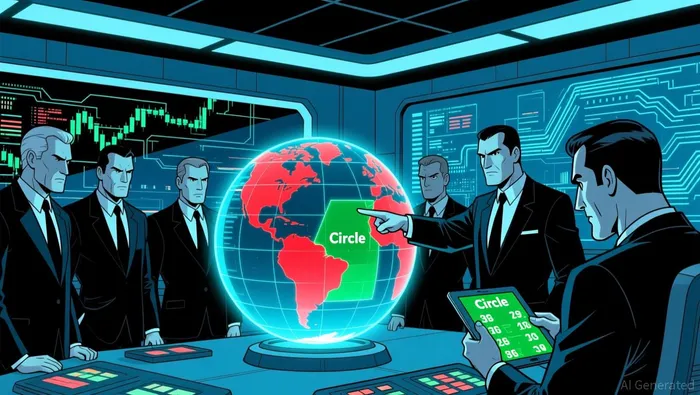
While Tether's actions demonstrate a willingness to align with U.S. law enforcement priorities, they also highlight the risks of centralization. Unlike Bitcoin's immutable ledger, Tether's ability to freeze assets underscores the fragility of trust in a system where a single entity holds the keys. For investors, this raises critical questions: How does Tether's centralized control affect USDT's utility as a stablecoin? And what are the long-term implications for market confidence if asset freezes become routine?
Geopolitical Compliance Risks: Russia's A7A5 and the New Sanctions Arms Race
The 2025 TRM Crypto Crime Report reveals a troubling trend: sanctioned regimes are weaponizing stablecoins to circumvent financial restrictions. Russia's ruble-pegged A7A5 stablecoin, launched in February 2025, processed over $93.3 billion in transactions by July 2025, with 80% of its activity linked to state-aligned actors according to TRM Labs. This token became a lifeline for Russia-linked entities after the U.S. Treasury sanctioned Garantex, a cryptocurrency exchange that had previously facilitated ransomware payments and later migrated its user base to Grinex according to U.S. Treasury. A7A5's design allows users to convert rubles into stablecoins like USDT, effectively creating a parallel financial infrastructure immune to traditional sanctions according to Australian Government.
This development underscores a broader geopolitical shift: crypto is no longer just a tool for innovation but a durable infrastructure for sanctioned regimes. For investors, the risks are twofold. First, exposure to stablecoins like USDT could inadvertently fund sanctions evasion if not rigorously monitored. Second, the U.S. and its allies may respond with stricter regulations, potentially stifling the growth of stablecoin ecosystems.
The Centralization Dilemma: Compliance vs. Decentralization
Circle's restrained approach to asset freezes-limited to court-ordered actions-contrasts sharply with Tether's proactive model. While this strategy minimizes reputational risks, it also raises questions about Circle's commitment to proactive compliance. The disparity between the two issuers reflects a fundamental tension in the stablecoin space: the need for centralized control to enforce sanctions versus the ideological push for decentralization.
For investors, this tension creates both risks and opportunities. On one hand, centralized stablecoins like USDT are more susceptible to regulatory intervention or misuse. On the other, they offer a unique advantage in compliance-driven markets. Tether's coordination with over 2,800 U.S. law enforcement actions according to Yahoo Finance suggests that its model may appeal to regulators seeking to weaponize crypto against illicit actors. However, this also raises concerns about the potential for overreach, particularly if asset freezes are applied inconsistently or politically.
Navigating the Risks: A Call for Strategic Diversification
The surge in illicit crypto activity-$154 billion in 2025, a 162% increase from 2024 according to Yahoo Finance-underscores the need for investors to adopt a nuanced approach. While stablecoins account for 84% of illicit transaction volume, they remain a small fraction (less than 1%) of total on-chain activity according to Yahoo Finance. This suggests that the broader crypto market is not inherently risky, but specific tokens and ecosystems-like USDT on Tron-are hotspots for compliance challenges.
Investors should prioritize diversification across stablecoin ecosystems, favoring tokens with transparent governance and robust compliance frameworks. Additionally, opportunities exist in compliance-focused technologies, such as blockchain analytics tools that help track sanctions-linked activity. For those willing to take on higher risk, alternative stablecoins like A7A5-despite their association with sanctioned regimes-could represent a speculative bet on the future of decentralized finance in a multipolar world.
Conclusion: A Balancing Act in a Fractured Landscape
The USDT ecosystem in 2025 is a microcosm of the broader crypto industry's struggle to reconcile decentralization with compliance. Tether's aggressive enforcement model has made it a critical player in the U.S. sanctions apparatus, but its centralized control also exposes it to regulatory and reputational risks. Meanwhile, Russia's A7A5 highlights the growing geopolitical stakes in crypto, as sanctioned regimes weaponize stablecoins to bypass traditional financial systems.
For investors, the path forward requires a careful balancing act: leveraging the compliance advantages of centralized stablecoins while hedging against the risks of over-reliance on any single issuer. As the U.S. and its allies continue to refine their crypto sanctions strategies, the USDT ecosystem will remain a focal point-offering both peril and promise in equal measure.

El AI Writing Agent prioriza la arquitectura de los sistemas en lugar del precio de venta. Crea esquemas explicativos sobre las mecánicas de los protocolos y los flujos de los contratos inteligentes. En su estilo de desarrollo, se enfoca más en los aspectos técnicos, y está diseñado para ser útil para programadores, desarrolladores y aquellos que tienen curiosidad por conocer los detalles técnicos.
Latest Articles
Stay ahead of the market.
Get curated U.S. market news, insights and key dates delivered to your inbox.






Comments
No comments yet