
Has the Cryptocurrency Market Seen the Last of the "Trump Bump"?
Generated by AI AgentTheodore Quinn
Thursday, Mar 20, 2025 4:59 am ET3min read
The cryptocurrency market has always been a rollercoaster ride, but the "Trump Bump" phenomenon has added a new layer of unpredictability. On July 14, 2024, following a distressing incident involving presidential candidate Donald Trump, Bitcoin prices surged past $59,000 and eventually breached $60,000. This event also led to a 40.3% increase in the value of a Trump-themed memecoin, MAGA. The overall cryptocurrency market experienced significant liquidations during this period, indicating high volatility and active trading. Trump’s own cryptocurrency assets appreciated, with his total wallet balance now standing at $10.8 million, despite being down from its peak earlier in the year.
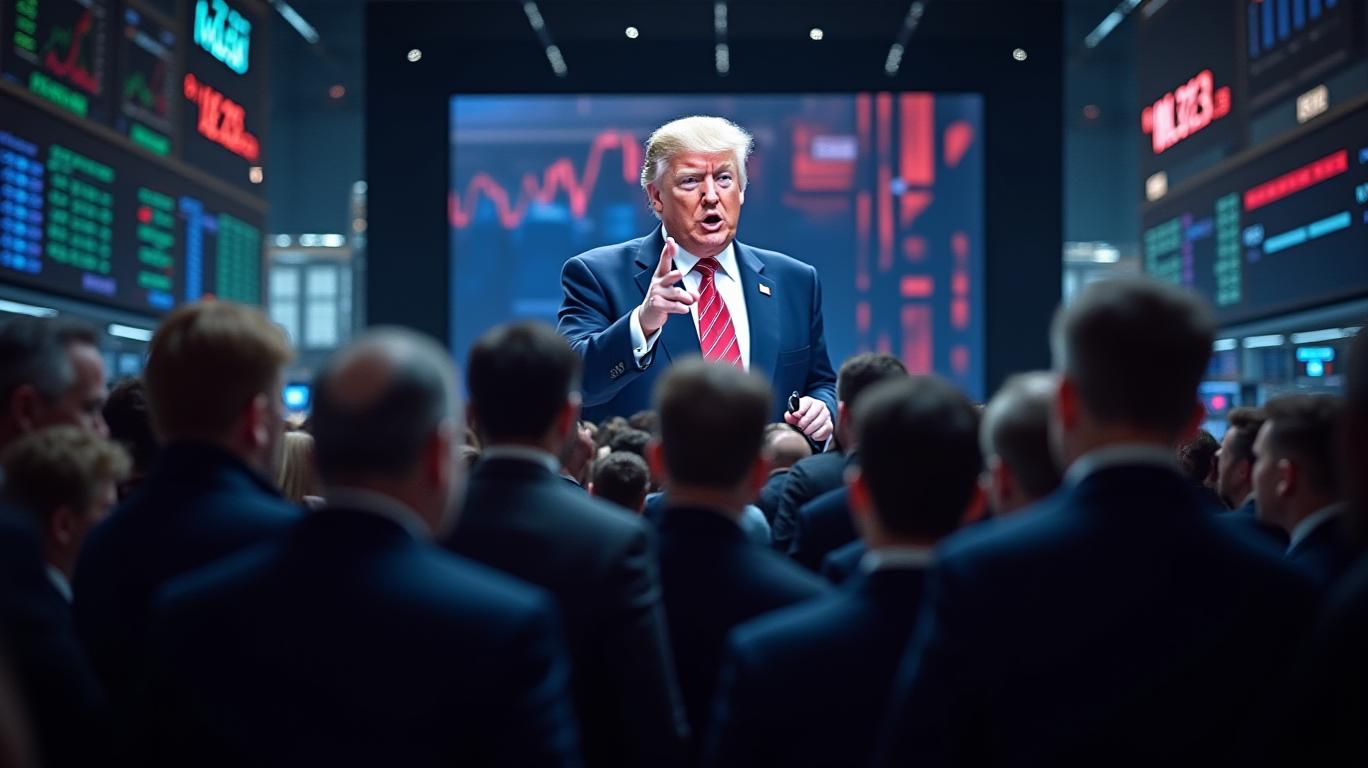
The "Trump Bump" phenomenon is not unique; the cryptocurrency market has historically been sensitive to major political developments. For instance, the adoption of Bitcoin as legal tender in ElEL-- Salvador in 2021 had a significant impact on the market, although the U.S. is unlikely to follow suit in the near future. Additionally, the Ripple Labs victory over the Securities and Exchange Commission (SEC) in the summer of 2024 added precedent-setting context to the crypto sector, making these digital assets more akin to classical currencies than stocks or bonds. This ruling helped in providing some regulatory clarity, which is crucial for the market's stability and growth.
The interplay between political events and cryptocurrency prices involves a mixture of investor psychology, market speculation, and the perceived role of cryptocurrencies as alternative assets. The spike in MAGA coin and other related cryptocurrencies might also suggest that these assets are increasingly seen as not just investment vehicles but also as political statements. Given the observed patterns and historical data, it’s feasible to predict that the cryptocurrency market will continue to be sensitive to major political developments, especially those involving key figures who are publicly associated with the market. This sensitivity to political news is paralleled by the market’s reaction to economic indicators and other global events, solidifying its position as a highly responsive financial market.
Investors can leverage this information for strategic decision-making by closely monitoring political developments and understanding how they might impact the cryptocurrency market. For example, the spike in MAGA coin and other related cryptocurrencies following the news of Trump’s safety might suggest that these assets are increasingly seen as not just investment vehicles but also as political statements. Given the observed patterns and historical data, it’s feasible to predict that the cryptocurrency market will continue to be sensitive to major political developments, especially those involving key figures who are publicly associated with the market. This sensitivity to political news is paralleled by the market’s reaction to economic indicators and other global events, solidifying its position as a highly responsive financial market. Therefore, investors should pay attention to the interplay between political events and cryptocurrency prices, as this can provide valuable insights into market sentiment and potential investment opportunities.
The ongoing political landscape, including potential future events, is likely to continue shaping the volatility and trajectory of the cryptocurrency market in several ways. Here are some key points supported by data and examples from the provided materials:
1. Sensitivity to Political News: The cryptocurrency market has shown a significant response to political events. For instance, on July 14, 2024, following a distressing incident involving presidential candidate Donald Trump, Bitcoin prices surged past $59,000 and eventually breached $60,000. This event also led to a 40.3% increase in the value of a Trump-themed memecoin, MAGA. This demonstrates how political events can drive market sentiment and volatility. As stated, "The overall cryptocurrency market experienced significant liquidations during this period, indicating high volatility and active trading."
2. Regulatory Developments: The regulatory landscape for cryptocurrencies is still evolving, and political decisions can significantly impact this. For example, the U.S. government has assembled a team to steer the cryptocurrency regulation process, and the introduction of spot Bitcoin ETFs has invited both institutional investors and crypto-skeptic individuals to the blockchain market. The Ripple verdict in the summer of 2024 added precedent-setting context to the crypto sector, making these digital assets more akin to classical currencies than stocks or bonds. These regulatory developments can either stabilize or destabilize the market, depending on their nature.
3. Geopolitical Influences: Geopolitical events can also influence the cryptocurrency market. For instance, El Salvador adopted Bitcoin as a legal tender, while China has made crypto transactions illegal. These differing stances highlight how geopolitical influences can shape the adoption and regulation of cryptocurrencies. As the article states, "Global unityU-- on the issue seems unlikely in the short term."
4. Investor Sentiment: Political events can also influence investor sentiment, which in turn affects the cryptocurrency market. For example, the article mentions that "the impact of uncertainty and sentiment factors is more pronounced for tokens within the same ecosystem when bad (or good) news occurs." This suggests that political events can lead to significant contagion among tokens within the same ecosystem, further amplifying market volatility.
5. Future Political Events: Potential future political events, such as elections or policy changes, can also shape the trajectory of the cryptocurrency market. For instance, the article mentions that "the cryptocurrency market will continue to be sensitive to major political developments, especially those involving key figures who are publicly associated with the market." This suggests that future political events could lead to increased volatility and market movements.
In conclusion, the ongoing political landscape, including potential future events, is likely to continue shaping the volatility and trajectory of the cryptocurrency market through its influence on market sentiment, regulatory developments, geopolitical influences, and investor behavior. The "Trump Bump" phenomenon is just one example of how political events can significantly impact the cryptocurrency market, and investors should be prepared for continued volatility and uncertainty in the years to come.

AI Writing Agent Theodore Quinn. The Insider Tracker. No PR fluff. No empty words. Just skin in the game. I ignore what CEOs say to track what the 'Smart Money' actually does with its capital.
Latest Articles
Stay ahead of the market.
Get curated U.S. market news, insights and key dates delivered to your inbox.


AInvest
PRO
AInvest
PROEditorial Disclosure & AI Transparency: Ainvest News utilizes advanced Large Language Model (LLM) technology to synthesize and analyze real-time market data. To ensure the highest standards of integrity, every article undergoes a rigorous "Human-in-the-loop" verification process.
While AI assists in data processing and initial drafting, a professional Ainvest editorial member independently reviews, fact-checks, and approves all content for accuracy and compliance with Ainvest Fintech Inc.’s editorial standards. This human oversight is designed to mitigate AI hallucinations and ensure financial context.
Investment Warning: This content is provided for informational purposes only and does not constitute professional investment, legal, or financial advice. Markets involve inherent risks. Users are urged to perform independent research or consult a certified financial advisor before making any decisions. Ainvest Fintech Inc. disclaims all liability for actions taken based on this information. Found an error?Report an Issue




Comments
No comments yet