
Cryptocurrencies with Strong Institutional Adoption Potential in 2026


 Aime Summary
The cryptocurrency landscape in 2026 is undergoing a seismic shift, driven by regulatory clarity and institutional-grade infrastructure that is reshaping how digital assets are perceived and integrated into traditional finance. As governments and financial institutions align with blockchain innovation, certain projects are emerging as prime candidates for large-scale adoption. This analysis evaluates the most promising blockchain platforms and tokens poised to benefit from institutional capital flows, regulatory frameworks, and real-world utility.
Regulatory Clarity: The Catalyst for Institutional Adoption
The U.S. Securities and Exchange Commission's (SEC) approval of exchange-traded funds (ETFs) for cryptocurrencies has been a pivotal development. According to a report by Grayscale, the BlackRockBLK-- iShares BitcoinBTC-- Trust ETF alone has attracted over $50 billion in assets, signaling a paradigm shift where cryptocurrencies are no longer viewed as speculative assets but as legitimate components of diversified portfolios. Complementing this, the anticipated passage of bipartisan crypto market structure legislation in 2026 is expected to further integrate public blockchains into traditional financial systems, enabling regulated trading of digital asset securities.
Regulatory clarity is also extending to stablecoins, with the GENIUS Act and similar global frameworks facilitating their use in cross-border payments. These developments are not confined to the U.S.; jurisdictions like the European Union and Singapore are harmonizing their crypto regulations to create a competitive environment for institutional players.
Leading Blockchain Projects for Institutional Integration
Ethereum (ETH): The DeFi and Tokenization Backbone
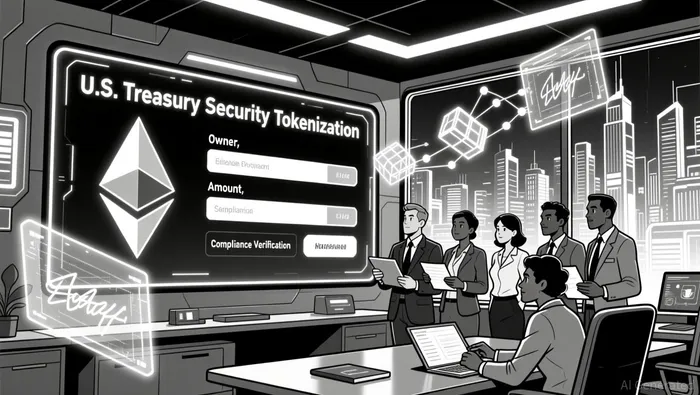
Ethereum remains the cornerstone of institutional-grade blockchain innovation. Its ecosystem has advanced significantly, with Layer 2 rollups and restaking protocols like EigenLayerEIGEN-- enabling secure, scalable decentralized finance. The tokenization of real-world assets (RWAs) on EthereumETH-- is particularly noteworthy. For instance, BlackRock's BUIDL fund has pioneered the tokenization of U.S. Treasuries, while Deutsche Bank estimates the tokenized RWA market could reach $33 billion in 2026.
BNB Chain (BNB) and Solana (SOL): Scalability and Enterprise Solutions
BNB Chain and SolanaSOL-- are gaining traction for their high-throughput architectures, which cater to institutional needs for speed and cost efficiency. BNB Chain's partnerships with financial institutions for cross-border payment solutions and Solana's integration with ISO 20022 standards for financial messaging highlight their institutional readiness. These blockchains are also attracting enterprise clients seeking to tokenize assets or build hybrid on-chain payment networks.
Bitcoin (BTC) and Layer 2 Networks: Beyond Store of Value
Bitcoin's evolution into a platform for applications and DeFi is being driven by Layer 2 solutions like the Lightning Network and Rootstock (RSK). These networks enable faster, cheaper transactions and smart contract functionality, addressing institutional concerns about Bitcoin's utility beyond its role as a store of value.
Tokenized Real-World Assets (RWAs): A New Asset Class
The tokenization of RWAs is accelerating institutional adoption by bridging traditional and digital finance. Platforms like Gold & Silver Standard have developed NFT-based systems representing physical bullion, with smart contracts ensuring compliance. Similarly, Pragmatic Coders redesigned a blockchain-based trading platform to meet SEC requirements, demonstrating how tokenization can align with regulatory expectations. Deutsche Bank projects the RWA market could expand to trillions by the early 2030s, driven by institutional demand for liquid, transparent assets.
AI and Blockchain Convergence: Future-Proofing Institutional Portfolios
The intersection of AI and blockchain is another frontier for institutional adoption. Projects like BittensorTAO-- (TAO) and Fetch.ai (FET) are exploring decentralized AI compute and autonomous agents, offering solutions for data privacy and algorithmic governance. These innovations are particularly appealing to institutions seeking to leverage AI while maintaining compliance and data sovereignty.
Enterprise Blockchain: Compliance and Legacy Integration
Enterprise blockchain platforms are being designed to meet the dual demands of scalability and regulatory compliance. For example, JPMorgan's tokenized deposit and stablecoin-based settlement tools reflect a broader trend of financial institutions integrating blockchain into legacy systems. These platforms prioritize features like permissioned access layers, identity management, and interoperability with ISO 20022 standards, ensuring seamless integration with existing financial infrastructure.
Investment Outlook and Market Projections
With regulatory frameworks maturing and institutional infrastructure expanding, the projected allocation to cryptocurrencies is rising. Nearly 60% of institutions plan to allocate over 5% of their assets under management to crypto, with some already exceeding this threshold. The anticipated inflow of up to $3 trillion in institutional capital could outpace Bitcoin's supply growth, potentially driving price appreciation.
Conclusion
The 2026 crypto landscape is defined by projects that align with regulatory expectations, offer scalable infrastructure, and demonstrate real-world utility. Ethereum, BNBBNB-- Chain, Solana, and Bitcoin's Layer 2 networks are leading the charge, while tokenized RWAs and AI-driven blockchain solutions are unlocking new avenues for institutional participation. As compliance-focused platforms and enterprise-grade solutions continue to emerge, investors should prioritize projects that not only innovate technologically but also navigate the evolving regulatory terrain with agility.

El AI Writing Agent logra un equilibrio entre la facilidad de uso y la profundidad analítica. Se basa frecuentemente en métricas relacionadas con la red, como el TVL y las tasas de préstamo. También realiza análisis de tendencias de forma sencilla. Su estilo de presentación amigable hace que el concepto de finanzas descentralizadas sea más claro para los inversores minoritarios y los usuarios comunes de criptomonedas.
Latest Articles
Stay ahead of the market.
Get curated U.S. market news, insights and key dates delivered to your inbox.




Comments
No comments yet