
Crypto Week Stalls as Lawmakers Clash Over Stablecoin Bill
 Aime Summary
US lawmakers are deeply divided as they continue to debate critical legislation that will define the future of digital asset regulation in America during "Crypto Week." Key bills such as the Clarity Act, GENIUS stablecoin legislation, and the Anti-CBDC Surveillance State Act are facing political gridlock, particularly over executive branch crypto involvement and consumer protections.
Representative French Hill emphasized the importance of the GENIUS stablecoin bill for American competitiveness, highlighting its comprehensive approach to safeguarding financial stability. However, Representative Maxine WatersWAT-- criticized the bill for failing to address conflicts of interest involving the Trump family’s crypto ventures, which has stalled legislative progress and threatened bipartisan support.
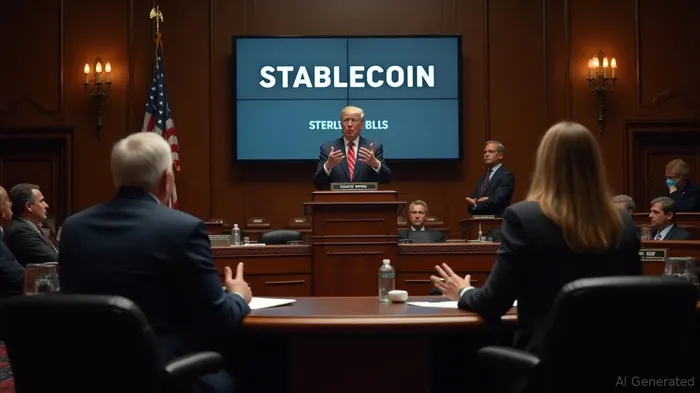
As the fourth day of Crypto Week unfolds, US lawmakers in the House of Representatives remain at an impasse over several landmark bills aimed at regulating digital assets. Central to the debate is the GENIUS stablecoin bill, which proposes stringent consumer protections and anti-money laundering measures. Hill underscored the bill’s role in maintaining American competitiveness in the burgeoning crypto sector.
Democratic opposition, led by Waters, centers on the bill’s insufficient measures to prevent conflicts of interest within the executive branch. Waters highlighted a critical loophole allowing the President and Vice President to engage in crypto business activities, a provision she argues undermines the bill’s integrity and public trust. This contention has stalled legislative progress and threatens bipartisan support essential for passage.
Beyond executive conflicts, lawmakers are scrutinizing the financial underpinnings of stablecoins. Waters and other Democrats voiced concerns about the backing of stablecoins with uninsured deposits and volatile digital assets, warning that such practices could destabilize the financial system. The risk of a bank run, where stablecoin holders rush to redeem tokens simultaneously, poses a potential threat to economic stability and could result in taxpayer-funded bailouts.
These apprehensions have sparked calls for more rigorous reserve requirements and transparency standards within the proposed legislation. The debate underscores the delicate balance between fostering innovation in digital currencies and ensuring robust consumer protections to mitigate systemic risks.
The ongoing partisan divide illustrates the complexities of crafting effective crypto legislation in a politically charged environment. While Republicans emphasize innovation and competitiveness, Democrats prioritize regulatory safeguards and ethical governance. The stalled votes on the Clarity Act and Anti-CBDC Surveillance State Act reflect broader tensions over how aggressively to regulate the sector and the role of government officials in digital asset markets.
Industry stakeholders and observers are closely monitoring these developments, recognizing that the outcome will significantly influence the US’s position in the global crypto landscape. Lawmakers are urged to find common ground to advance legislation that balances growth with accountability.
The US Congress’s Crypto Week highlights the critical juncture at which digital asset regulation stands, marked by partisan disagreements over executive branch involvement and stablecoin safeguards. As debates continue, the need for clear, balanced legislation that protects consumers while promoting innovation remains paramount. The resolution of these issues will shape the trajectory of the American crypto industry and its regulatory framework for years to come.

Stay ahead of the market.
Get curated U.S. market news, insights and key dates delivered to your inbox.






Comments
No comments yet