
Crypto Week Kicks Off With Congressional Divide Over Regulation
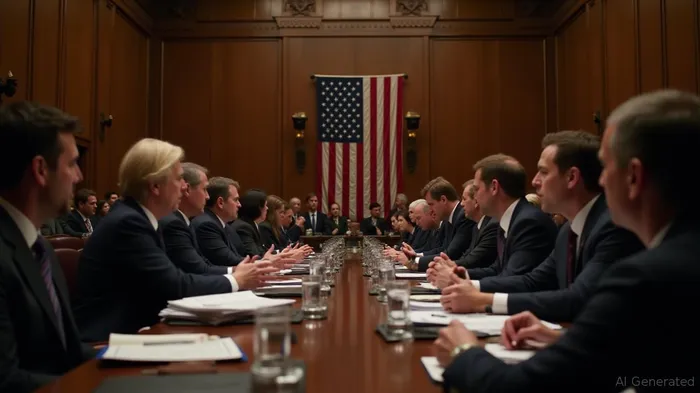
Washington D.C. is gearing up for a pivotal moment in the digital asset world, dubbed “Crypto Week.” This week is set to highlight the deep-seated congressional divide over cryptocurrency regulation, with Republicans pushing forward three significant bills aimed at shaping the future of digital asset regulation. The bills include the Payment Stablecoin Clarity Act, the Financial Innovation and Technology for the 21st Century Act, and the Anti-CBDC Surveillance State Act. These legislative efforts reflect a Republican desire to foster innovation and provide a clear path for the crypto industry to grow within defined boundaries, believing that a proactive approach is better than reactive enforcement.
Democrats, however, have voiced strong opposition to these bills. Influential figures like House Financial Services Committee Ranking Member Maxine Waters and Digital Assets Subcommittee Ranking Member Stephen Lynch have expressed concerns about significant gaps in consumer protection and national security safeguards within the proposed bills. Waters has criticized the bills for potentially aligning Congress with what she described as a “crypto scam linked to President Donald Trump,” emphasizing the need for robust consumer safeguards to prevent financial harm. Lynch echoed these sentiments, highlighting worries about the “potential for abuse and oversight gaps” in the rapidly evolving crypto space. Democrats generally advocate for a more cautious approach, emphasizing the need for comprehensive regulatory oversight to mitigate risks such as money laundering, terrorist financing, and market manipulation.
The core of this congressional crypto divide lies in a fundamental disagreement over the balance between fostering innovation and ensuring robust consumer and national security protections. Republicans often prioritize the former, arguing that over-regulation stifles growth, while Democrats lean towards the latter, emphasizing the need to prevent harm before innovation runs wild.
The debate over crypto market structure is perhaps the most critical aspect of this legislative push. Currently, the lack of clear definitions for digital assets has led to a regulatory “wild west,” where the SEC and CFTC often battle over jurisdiction. This ambiguity creates significant challenges for crypto businesses operating in the US, leading to uncertainty for innovation, investor confusion, and a competitive disadvantage. The proposed legislation aims to provide this clarity, but the partisan divide makes its passage uncertain. A clear market structure could unlock significant investment and innovation, positioning the US as a leader in the digital economy. Conversely, continued stalemate could further entrench the current state of regulatory limbo, to the detriment of the industry.
Payment stablecoins, designed to maintain a stable value relative to a fiat currency like the U.S. dollar, are seen by many as a crucial bridge between traditional finance and the crypto world. They facilitate fast, low-cost transactions and are integral to the functioning of decentralized finance (DeFi). Republicans, through the GENIUS Act, seek to establish a framework that would allow these assets to flourish under clear rules, potentially enabling their widespread adoption for everyday payments. However, the Democratic opposition often raises concerns about the stability of stablecoins, especially after events like the Terra/Luna collapse, and their potential use in illicit finance. They advocate for stringent reserve requirements, robust auditing, and strong anti-money laundering (AML) and know-your-customer (KYC) provisions to ensure that stablecoins do not pose systemic risks or become tools for criminals.
The “Anti-CBDC Surveillance State Act” highlights a significant philosophical divergence regarding the role of government in financial transactions. While some see a Central Bank Digital Currency (CBDC) as a natural evolution of money, offering benefits like increased efficiency, financial inclusion, and potentially lower transaction costs, others view it with extreme skepticism. Republican concerns primarily revolve around privacy, government control, and the disintermediation of banks. This bill reflects a strong desire to protect financial privacy and limit government overreach, particularly in an era where digital footprints are constantly expanding. Democrats, while often more open to exploring CBDCs, also acknowledge the need for careful consideration of privacy and security implications, though their approach might be less outright prohibitive.
For anyone involved in or interested in cryptocurrencies, “Crypto Week” is more than just political theater; it’s a critical indicator of the direction of US digital asset policy. The outcomes, or even the debates themselves, will influence the investment landscape, business operations, consumer protection, and global competitiveness. While the immediate passage of these bills is far from guaranteed given the stark congressional crypto divide, their advancement signifies a growing recognition within Congress that the crypto industry cannot be ignored. The discussions will lay the groundwork for future legislation, shaping how digital assets are regulated, integrated, and perceived in the United States.
The upcoming “Crypto Week” will be a litmus test for the possibility of bipartisan cooperation on digital asset regulation. Given the current political climate and the deep ideological differences highlighted by the debate over US crypto bills, a quick resolution seems unlikely. However, the very act of bringing these bills to the floor forces a conversation that is long overdue. The industry, investors, and consumers alike will be watching closely. Will lawmakers find common ground to create a balanced framework that fosters innovation while protecting consumers? Or will the partisan divide continue to impede progress, leaving the US crypto landscape in a state of prolonged uncertainty? The stakes are incredibly high, and the outcome will undoubtedly shape the future of digital finance in America.

Stay ahead of the market.
Get curated U.S. market news, insights and key dates delivered to your inbox.






Comments
No comments yet