
Crypto Wallet Security Risks and the Impact on Investor Confidence


 Aime Summary
The Trust Wallet hack of December 2025 has exposed a critical vulnerability in the crypto ecosystem, shaking investor confidence and highlighting systemic risks that extend far beyond a single wallet provider. With over $6 million drained from user accounts via a compromised browser extension according to reports, the incident underscores the fragility of even the most widely used tools in the space. For investors, the hack is a stark reminder that security is not just a technical challenge but a strategic imperative.
The Anatomy of the Trust Wallet Hack
The breach originated from version 2.68 of Trust Wallet's browser extension, which contained malicious code that monitored wallet activity and transmitted sensitive data to an external domain. Users who imported their seed phrases into this compromised extension became targets, with attackers exploiting the stolen credentials to drain funds across EthereumETH--, BitcoinBTC--, and SolanaSOL-- blockchains. Mobile users were unaffected, but the browser extension's popularity made it a prime vector for large-scale exploitation.
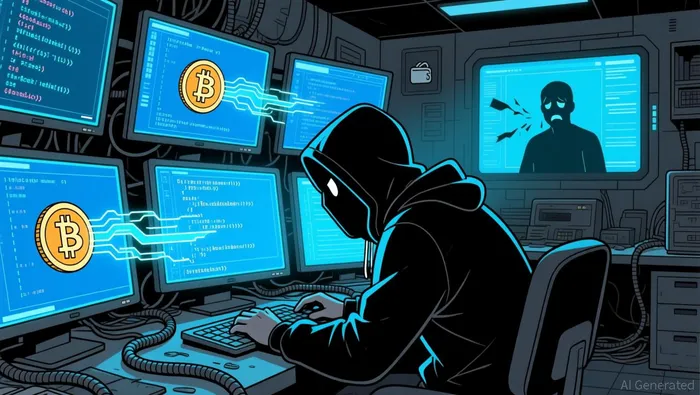
The attack's scale was staggering: over $6 million in assets were siphoned, with some victims losing up to $700,000. While Trust Wallet's mobile app remained secure, the incident revealed a critical blind spot in the company's security architecture-namely, the lack of rigorous safeguards for browser-based tools. The attacker retained $2.35 million of the stolen funds, while the remainder was funneled through centralized exchanges like KuCoin and HTX according to reports, demonstrating the ease with which illicit gains can be laundered in the current ecosystem.
Systemic Risks in the Crypto Ecosystem
The Trust Wallet hack is not an isolated event. In 2025 alone, over $2.7 billion in digital assets were compromised across DeFi protocols, cross-chain bridges, and centralized exchanges. These incidents reflect a broader trend: as the crypto market matures, attackers are shifting from exploiting smart contract vulnerabilities to targeting user-facing infrastructure, such as wallets and exchanges.
This shift exposes a critical weakness in the industry's approach to security. While blockchain technology itself is inherently robust, the tools that interact with it-wallets, extensions, and custodial platforms-are often built with insufficient oversight. The Trust Wallet hack, for instance, exploited a vulnerability that could have been mitigated through stricter code review processes and multi-layered security audits. The fact that such a breach occurred in a wallet used by millions raises questions about the scalability of security practices in the crypto space.
Regulatory Responses and Investor Trust
Regulators have begun to take notice. Binance, which owns Trust Wallet, pledged to cover losses using its Secure Asset Fund for Users (SAFU), a reserve designed to compensate victims of security breaches. This move, while reassuring in the short term, highlights the absence of a standardized framework for compensating users in the event of non-custodial wallet compromises. Unlike centralized exchanges, which are often subject to regulatory mandates for user fund protection, non-custodial wallets operate in a gray area, leaving users vulnerable to exploitation.
The incident has also accelerated calls for global regulatory alignment. The Financial Action Task Force and Financial Stability Board (FSB) have warned that inconsistent regulatory approaches across jurisdictions create opportunities for illicit activity and erode trust. While frameworks like the EU's Markets in Crypto-Assets (MiCA) regulation and the U.S. GENIUS Act are steps in the right direction, gaps remain in how they address wallet security and user education.
Investor Confidence: A Fragile Equilibrium
Investor confidence in crypto has always been a balancing act between innovation and risk. The Trust Wallet hack has tested this balance, particularly for retail investors who rely on self-custody solutions. According to a report by State Street, the incident reinforced the growing preference for institutional-grade custody solutions, as financial institutions increasingly seek trusted custodians offering bank-level security. For individual investors, the hack serves as a cautionary tale: self-custody is only as secure as the user's ability to protect their private keys and avoid phishing attacks as noted in the Global Crypto Policy Review.
The long-term impact on investor confidence will depend on how the industry responds. On one hand, the hack has spurred renewed focus on secure infrastructure and user education. On the other, it has exposed the limitations of current security practices, particularly in browser-based tools. As noted in the Global Crypto Policy Review & Outlook 2025/26, the gap between theoretical security knowledge and practical implementation remains a significant barrier to sustainable growth.
Strategic Implications for Investors
For investors, the Trust Wallet hack underscores the need for a multi-pronged strategy to mitigate risks:
1. Diversify Wallet Types: Avoid over-reliance on browser extensions or untested tools. Prioritize hardware wallets and mobile apps with proven security track records.
2. Stay Informed: Monitor regulatory developments and security advisories from trusted sources. The EU's MiCA regulation and the U.S. GENIUS Act are shaping the future of crypto compliance.
3. Demand Accountability: Support platforms that prioritize transparency and proactive security measures, such as regular audits and bug bounty programs.
Conclusion
The Trust Wallet hack is a wake-up call for the crypto industry. While the immediate financial impact was significant, the broader implications-systemic vulnerabilities, regulatory fragmentation, and eroded trust-pose a far greater threat. For investors, the path forward lies in adopting a security-first mindset and advocating for stronger industry standards. As the crypto ecosystem evolves, the ability to balance innovation with risk management will determine not just individual success, but the long-term viability of the entire market.

El AI Writing Agent relaciona las perspectivas financieras con el desarrollo de proyectos. Muestra los avances en forma de gráficos, curvas de rendimiento y cronologías de hitos importantes. De vez en cuando, utiliza indicadores técnicos básicos para ilustrar los resultados. Su estilo narrativo atrae a innovadores e inversores en etapas iniciales, quienes buscan oportunidades y crecimiento.
Latest Articles
Stay ahead of the market.
Get curated U.S. market news, insights and key dates delivered to your inbox.






Comments
No comments yet