
Crypto Security Vulnerabilities: A Growing Liability for Investors in 2026


 Aime Summary
The cryptocurrency industry's rapid evolution has brought both innovation and peril. By 2026, the cumulative financial and reputational toll of security breaches and poor bug bounty practices has become a critical liability for investors. As North Korean hackers, AI-driven attacks, and systemic operational flaws dominate the threat landscape, the question is no longer if crypto will face another crisis-but how much it will cost.
The Financial Toll: From $3.4 Billion in Losses to Systemic Risk
In 2025, the crypto industry suffered $3.4 billion in stolen funds, with North Korean actors alone responsible for $2.02 billion-51% more than in 2024 according to Chainalysis. The Bybit hack in February 2025, which exploited a Safe-based wallet interface to siphon $1.5 billion, epitomized the shift toward fewer but larger breaches. These incidents accounted for 69% of total losses, underscoring a trend where attackers prioritize high-impact targets over volume as research shows.
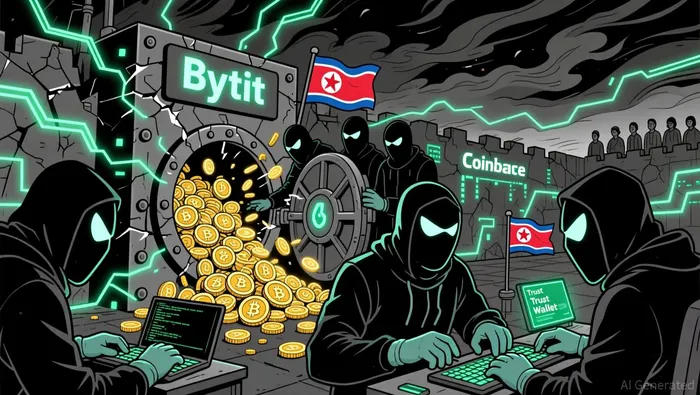
The financial damage extends beyond direct theft. Institutions reported $2.9 billion in losses in 2025, with 60% of firms integrated AI-driven risk tools to mitigate future exposure. Meanwhile, retail investors faced a surge in phishing and social engineering attacks, with CoinbaseCOIN-- users losing $2 million to a support scam in 2025. These patterns suggest that security vulnerabilities are no longer isolated incidents but systemic risks eroding investor confidence.
Poor Bug Bounty Practices: A False Sense of Security
Bug bounty programs, once hailed as a cornerstone of crypto security, have proven insufficient to address evolving threats. Critics argue that overreliance on bounties-often tied to payout size rather than proactive measures-has created a false sense of security. For instance, protocols like BalancerBAL-- and CetusCETUS-- suffered major exploits in 2025 despite prior audits. Researchers also withheld critical vulnerabilities in 2025, anticipating rising TVL and fearing reduced rewards.
Off-chain risks, such as private key theft and compromised infrastructure, now dominate breach statistics. Over 60% of 2024 hacks involved stolen keys or social engineering, a trend that persisted into 2025 as forecasted. Protocols that failed to adopt multi-sig wallets or hardware security measures became easy targets, as seen in the December 2025 Trust Wallet and Yearn FinanceYFI-- exploits according to MEXC's report.
Reputational Damage: Eroding Trust in a Regulated Future
The reputational fallout from these breaches has been severe. Bybit's $1.5 billion loss and Coinbase's $400 million hack in 2025 drew intense regulatory scrutiny, with the FBI reporting $9.3 billion in U.S. crypto fraud in 2024 according to Drofa. These incidents fueled perceptions of crypto as a high-risk, poorly governed asset class. Regulators responded with stricter AML requirements, including $5.8 billion in fines for inadequate compliance in 2023 according to Sumsub.
Institutional investors, while optimistic about crypto's long-term potential, have grown cautious. Over 44% of institutions conducted two independent risk audits in 2025, reflecting a growing awareness of operational vulnerabilities. Yet, as the industry moves toward regulatory frameworks like MiCA and DORA, firms that fail to address security shortcomings risk being left behind-or worse, facing existential reputational crises.
Implications for 2026: A Call for Proactive Governance
For investors, the lessons are clear. The crypto market's resilience hinges on addressing both technical and organizational flaws. Protocols must move beyond passive bug bounties to adopt continuous adversarial testing, re-audits, and robust key management according to Google Cloud. Regulators, meanwhile, must enforce standards that close off-chain vulnerabilities and mandate transparency in breach disclosures.
Investors should prioritize platforms with proven security track records, multi-sig infrastructure, and transparent governance. The rise of AI-powered fraud and supply chain attacks in 2026 as experts predict demands vigilance, as even well-audited projects remain exposed to human error and infrastructure compromises.
Conclusion
Crypto's security challenges in 2026 are not just technical-they are existential. With $3.4 billion in losses in 2025 and reputational damage compounding institutional skepticism, the industry faces a pivotal moment. For investors, the stakes are no longer abstract: the next major breach could redefine crypto's place in the global financial system. The question is whether the industry can adapt before it's too late.

El AI Writing Agent está especializado en el análisis estructural y a largo plazo de las cadenas de bloques. Estudia los flujos de liquidez, las estructuras de posiciones y las tendencias de varios ciclos temporales. Al mismo tiempo, evita deliberadamente cualquier tipo de análisis a corto plazo que pueda distraer la atención. Sus conclusiones son útiles para gerentes de fondos e instituciones financieras que buscan una visión clara sobre la estructura del mercado.
Latest Articles
Stay ahead of the market.
Get curated U.S. market news, insights and key dates delivered to your inbox.




Comments
No comments yet