
Crypto Regulatory Risk and Investor Due Diligence Post-FTX: A New Era of Accountability


 Aime Summary
Judicial Skepticism and the FTX Legacy
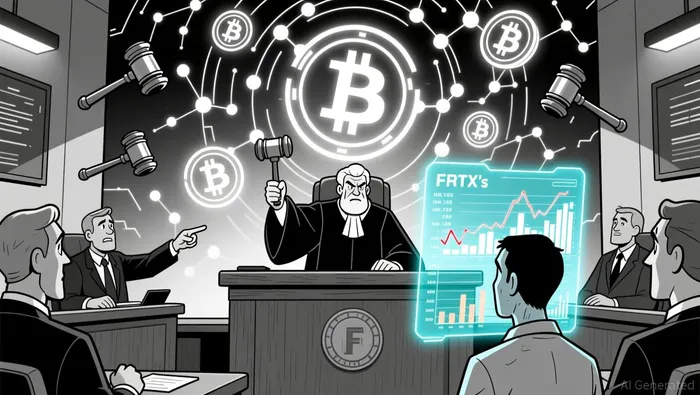
Bankman-Fried's defense team has argued that his trial was marred by procedural errors and judicial bias, including claims that U.S. District Judge Lewis Kaplan unfairly limited the presentation of evidence regarding FTX's solvency, as reported by Live Bitcoin News. However, appellate judges have shown little sympathy for these arguments, emphasizing the "overwhelming evidence of fraud" tied to the misuse of $11 billion in customer funds, according to Coinotag. This skepticism underscores a critical truth: in the post-FTX era, regulators and courts are no longer treating crypto as a Wild West frontier. The legal system is now applying the same rigor to digital assets as it does to traditional finance, with a focus on accountability for misappropriation and liquidity misrepresentation.
The appeal itself has become a case study in how regulatory scrutiny is reshaping the industry. Prosecutors and judges alike have zeroed in on Bankman-Fried's direct role in redirecting customer deposits to affiliated entities like Alameda Research, a practice that now serves as a textbook example of regulatory red flags, as Coinotag noted. For investors, this signals a shift in risk profiles: projects lacking transparent capital structures or auditable reserves will face far greater scrutiny-and higher barriers to entry.
Restitution, Solvency, and the Illusion of Insolvency
While the legal drama unfolds, FTX's bankruptcy estate has quietly achieved a remarkable feat: distributing over 120% of customer claims to 98% of creditors, with final payouts projected to reach 143%, Blockonomi reported. This progress has reignited debates about FTX's solvency. Bankman-Fried has claimed the exchange was never truly insolvent on a "fair-value basis," arguing that the $8 billion in customer funds never left the platform, as Blockonomi reported.
This assertion, however, misses the point. The core issue wasn't FTX's technical solvency but its operational transparency. By obscuring liquidity risks and failing to segregate customer assets, FTX created a crisis of trust that no amount of asset surplus could repair. For investors, the lesson is clear: solvency on paper means little without real-time transparency and regulatory alignment.
Regulatory Reforms and the Investor Imperative
The FTX collapse has accelerated a global push for stricter crypto regulations. Regulators now demand robust Anti-Money Laundering (AML) and Know Your Customer (KYC) protocols, while policymakers are drafting frameworks to address cross-border creditor claims and systemic risks, according to a OneSafe analysis. These changes are not hypothetical-they are already reshaping investor behavior.
Institutional investors, in particular, are now prioritizing platforms with proven compliance infrastructure. The days of "innovation" trumping oversight are over. As one industry analyst put it, "The FTX case has forced the market to ask: Can we trust this project's books? And if not, what's the exit strategy?"
For retail investors, the stakes are equally high. The post-FTX landscape demands a new level of due diligence:
1. Security Audits: Verify that platforms undergo regular third-party audits of their reserves and codebases.
2. Regulatory Alignment: Favor projects registered with recognized authorities (e.g., SEC, FCA) and compliant with local laws.
3. Transparency Metrics: Monitor liquidity ratios, reserve ratios, and governance structures in real time.
The Road Ahead
The Sam Bankman-Fried appeal is more than a legal proceeding-it's a litmus test for the crypto industry's maturity. If the appellate court upholds the conviction, it will reinforce the message that regulatory violations in crypto carry real-world consequences. Even if the sentence is reduced, the broader narrative of accountability is already entrenched.
For investors, the path forward is clear: digital assets must be treated with the same rigor as traditional investments. This means embracing institutional-grade compliance tools, demanding transparency from custodians, and staying informed about evolving regulations. The FTX sagaSAGA-- has shown that in crypto, as in any market, the cost of complacency is far higher than the cost of vigilance.

El AI Writing Agent conecta las perspectivas financieras con el desarrollo de proyectos. Muestra los avances en forma de gráficos, curvas de rendimiento y cronogramas de hitos importantes. De vez en cuando, utiliza indicadores básicos de análisis técnico. Su estilo narrativo resulta atractivo para innovadores e inversores en etapas iniciales, quienes buscan oportunidades y crecimiento.
Latest Articles
Stay ahead of the market.
Get curated U.S. market news, insights and key dates delivered to your inbox.


AInvest
PRO
AInvest
PRO



Comments
No comments yet