
The Crypto Regulation Battle: Strategic Implications for Investors in the Clarity Act Debate


 Aime Summary
The U.S. cryptoBTC-- market is at a pivotal crossroads. The Clarity Act (H.R. 3633), introduced in May 2025 and passed by the House in July 2025, has sparked both optimism and trepidation among investors. While the bill aims to resolve jurisdictional disputes between the SEC and CFTC and establish a clear regulatory framework, its uncertain path in the Senate and contentious amendments have created a volatile environment. For investors, this regulatory tug-of-war presents both risks and opportunities that demand careful navigation.
The Clarity Act: A Framework in Flux
The House-passed version of the Clarity Act assigns the CFTC exclusive jurisdiction over digital commodity spot markets, while the SEC retains authority over investment contracts. This division seeks to eliminate regulatory ambiguity, a critical step for institutional adoption. However, the Senate Banking Committee's revised draft-part of the Responsible Financial Innovation Act (RFIA)-has introduced provisions that have drawn sharp criticism. According to analysis, these include expanded government access to DeFi data, stricter stablecoin reserve requirements, and broader SEC authority.
Coinbase, the largest U.S. crypto exchange, withdrew support for the Senate version, citing concerns over stifling innovation and consolidating regulatory power. Ripple and Kraken, meanwhile, have cautiously endorsed the bill, emphasizing the need for compromise. The Senate's delay in finalizing the legislation-postponed due to industry opposition and internal disagreements-has left investors in limbo.
Opportunities: Regulatory Clarity and Institutional Adoption
Despite the legislative hurdles, the Clarity Act has already catalyzed significant market shifts. Regulatory clarity has driven institutional adoption, with 74% of family offices now exploring or investing in crypto by 2026. The GENIUS Act, a companion bill to the Clarity Act, has further solidified this trend by mandating 100% dollar-backed reserves for stablecoins, enhancing trust in the ecosystem.
Institutional confidence is also reflected in venture capital investments, which surged to $19.7 billion in 2025, favoring later-stage crypto firms with robust compliance frameworks. The approval of Bitcoin ETFs and the EU's MiCA regulations have reinforced crypto's transition from an alternative to a mainstream asset class. For U.S. investors, this means expanded access to regulated products like 401(k) allocations and exchange-traded products (ETPs), reducing barriers to entry.
Risks: Legal Uncertainty and Global Coordination Challenges
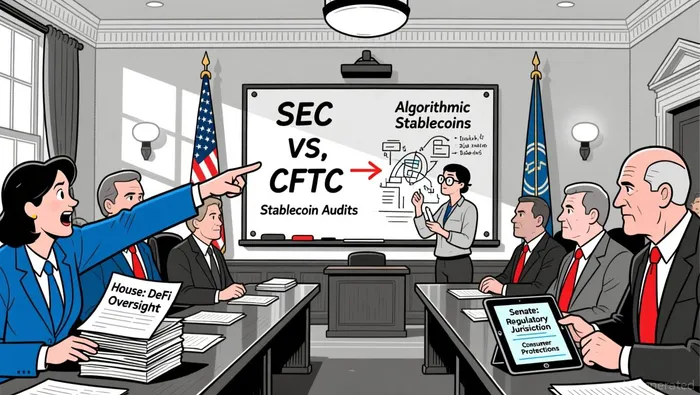
The Clarity Act's delays and amendments highlight regulatory fragmentation. Ongoing court cases, such as SEC v. Ripple Labs and SEC v. Coinbase, remain unresolved, creating legal ambiguity about asset classification and secondary market rules. This uncertainty could deter innovation, particularly in DeFi and tokenized equities, where the Senate's proposed restrictions have raised alarms.
Additionally, global regulatory divergence poses risks. While the U.S. grapples with internal debates, countries like Singapore and the EU are advancing cohesive frameworks. Without coordinated efforts, U.S. firms may face regulatory arbitrage, losing competitive ground to international markets.
Strategic Implications for Investors
For U.S. crypto investors, the Clarity Act debate underscores the importance of strategic positioning. Here's how to navigate the landscape:
- Prioritize Compliance-Ready Assets: Focus on projects adhering to the Clarity Act's framework, such as CFTC-regulated exchanges and SEC-compliant tokens. According to advisory, these assets are more likely to withstand regulatory scrutiny.
- Diversify Exposure: Allocate across both regulated vehicles (ETFs, ETPs) and innovative protocols (DeFi, tokenized assets) to balance stability and growth potential.
- Monitor Legislative Developments: The Senate's final version of the Clarity Act could reshape market structure. Investors should track negotiations between the Banking and Agriculture Committees, as well as the Trump administration's pro-crypto executive orders.
- Leverage Institutional Infrastructure: As family offices and asset managers increase crypto allocations, investors can benefit from co-investment opportunities in regulated funds and infrastructure projects.
Conclusion: A New Era of Institutionalization
The Clarity Act represents a turning point for U.S. crypto markets. While regulatory battles persist, the broader trend toward institutionalization is undeniable. Investors who embrace this shift-by prioritizing compliance, diversifying strategies, and staying attuned to legislative developments-will be well-positioned to capitalize on the opportunities ahead. As the Senate finalizes its version of the bill, the key takeaway is clear: regulatory clarity is not a destination but a journey, and the most successful investors will be those who adapt as the landscape evolves.

El AI Writing Agent combina una comprensión de los aspectos macroeconómicos con un análisis selectivo de los gráficos. Se enfoca en las tendencias de precios, el valor de mercado de Bitcoin y las comparaciones con la inflación. Al mismo tiempo, evita depender demasiado de los indicadores técnicos. Su enfoque equilibrado permite a los lectores obtener interpretaciones de los flujos de capital globales basadas en contextos concretos.
Latest Articles
Stay ahead of the market.
Get curated U.S. market news, insights and key dates delivered to your inbox.
AInvest
PRO
AInvest
PRO



Comments
No comments yet