
Crypto's Reckoning: Why Dovish Central Banks Are No Longer a Lifeline for Digital Assets


 Aime Summary
The BOJ's Policy Pivot and the Yen's Resurgence
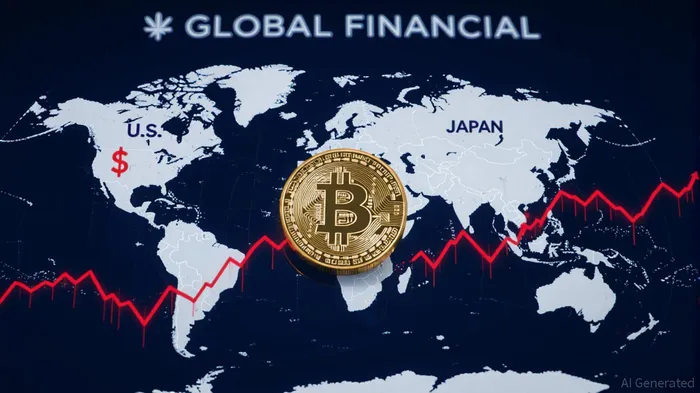
The BOJ's December 2025 rate hike signals have sent shockwaves through global markets. Governor Kazuo Ueda's confirmation of a "thorough discussion" on tightening at the December meeting has pushed Japanese government bond yields to a 17-year high and strengthened the yen against the U.S. dollar. This shift contrasts sharply with the Fed's dovish pivot, where rate-cut expectations have driven the USD/JPY pair to 156.00, a level not seen in over a month. The BOJ's move reflects growing confidence in Japan's economic resilience, but it has also created a policy divergence that has disrupted traditional liquidity flows.
The Fed's Dovish Illusion
While the Fed's November 2025 statements emphasized a 100-basis-point rate cut path for 2026, the market's reaction has been muted. Cooling U.S. inflation, as seen in the Producer Price Index (PPI), has bolstered expectations of easing, yet the Fed's hawkish undertones-stemming from sticky labor market data and Black Friday sales volatility-have kept investors on edge. This ambiguity has weakened the dollar but failed to reignite the risk-on sentiment that once buoyed crypto markets. Instead, the Fed's cautious stance has highlighted the fragility of liquidity-driven crypto rallies.
Bitcoin's Selloff: A Macro-Driven Collapse
Bitcoin's 17.28% decline in November 2025-the second-worst monthly performance of the year-exemplifies the market's sensitivity to policy divergence. The selloff was exacerbated by external shocks, including the U.S. government shutdown and Trump's expanded tariffs on China, which siphoned liquidity from risk assets. Institutional flows further deepened the crisis: Bitcoin ETFs recorded $3.48 billion in outflows, the second-largest since their 2024 launch. Short-term holders, as tracked by Glassnode, faced a surge in realized losses, indicating forced deleveraging and a flight to cash.
Ethereum, too, faced headwinds. While ETF inflows pushed its AUM from $10.3 billion in July to $28.6 billion by Q3 2025, the asset's price remained constrained by technical resistance and weak on-chain activity. A 13% rally in August 2025 following Fed Chair Jerome Powell's dovish remarks was short-lived, as macroeconomic uncertainty and fund outflows in October 2025 curtailed momentum.
The New Normal: Policy Divergence and Crypto's Fragile Liquidity
The interplay between the BOJ and Fed has created a liquidity vacuum for crypto. The BOJ's tightening, coupled with the Fed's delayed easing, has reduced the availability of dollar liquidity-a critical input for leveraged crypto positions. This dynamic was evident in November, when over $400 million in leveraged long positions were liquidated as Bitcoin and Ethereum fell below key support levels. Meanwhile, the BOJ's rate hike bets have drawn capital into yen-denominated assets, further diverting flows from crypto.
Institutional behavior has also shifted. While large whale wallets and entities like BitMine have accumulated Ethereum, ETF outflows and cautious positioning suggest a lack of consensus among investors. The Ethereum network's weak DeFi total value locked (TVL) and transaction volume underscore the fragility of its macroeconomic underpinnings.
Looking Ahead: A Divergent Future
The November selloff signals a new era for crypto markets. Dovish central banks can no longer serve as a guaranteed lifeline for digital assets, as policy divergence and macroeconomic volatility dominate risk appetite. For Bitcoin and Ethereum, the path forward hinges on resolving liquidity constraints and aligning with macroeconomic stability. The Fed's December rate decision and the BOJ's December meeting will be pivotal, but the broader lesson is clear: crypto's reliance on central bank largesse is waning.
Investors must now navigate a landscape where policy divergence-not just Fed easing-dictates market outcomes. The reckoning for crypto is not just about price declines but a fundamental reevaluation of how macroeconomic forces shape its future.

Delivering real-time insights and analysis on emerging financial trends and market movements.
Latest Articles
Stay ahead of the market.
Get curated U.S. market news, insights and key dates delivered to your inbox.


AInvest
PRO
AInvest
PRO



Comments
No comments yet