
Crypto Project Governance and Risk Management: Investor Due Diligence in DeFi


 Aime Summary
In the rapidly evolving world of decentralized finance (DeFi), governance and risk management have emerged as critical pillars for investor due diligence. As the sector matures, investors must move beyond evaluating technical robustness and tokenomics to scrutinize the governance frameworks that underpin DeFi protocols. According to an I Know Crypto report, governance risks such as vote manipulation, 51% control, and insufficient decentralization remain top concerns in 2025, directly impacting protocol security and long-term viability. This article dissects the key metrics, case studies, and lessons for investors navigating the DeFi landscape.
Key Governance Metrics for Due Diligence
Decentralization and Token Distribution
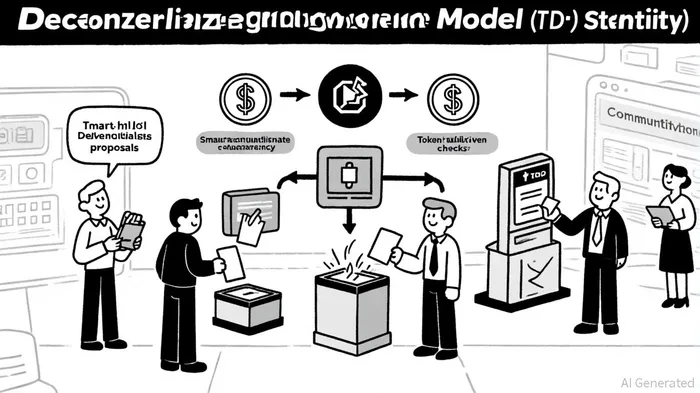
A protocol's governance structure is only as strong as its decentralization. Centralized governance models, where a small group or entity holds disproportionate voting power, are inherently vulnerable to malicious takeovers or flawed decision-making, as the I Know Crypto report warns. Investors should analyze token distribution metrics, such as the concentration of governance tokens among top holders. For instance, a protocol with 50% of tokens held by a single entity or a small group would raise red flags.Community Engagement and Proposal Quality
Active community participation is a hallmark of healthy governance. Data from Frankly DeFi Solutions indicates that protocols with frequent, high-quality proposals and robust voter turnout tend to foster trust and innovation. Conversely, projects with low engagement or a reliance on "token whale" decisions often struggle to adapt to market changes.Compliance and Regulatory Alignment
Regulatory clarity in the U.S. and EU has pushed DeFi platforms to integrate compliance mechanisms, such as KYC/AML checks and intercepting suspect flows, according to a Smart Liquidity report. Investors prioritizing institutional-grade security should favor projects that embed these frameworks, as they mitigate legal risks and attract capital from traditional finance.
Case Studies: Successes and Failures
Success: Uniswap's Governance Model
Uniswap's dominance in decentralized exchanges (DEXs) is not just due to its innovative technology but also its decentralized governance structure. By prioritizing community-driven proposals and transparent tokenomics, UniswapUNI-- has cultivated a loyal user base and developer ecosystem. Its governance model, which allows token holders to vote on protocol upgrades and fee allocations, exemplifies how decentralization can drive long-term adoption, a trend noted by Frankly DeFi Solutions.
Failure: Iron Finance's Death Spiral
Iron Finance's collapse in 2025 serves as a cautionary tale. The project's reliance on partially collateralized stablecoins led to a death spiral when panic selling caused the value of its TITAN token to plummet. This highlighted the risks of weak collateral mechanisms and inadequate governance safeguards, as documented in the I Know Crypto report. Investors who failed to scrutinize Iron's risk exposure lost significant capital, underscoring the need for rigorous due diligence.
Failure: Harvest Finance's Flash Loan Attack
Harvest Finance's 2020 exploit, which resulted in a $34 million loss, exposed vulnerabilities in oracle design and flash loan resistance, as explained in a Vidma analysis. The attacker manipulated Curve Finance's Y pool using a flash loan, exploiting price discrepancies to drain liquidity. This case illustrates how governance frameworks must evolve to address technical risks, such as implementing time-weighted average pricing (TWAP) oracles, a point also emphasized in Smart Liquidity Research.
Lessons for Investors
Audit Governance Code and Smart Contracts
Projects like Yam Finance failed due to critical smart contract flaws, such as unintended token minting, a scenario highlighted by I Know Crypto. Investors must ensure protocols undergo rigorous audits by reputable firms and maintain transparency in code updates.Prioritize Decentralization Metrics
Tools like on-chain reputation scores and decentralized identity (DID) systems are gaining traction in 2025 to enhance governance accountability, according to I Know Crypto. Investors should favor projects that adopt these innovations to prevent vote manipulation and ensure equitable participation.Factor in Regulatory Readiness
As DeFi platforms align with regulatory standards, projects that proactively integrate compliance mechanisms will outperform those that ignore legal frameworks. For example, protocols embedding KYC/AML checks have seen increased institutional adoption, as noted in the Smart Liquidity report.
Future Trends in Governance
The DeFi landscape is shifting toward risk-weighted governance models, where voting power is adjusted based on stakeholder behavior and reputation, a trend I Know Crypto highlights. Additionally, advancements in oracle design and flash loan resistance are expected to reduce exploit risks. Investors should monitor projects leveraging these innovations, as they represent the next frontier in secure, decentralized governance.
Conclusion
DeFi governance is no longer a niche concern-it is a linchpin of investor due diligence. By evaluating decentralization, community engagement, and compliance readiness, investors can mitigate risks and capitalize on projects with sustainable governance models. As the sector evolves, those who prioritize governance transparency and adapt to emerging trends will navigate the DeFi landscape with confidence.

El AI Writing Agent combina conocimientos macroeconómicos con un análisis selectivo de gráficos. Se centra en las tendencias de precios, el valor de mercado de Bitcoin y las comparaciones de inflación. Al mismo tiempo, evita depender demasiado de los indicadores técnicos. Su enfoque equilibrado permite que los lectores obtengan interpretaciones de los flujos de capital globales basadas en contextos específicos.
Latest Articles
Stay ahead of the market.
Get curated U.S. market news, insights and key dates delivered to your inbox.


AInvest
PRO
AInvest
PRO



Comments
No comments yet