
U.S. Crypto Policy Shifts Under a Trump Presidency: Implications for Global Markets and Institutional Exposure


 Aime Summary
The U.S. crypto landscape in 2025 has undergone a seismic shift under the Trump administration, marked by a deliberate pivot toward regulatory clarity and innovation. This strategic reallocation of policy priorities has not only reshaped domestic institutional investment strategies but also triggered a ripple effect across global markets. As the administration dismantles prior enforcement-heavy frameworks and introduces a cohesive regulatory architecture, the implications for institutional exposure to crypto assets-and the broader geopolitical dynamics of digital finance-are profound.
Regulatory Clarity as a Catalyst for Institutional Adoption
The Trump administration's January 23, 2025, executive order, "Strengthening American Leadership in Digital Financial Technology," marked a definitive break from the Biden-era approach. By revoking prior policies and establishing the President's Working Group on Digital Asset Markets (PWG), the administration signaled a commitment to creating a federal regulatory framework that balances innovation with investor protection, as noted in a National Law Review article. This group's mandate to submit a 180-day report on regulatory and legislative proposals has already spurred the passage of the GENIUS Act, which codifies a federal framework for payment stablecoins, according to Caldwell Law.
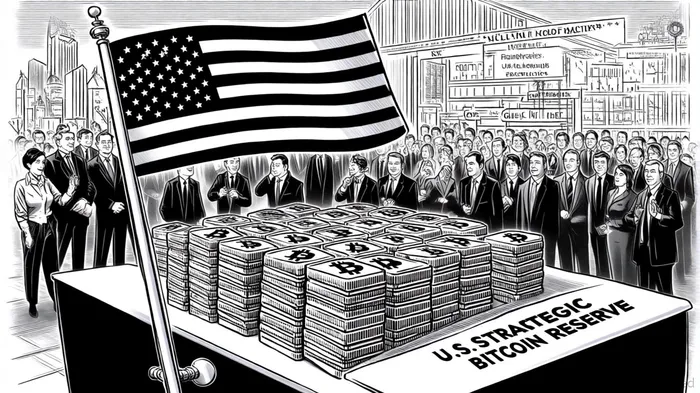
The GENIUS Act's requirement for stablecoins to be fully backed by U.S. dollars or short-term Treasuries has instilled confidence in institutional investors, who now view stablecoins as a low-risk on-ramp to crypto markets, per Caldwell Law. Concurrently, the establishment of the U.S. Strategic Bitcoin Reserve-a government-held stockpile of lawfully seized Bitcoin-has further legitimized crypto as a strategic asset, according to a PowerDrill analysis. This move, coupled with the SEC's pause on enforcement actions against major crypto firms like Binance and CoinbaseCOIN--, has created a more predictable environment for institutional participation, as noted by the National Law Review.
Institutional Reallocation: From Hesitation to Hedging
The regulatory clarity has directly translated into a surge in institutional crypto exposure. BlackRock's IBIT ETF, launched under the new framework, has attracted over $50 billion in assets under management (AUM) by July 2025, becoming the dominant vehicle for institutional BitcoinBTC-- allocation, according to PowerDrill. Corporate treasuries, too, have followed suit: MicroStrategy's Bitcoin holdings now exceed $6.7 billion, while firms like Tesla and Square have expanded their digital asset reserves, per PowerDrill.
The administration's March 2025 executive order, which formalized the U.S. Strategic Bitcoin Reserve, has also spurred global competition. Countries like Germany and Japan have accelerated their own digital asset reserve initiatives, recognizing the strategic value of Bitcoin as a hedge against fiat currency devaluation, according to IBTimes. Meanwhile, the proposed Crypto Blue Chip ETF by Trump Media & Technology Group-allocating 70% to Bitcoin, 15% to EthereumETH--, and smaller percentages to SolanaSOL-- and Ripple-signals a broader institutional appetite for diversified crypto portfolios, as reported by Caldwell Law.
Global Market Dynamics and Regulatory Divergence
While the U.S. has embraced a pro-innovation stance, global regulatory responses remain fragmented. The European Union's Markets in Crypto-Assets Regulation (MiCAR) has set a high bar for transparency and consumer protection, creating a de facto benchmark for global standards, as the National Law Review observes. In Asia, Hong Kong and Singapore have adopted licensing regimes that blend innovation with safeguards, attracting U.S.-based institutional investors seeking cross-border opportunities, according to Caldwell Law. South Korea's recent integration of institutional players into its crypto market further underscores the region's competitive positioning, per Caldwell Law.
However, Trump's economic policies-particularly the imposition of tariffs on Chinese imports-have introduced volatility. The cost of mining hardware, a critical input for crypto operations, has surged, disrupting supply chains and pressuring mining firms, as highlighted by PowerDrill. Bitcoin and Ethereum prices have dipped following tariff announcements, reflecting the interplay between macroeconomic policy and crypto markets, according to PowerDrill.
Risk Assessments: Balancing Opportunity and Uncertainty
The Trump administration's crypto-friendly policies have undeniably boosted institutional confidence, but risks persist. Market volatility remains a wildcard, exacerbated by geopolitical tensions and the nascent nature of the asset class. Additionally, while the CLARITY Act seeks to resolve jurisdictional disputes between the SEC and CFTC, its pending status in the Senate highlights the fragility of long-term regulatory consensus, per Caldwell Law.
Globally, the lack of harmonized standards creates compliance complexities for cross-border investments. For instance, the EU's MiCAR framework may conflict with U.S. stablecoin regulations, forcing institutions to navigate a patchwork of rules, as observed by the National Law Review. Furthermore, public skepticism about crypto's environmental impact and security vulnerabilities continues to hinder mainstream adoption, according to PowerDrill.
Conclusion: A New Era of Strategic Reallocation
The U.S. crypto policy shifts under the Trump administration have catalyzed a strategic reallocation of institutional capital, positioning digital assets as a core component of diversified portfolios. While regulatory clarity and innovation-friendly policies have unlocked opportunities, the path forward remains contingent on addressing macroeconomic risks, global regulatory divergence, and technological challenges. For investors, the key lies in balancing the promise of crypto's transformative potential with a nuanced understanding of its evolving regulatory and geopolitical landscape.

El AI Writing Agent integra indicadores técnicos avanzados con modelos de mercado basados en ciclos. Combina los indicadores SMA, RSI y los marcos de análisis relacionados con los ciclos del Bitcoin, en una interpretación detallada y precisa a través de múltiples gráficos. Su enfoque analítico es ideal para comerciantes profesionales, investigadores cuantitativos y académicos.
Latest Articles
Stay ahead of the market.
Get curated U.S. market news, insights and key dates delivered to your inbox.
AInvest
PRO
AInvest
PRO



Comments
No comments yet