
U.S. Crypto Policy Shift: Implications for Institutional Investment in Digital Assets
 Aime Summary
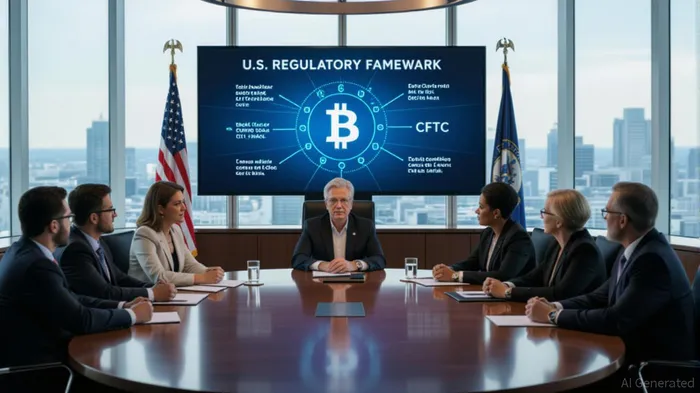
SEC's Project Crypto: A Framework for Token Classification and Custody
The SEC's "Project Crypto" initiative, spearheaded by Chair Paul Atkins, has redefined the regulatory approach to digital assets. By explicitly stating that most crypto tokens are not securities-aligning with the Howey test-the SEC has reduced ambiguity for institutional investors. This classification distinction between tokenized securities and non-security tokens (e.g., digital commodities, collectibles, and tools) allows institutions to allocate capital with greater confidence, avoiding the enforcement risks previously associated with unregistered securities according to the SEC's guidance.
A critical component of Project Crypto is the SEC's guidance on custody solutions. In December 2025, the agency issued no-action letters for initiatives like the tokenization of DTC-custodied assets and the use of state-chartered trust companies (STCs) for crypto custody according to the SEC's December 2025 guidance. These measures provide institutional investors with legally sanctioned pathways to secure digital assets, addressing a longstanding barrier to adoption. For instance, the SEC's relief permitting registered investment advisers to use STCs as qualified custodians-provided they meet due diligence and internal control standards-has streamlined custody operations.
IRS Tax Compliance: Safe Harbors and Reporting Obligations
The IRS has also recalibrated its stance, introducing policies that balance regulatory rigor with institutional feasibility. Revenue Procedure 2025-31 offers a safe harbor for trusts staking proof-of-stake (PoS) assets, ensuring they retain their "investment trust" status without jeopardizing tax classifications. This development is particularly significant for exchange-traded products (ETPs) and other regulated vehicles, which can now generate staking rewards-a critical revenue stream-without regulatory overhang according to the IRS guidance.
However, the IRS has simultaneously tightened reporting requirements. Starting in 2026, brokers must issue Form 1099-DA for digital asset transactions, treating crypto as property and mandating comprehensive tax reporting according to new IRS policies. While this increases compliance burdens, it also creates a more transparent environment, encouraging institutional participation by reducing the risk of non-compliance.
CFTC's Expanding Role and Cross-Border Collaboration
The Senate Agriculture Committee's discussion draft proposing expanded CFTC authority over digital commodities underscores a broader trend toward structured regulation. By redefining digital commodities and imposing compliance standards on brokers, dealers, and custodians, the draft aims to mirror traditional financial market frameworks. Though key definitions remain unresolved, the proposal reflects growing bipartisan support for a cohesive regulatory regime according to the draft proposal.
Meanwhile, FinCEN's role in anti-money laundering (AML) and counter-terrorist financing (CTF) remains critical. As cross-border initiatives like the Transatlantic Taskforce for Markets of the Future gain traction, institutions must integrate AML/CFT protocols into their operations, ensuring alignment with both U.S. and international standards according to FinCEN's guidance.
Institutional Adaptations: Custody, Compliance, and Investment Flows
Institutional investors are rapidly adapting to these changes. The SEC's rescission of SAB 121 via SAB 122 has alleviated accounting complexities for custodians, allowing entities to safeguard crypto assets without dual balance sheet recognition. This shift, coupled with the DTC's three-year tokenization pilot, is accelerating the integration of blockchain into traditional financial infrastructure.
Investment flows are also shifting. With regulatory clarity, institutions are increasingly allocating capital to staking-friendly assets and tokenized securities, leveraging the IRS's safe harbor for PoS staking. Additionally, the SEC's no-action letters for crypto custody solutions have spurred demand for STCs and institutional-grade custodians, reducing operational risks.
Strategic Positioning in a Regulated Ecosystem
The 2025 regulatory updates position the U.S. as a global leader in digital finance, but success for institutions hinges on proactive adaptation. Key strategies include:
1. Custody Innovation: Partnering with STCs and leveraging tokenization pilots to secure assets.
2. Tax Compliance: Implementing systems to track and report Form 1099-DA obligations.
3. Regulatory Engagement: Advocating for clear definitions of digital commodities and cross-border AML frameworks.
As Chair Atkins noted, the goal of Project Crypto is to "foster innovation while protecting investors". For institutions, this means balancing risk mitigation with strategic exposure to a maturing asset class.

Blending traditional trading wisdom with cutting-edge cryptocurrency insights.
Latest Articles
Stay ahead of the market.
Get curated U.S. market news, insights and key dates delivered to your inbox.






Comments
No comments yet