
U.S. Crypto Policy Shift Affects Market Clarity and Oversight Frameworks
 Aime Summary
The U.S. regulatory landscape for financial services is evolving, with recalibrations to Basel III capital requirements and adjustments to GSIB surcharges to reduce capital burdens on large banks according to PwC analysis.
- The Office of the Comptroller of the Currency (OCC) has proposed detailed regulations for payment stablecoins under the GENIUS Act, outlining reserve, liquidity, and reporting standards.
- The CLARITY Act, which passed the House in July 2025, remains stalled in the Senate, aiming to resolve jurisdictional disputes and provide a clear legal framework for digital assets.
How are capital requirements being recalibrated for large banks?
The updated Basel III framework and GSIB surcharge reforms aim to reduce the overall capital burden for major financial institutions by recalibrating risk weights and aligning with systemic risk factors. These changes are designed to create a more level playing field between large and regional banks and shift credit intermediation back into the banking system.
What are the implications of the proposed payment stablecoin regulations under the GENIUS Act?
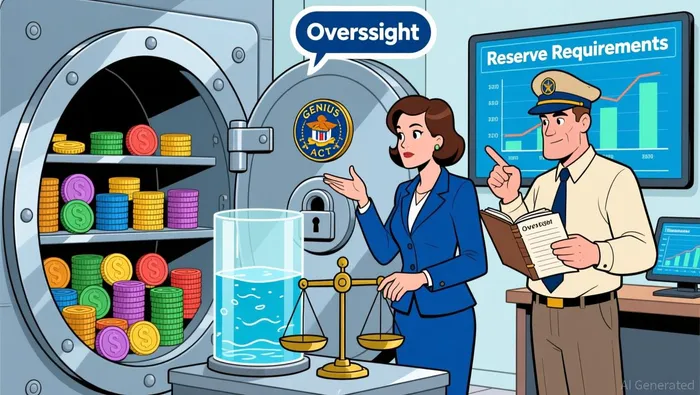
The proposed rules under the GENIUS Act require payment stablecoin issuers (PPSIs) to maintain a one-to-one reserve ratio with outstanding stablecoins and adhere to minimum liquidity and diversification standards. These regulations also outline conditions for transitioning to federal supervision and provide oversight for custodians, aiming to create a more transparent and stable stablecoin market.
What challenges remain for the CLARITY Act and the broader regulatory framework?
The CLARITY Act seeks to classify digital assets into securities and assign regulatory oversight to respective agencies. However, it has stalled in the Senate due to concerns from the banking industry, particularly around stablecoin yield provisions. This regulatory delay creates uncertainty for market participants and may influence the 2026 midterm elections.
What is the role of the SEC-CFTC Memorandum of Understanding (MOU) in crypto regulation?
The SEC and CFTC have signed an MOU to improve coordination in regulating crypto assets and derivatives, aiming to reduce regulatory friction and enhance investor protection. The agreement includes mechanisms for information sharing and joint engagement with market participants, reflecting a shift from competing regulatory approaches to a more harmonized one.
- The new reporting rules for digital assets, including Form 1099-DA, have been criticized for imposing administrative burdens on small retail traders, particularly for low-value transactions like gas fees and stablecoin movements.
- AI-powered models are being explored by the U.S. Department of the Treasury to detect and prevent illicit finance in blockchain and stablecoin transactions, highlighting innovation in regulatory technology.

Blending traditional trading wisdom with cutting-edge cryptocurrency insights.
Latest Articles
Stay ahead of the market.
Get curated U.S. market news, insights and key dates delivered to your inbox.


AInvest
PRO
AInvest
PRO



Comments
No comments yet