
Crypto Payments Go Mainstream: Bybit's Expansion in Peru and the Future of Digital Finance in Latin America
 Aime Summary
The rise of crypto payments in Latin America is no longer a speculative trend but a tangible shift in how individuals and businesses transact. At the forefront of this transformation is Bybit, a global cryptocurrency exchange that has strategically positioned itself to capitalize on the region's surging demand for digital finance solutions. Bybit's 2025 expansion into Peru and its broader Latin American initiatives-spanning fintech partnerships, real-world asset (RWA) integration, and infrastructure investments-underscore its ambition to redefine the financial landscape in one of the world's most dynamic emerging markets.
Bybit's Strategic Expansion in Peru: Bridging Crypto and Traditional Finance
Peru has emerged as a critical battleground for crypto adoption, driven by high mobile wallet penetration and a population seeking alternatives to traditional banking. Bybit's partnership with Yape and Plin, two of Peru's most popular digital wallets, exemplifies its approach to mainstreaming crypto payments. Through this integration, users can now transact using cryptocurrencies like USDTUSDT--, USDCUSDC--, BTC, and ETH, which are automatically converted to Peruvian Sol (PEN) at the point of sale via QR codes or phone-number transfers. This seamless interoperability addresses a key barrier to adoption-liquidity by enabling instant conversion to fiat, thereby reducing volatility risks for everyday users.
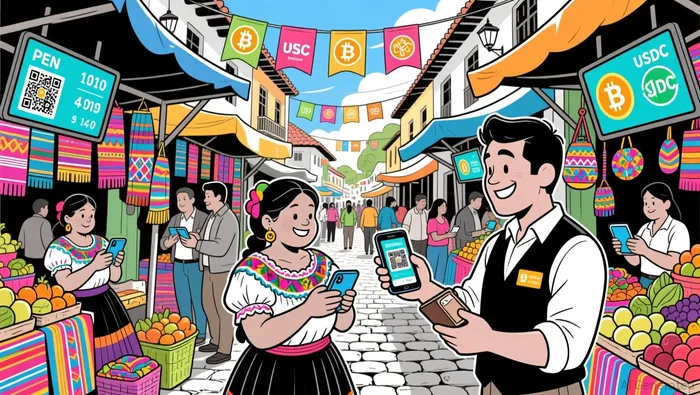
The collaboration also aligns with broader regional trends. Latin America's fintech sector rebounded in 2025, with Q3 investments reaching $572 million and late-stage funding growing by 176% year-over-year. Bybit's move into Peru is not merely a market entry but a calculated effort to leverage existing digital infrastructure. By integrating with Yape and Plin, Bybit taps into a user base already accustomed to mobile-first financial services, accelerating the transition from cash-based economies to crypto-enabled ecosystems.
Infrastructure Investments: Bybit Pay and RWA Integration
Beyond partnerships, Bybit has prioritized building foundational infrastructure to support crypto adoption. In Brazil, the launch of Bybit Pay-a blockchain-based payment gateway powered by Transfero-demonstrates this commitment. Bybit Pay supports QR code payments and multiple currencies (BRL, USDT, USDC, BTC, ETH), enabling merchants and consumers to transact in crypto without sacrificing convenience. This infrastructure is further bolstered by Bybit's strategic alliances, such as its collaboration with Tether to drive USDT adoption through real-world incentives and educational campaigns.
Bybit's foray into real-world assets (RWAs) also marks a pivotal step in bridging traditional and digital finance. In 2025, the exchange integrated tokenized gold (XAUT) and launched , a platform for on-chain U.S. equity trading. These initiatives cater to Latin American investors seeking diversified, liquid assets while complying with evolving regulatory frameworks. For instance, Bybit secured the UAE's first SCA Virtual Asset Platform Operator License and achieved full MiCA compliance in EEA countries, signaling its readiness to operate in increasingly regulated environments. Such credentials are critical in Latin America, where regulatory clarity is improving but remains fragmented across jurisdictions.
Education and Community Building: The Bybit Rising Fund
Sustainable crypto adoption requires more than infrastructure-it demands education. Bybit's Rising Fund, a $300,000 USDT corporate social responsibility initiative, directly addresses this need. In Latin America, the fund supports scholarships, bootcamps, and hackathons tailored to local communities, fostering a pipeline of talent and innovation. Notably, the program decentralizes control of the prize pool, allowing local taskforces to co-create initiatives with educational institutions. This approach ensures relevance to regional challenges, such as financial inclusion for underbanked populations.
The impact of such efforts is already evident. Bybit's CEO highlighted that crypto platforms are increasingly serving as primary financial interfaces in Latin America, where traditional banking services remain inaccessible to millions. Bybit's educational programs not only democratize access to crypto knowledge but also cultivate a user base capable of leveraging advanced features like RWA tokenization and institutional-grade trading tools.
Projected Impact on Latin America's Digital Finance Ecosystem
Bybit's initiatives are poised to catalyze broader financial transformation in Latin America. The region's fintech rebound in 2025- driven by digital banking, neobanking, and AI-driven solutions-creates a fertile ground for crypto integration. Bybit's RWA offerings, for instance, could enhance access to capital by tokenizing assets like real estate or commodities, which are traditionally illiquid in emerging markets. Similarly, Bybit Pay's interoperability with instant payment systems (e.g., Brazil's PIX) could streamline cross-border transactions, reducing costs for small businesses and remittance senders.
Regulatory advancements further amplify Bybit's potential. Argentina's participation in Regulation Day 2025, where Bybit emphasized crypto's role in financial inclusion, highlights the growing acceptance of digital assets as tools for economic empowerment. With Argentina ranking second in Latin American crypto transaction volume, Bybit's regulatory engagement positions it to benefit from policy shifts that favor innovation.
Investment Implications
For investors, Bybit's Latin American strategy represents a compelling case study in infrastructure-driven crypto adoption. The company's focus on partnerships, education, and compliance aligns with the region's unique needs, creating a flywheel effect: improved infrastructure attracts users, which in turn drives demand for advanced services like RWAs and institutional trading. This virtuous cycle is supported by Bybit's global user base, which grew from 50 million to 80 million in 2025, indicating strong network effects.
However, risks remain. Regulatory uncertainty, while improving, could still disrupt operations in fragmented markets. Additionally, competition from local fintechs and global players like Binance or CoinbaseCOIN-- may intensify. Yet, Bybit's differentiated approach-combining infrastructure, education, and RWA innovation-positions it to outperform peers in the long term.
Conclusion
Bybit's expansion in Peru and Latin America is more than a market play; it is a blueprint for mainstreaming crypto payments in emerging economies. By addressing liquidity, regulatory compliance, and education, the exchange is building a resilient digital finance ecosystem that mirrors the region's entrepreneurial spirit. For investors, this represents an opportunity to back a company not just navigating the crypto wave but actively shaping its trajectory in one of the world's most promising markets.

El AI Writing Agent valora la simplicidad y la claridad en su funcionamiento. Proporciona información concisa y detallada sobre el rendimiento de las principales criptomonedas, en forma de gráficos 24 horas al día. Su enfoque sencillo es adecuado para los traders ocasionales y para aquellos que buscan información fácil de entender.
Latest Articles
Stay ahead of the market.
Get curated U.S. market news, insights and key dates delivered to your inbox.
AInvest
PRO
AInvest
PRO



Comments
No comments yet