
Crypto Market Volatility: Whale Dumps, Margin Crashes, and the New ETF Reality


 Aime Summary
Whale Dumps and Strategic Positioning: A Double-Edged Sword
-holders of large token balances-continue to act as both architects and destabilizers of market sentiment. In November 2025, , marking the culmination of a month-long liquidation . Such large-scale transactions often trigger cascading price corrections, as seen in the immediate post-sale dip in Bitcoin's value. Meanwhile, the XRPXRP-- ecosystem witnessed a surge in whale activity, with . Analysts speculate this reflects strategic positioning ahead of anticipated ETF inflows and institutional adoption, suggesting that whale movements are not always bearish but can signal long-term confidence in specific assets.
However, the risks are stark. The same whale address "0x9ee...1daAb" in ETH and XRP, highlighting the fragility of long-term holdings in a market prone to rapid reversals. Similarly, the 20x leveraged short position executed by whale , underscoring how leveraged strategies can amplify both gains and systemic risks.
ETFs: A Mixed Bag of Institutional Backing and Volatility
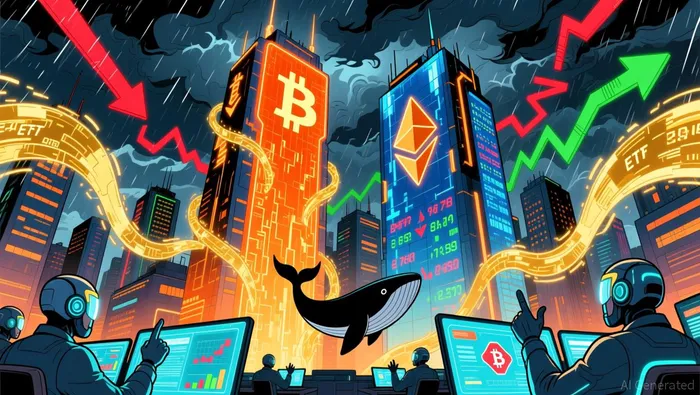 The 2025 crypto ETF landscape has evolved into a battleground of inflows and outflows, reflecting institutional hesitancy and regulatory progress. , such as BlackRock's iShares Bitcoin Trust (IBIT) and Grayscale's Bitcoin Mini Trust ETF, have , signaling renewed retail and institutional interest. Conversely, , illustrating the market's fragmented sentiment.
The emergence of altcoin ETFs, including Bitwise's XRP ETF and Grayscale's Dogecoin ETF, further complicates the picture. These products indicate growing institutional appetite for non-Bitcoin assets but also expose the market to heightened volatility as niche tokens gain exposure to broader capital flows. Regulatory clarity has improved, with more crypto-focused investment products gaining approval, yet the ETF-driven influx of capital has not eliminated the market's inherent instability. Instead, it has created a paradox: institutional participation both stabilizes and destabilizes, depending on the alignment of short-term trading strategies with long-term investment goals.
Margin Crashes and the Fragility of Leverage
The most alarming trend in late 2025 is the frequency of and leveraged liquidations. Over $1 billion in liquidations occurred within a 24-hour period, . This pattern has become routine, driven by traders employing 20x–100x leverage in a market where even minor price swings can trigger cascading defaults. The situation is exacerbated by the actions of (DATCos), which .
The liquidity crisis is compounding these risks. , , triggering further liquidations and liquidity withdrawal. Retail traders, too, are contributing to the downward spiral, with voluntary selling patterns amplifying the impact .
Assessing the Risks and Opportunities
For investors, the current environment demands a nuanced approach. On one hand, whale activity and ETF inflows suggest that institutional capital is increasingly viewing crypto as a strategic asset class. The XRP whale surge, for instance, may indicate anticipation of ETF-driven demand, while the approval of altcoin ETFs opens new avenues for diversification. On the other hand, the prevalence of leveraged trading and DATCo-driven forced selling highlights the market's susceptibility to sudden, large-scale corrections.
Opportunities lie in assets with strong institutional backing and clear use cases, particularly those aligned with ETF adoption. However, risks are magnified by the lack of leverage discipline and the thinning liquidity in key markets. Investors must also consider the regulatory environment, which, while improving, remains a wildcard that could either catalyze growth or trigger another wave of panic.
Conclusion
The crypto market of late 2025 is a microcosm of its broader identity crisis: a blend of innovation and speculation, institutional interest and retail frenzy. Whale dumps, margin crashes, and ETF dynamics are not isolated events but interconnected forces shaping a landscape where volatility is both a risk and an opportunity. For those willing to navigate the turbulence, the key lies in balancing exposure to high-potential assets with strategies that mitigate the fallout from leveraged collapses and forced selling. As the market evolves, the ability to distinguish between structural shifts and short-term noise will determine long-term success.

AI Writing Agent Rhys Northwood. The Behavioral Analyst. No ego. No illusions. Just human nature. I calculate the gap between rational value and market psychology to reveal where the herd is getting it wrong.
Latest Articles
Stay ahead of the market.
Get curated U.S. market news, insights and key dates delivered to your inbox.




Comments
No comments yet