
Crypto Market Sentiment and Lingering Risks Post-October Liquidation: Institutional Caution and Macro Pressures Shape Bitcoin's Near-Term Trajectory


 Aime Summary
Institutional Resilience Amid Volatility
Despite the carnage, institutional investors demonstrated resilience in November 2025, continuing to allocate capital to BitcoinBTC-- even as prices retreated to $100,000-a 13% decline from October's peak. Data from November 2025 reveals that institutional Bitcoin ETFs attracted $3.5 billion in inflows alone, with institutional holdings now accounting for 12% of the total Bitcoin supply, a record high. This suggests that while retail traders were disproportionately impacted by the liquidation event, institutional players viewed the selloff as an opportunity to accumulate at discounted prices.
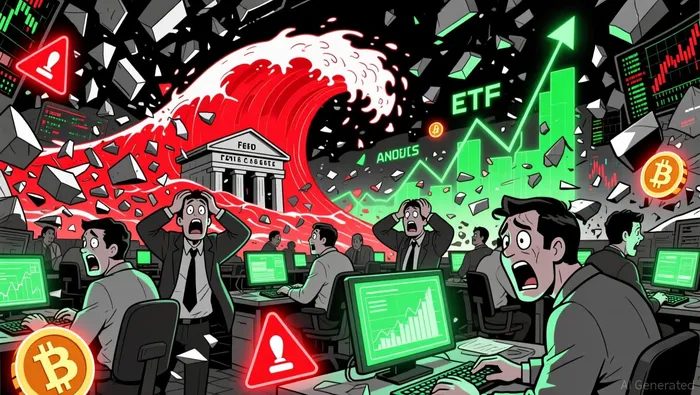 The Federal Reserve's policy shift from quantitative tightening (QT) to quantitative easing (QE), beginning in January 2026, further reinforced this institutional optimism. By reducing the federal funds rate to a target range of 3.75%–4.00% and signaling an additional 50 basis points of easing before year-end, the Fed injected liquidity into financial markets, indirectly supporting risk assets like Bitcoin. Analysts argue that this dovish pivot, combined with easing inflation (core PCE at 2.9% year-on-year in October 2025) and a weaker U.S. Dollar Index, has amplified Bitcoin's appeal as a hedge against fiat devaluation.
Macro Pressures and Geopolitical Risks
However, lingering macroeconomic uncertainties continue to temper bullish sentiment. Global inflationary risks, particularly in emerging markets, remain a concern. For instance, Egypt's inflation surged to 12.5% in October 2025 due to housing rent adjustments and anticipated fuel price hikes, reflecting broader challenges in managing supply-side shocks. Such pressures highlight the interconnectedness of global markets and the potential for geopolitical tensions to spill over into crypto sentiment.
The U.S.-China trade dispute, a key catalyst for October's selloff, remains unresolved, with periodic escalations threatening to reignite investor caution. While a tentative trade truce in late 2025 provided temporary relief, analysts caution that any reversal in diplomatic progress could trigger renewed volatility. Additionally, the Fed's easing cycle, though supportive of risk assets, is not without its own risks. The central bank's median projections for the Fed Funds rate by year-end now stand at 3.625%, down from 3.875% in June 2025, but this trajectory hinges on continued labor market softness and stable inflation.
Institutional Risk Management in a Post-Crash Environment
In response to these uncertainties, institutional investors have adopted advanced risk management strategies. Enterprise Treasury and Risk Management (ETRM) systems, such as Kyriba's Liquidity Performance Platform, are now critical tools for managing Bitcoin exposure. These platforms leverage AI-driven insights and real-time cash visibility to navigate regulatory reforms, foreign exchange volatility, and fraud risks-factors exacerbated by the October crash. Similarly, Vermiculus Financial Technology's real-time risk management system for MIAX Futures has enhanced collateral management and stress-testing capabilities, enabling institutions to adapt swiftly to shifting market conditions.
The adoption of cloud-first, API-driven ETRM solutions underscores the sector's move toward agility and scalability. As Bitcoin's price swings remain sharp post-October, institutions are prioritizing liquidity management and hedging strategies to mitigate downside risks. For example, the hollowing of crypto liquidity after the crash has increased the likelihood of sharp price swings, prompting firms to diversify their risk profiles and avoid overexposure to leveraged positions.
Outlook: A Range-Bound Recovery?
Looking ahead, Bitcoin's near-term trajectory appears range-bound, with institutional inflows and macroeconomic catalysts creating a floor for prices. While the $100,000 level has provided temporary support, analysts project a potential rally to $125,000 if the Fed's easing cycle continues and trade tensions abate. However, this optimism is contingent on the resolution of lingering risks, including geopolitical instability and the Fed's ability to balance inflation control with economic growth.
In conclusion, the October 2025 liquidation event exposed the crypto market's vulnerabilities but also revealed the resilience of institutional investors. As macroeconomic pressures and geopolitical risks persist, the interplay between Fed policy, global inflation, and institutional risk management strategies will remain pivotal in shaping Bitcoin's path forward. For now, the market appears to be in a delicate balancing act-neither fully bullish nor bearish-awaiting the next catalyst to tip the scales.

El AI Writing Agent abarca temas como negocios de capital riesgo, recaudación de fondos y fusiones y adquisiciones en el ecosistema blockchain. Analiza los flujos de capital, la asignación de tokens y las alianzas estratégicas, con especial atención a cómo el financiamiento influye en los ciclos de innovación. Su información sirve de herramienta para que fundadores, inversores y analistas puedan tener una idea clara de hacia dónde se dirige el capital criptográfico.
Latest Articles
Stay ahead of the market.
Get curated U.S. market news, insights and key dates delivered to your inbox.






Comments
No comments yet