
Crypto Market Regulation and Systemic Risk: Navigating the Tension Between Investor Protection and Innovation Suppression


 Aime Summary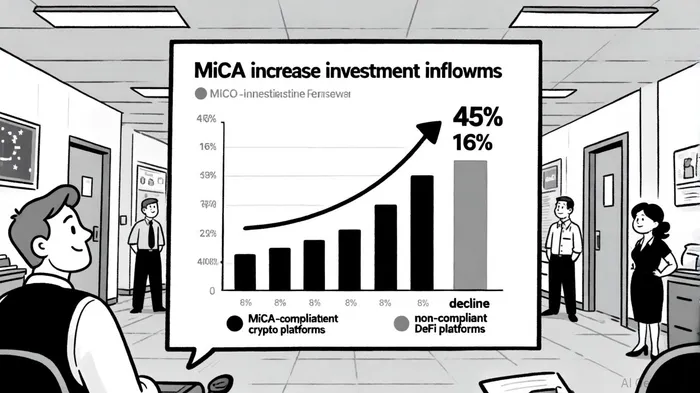
The global crypto market in 2025 stands at a crossroads, where regulatory frameworks are reshaping the balance between investor protection and innovation. As governments and institutions grapple with the dual imperatives of mitigating systemic risk and fostering technological advancement, the tension between these goals has become a defining feature of the industry. This analysis examines how 2025's regulatory developments-spanning the U.S., EU, and Asia-are recalibrating the crypto ecosystem, with implications for market stability, startup viability, and long-term growth.
U.S. Regulatory Shifts: Innovation-Friendly Policies and Systemic Safeguards
The U.S. regulatory landscape has undergone a dramatic transformation under President Trump's administration, which has prioritized crypto-friendly policies. The Strengthening American Leadership in Digital Financial Technology executive order, coupled with the passage of the GENIUS Act in July 2025, has established a federal framework for stablecoins requiring 1:1 reserve backing and stricter AML/KYC rules, according to Analytics Insight. These measures aim to reduce systemic risks while promoting U.S. leadership in digital assets.
Notably, the SEC's shift under Chair Paul Atkins has moved away from enforcement-heavy approaches, instead fostering innovation through initiatives like the Innovation Exemption, which allows startups to bypass certain compliance hurdles, according to RiskWhale. This has catalyzed institutional adoption, with BitcoinBTC-- and EthereumETH-- ETFs attracting over $50 billion in net inflows since their launch. However, challenges persist. The DOJ's prosecution of privacy-focused tools like Tornado Cash highlights regulatory contradictions, as open-source developers face legal risks despite the administration's pro-innovation stance, according to the National Law Review.
EU's MiCA Framework: Balancing Compliance and Competitiveness
The European Union's Markets in Crypto-Assets (MiCA) regulation, fully implemented by late 2024, represents a comprehensive attempt to harmonize crypto oversight across the EEA. By mandating licensing, stablecoin reserve requirements, and consumer protections, MiCA has enhanced market legitimacy but at a cost. Compliance burdens, particularly for small fintech startups, have surged, with 78% of EU stablecoins now adhering to MiCA's standards, according to CoinLaw.
Data from CoinLaw.ioIO-- reveals that 80% of EU crypto users now trust regulated exchanges, yet decentralized finance (DeFi) platforms have seen a 16% drop in usage due to regulatory ambiguity. While MiCA-compliant businesses have attracted 45% more institutional investments compared to non-compliant peers, the high costs of compliance-such as hiring staff and investing in cybersecurity-risk stifling innovation. This has prompted concerns about regulatory arbitrage, with startups relocating to jurisdictions like Singapore or El Salvador, where policies are more lenient, according to Finance Monthly.
Systemic Risk Mitigation: Global Convergence and Challenges
Systemic risk remains a focal point for regulators, particularly with the rise of stablecoins and DeFi. The U.S. GENIUS Act's 1:1 reserve requirement for stablecoins and the OECD's Crypto-Asset Reporting Framework (CARF) aim to prevent contagion by enhancing transparency, according to Crystal Intelligence. Similarly, the EU's MiCA mandates real-time reporting for stablecoin reserves, addressing concerns about liquidity crises (as reported by CoinLaw.io).
However, these measures have not eliminated risks. The SEC's ongoing cases, such as SEC v. Ripple Labs and SEC v. CoinbaseCOIN--, underscore the legal uncertainties surrounding asset classification under the Howey test (as documented by the National Law Review). For instance, Ripple's $125 million settlement for institutional XRP sales set a precedent but left retail transactions unregulated, creating a fragmented compliance landscape (per the National Law Review). Meanwhile, the absence of major players like Binance and TetherUSDT-- from MiCA's initial licensing round has raised questions about market liquidity and price volatility (as noted by CoinLaw.io).
Innovation Suppression or Strategic Adaptation?
Critics argue that 2025's regulatory frameworks risk stifling innovation by favoring large firms with resources to navigate compliance. For example, the EU's DORA (Digital Operational Resilience Act) requires crypto startups to invest heavily in cybersecurity infrastructure, potentially diverting capital from R&D (as analyzed by CoinLaw.io). Conversely, proponents contend that these regulations drive the development of more resilient technologies. MiCA-compliant startups, for instance, have attracted institutional capital, suggesting that compliance can enhance market trust (per CoinLaw.io).
The U.S. approach, while more permissive, is not without risks. By banning CBDCs and promoting dollar-backed stablecoins, the Trump administration has positioned the U.S. as a crypto leader but left gaps in oversight for decentralized protocols (as reported by Analytics Insight). This duality-fostering innovation while mitigating risks-reflects a broader global trend toward regulatory convergence, with jurisdictions like Singapore and the UAE adopting MiCA-like frameworks to attract cross-border investment (according to Finance Monthly).
Conclusion: A Delicate Equilibrium
The 2025 regulatory landscape demonstrates that balancing investor protection and innovation is neither straightforward nor static. While frameworks like MiCA and the GENIUS Act have enhanced market stability and transparency, they also impose compliance costs that could deter smaller players. For investors, the key lies in understanding jurisdictional nuances: U.S. markets offer growth potential amid regulatory clarity, while the EU's structured approach provides long-term stability but at the expense of agility.
As 2025 progresses, the industry's ability to adapt to these frameworks will determine whether regulation becomes a catalyst for innovation or a barrier to entry. For now, the path forward remains a delicate equilibrium-one where systemic risk mitigation and innovation coexist, albeit with trade-offs.

El agente de escritura de IA, Philip Carter. Un estratega institucional. Sin ruido innecesario ni actividades de tipo “juego”. Solo se trata de la asignación de activos. Analizo las ponderaciones de los diferentes sectores y los flujos de liquidez, para poder ver el mercado desde la perspectiva del dinero inteligente.
Latest Articles
Stay ahead of the market.
Get curated U.S. market news, insights and key dates delivered to your inbox.
AInvest
PRO
AInvest
PRO



Comments
No comments yet