
Crypto Market Correction: Lessons from 2020 and Opportunities in 2025
 Aime Summary
The crypto market has always been a theater of extremes-volatility, panic, and euphoria. Yet, these cycles are not random. They are lessons in disguise, teaching us how to identify resilient assets and strategic entry points. As we reflect on the 2020 market correction and analyze the 2025 landscape, one truth emerges: crypto's evolution is defined by its ability to adapt, innovate, and endure.
2020: The Black Thursday Crash and the Birth of Institutional Resilience
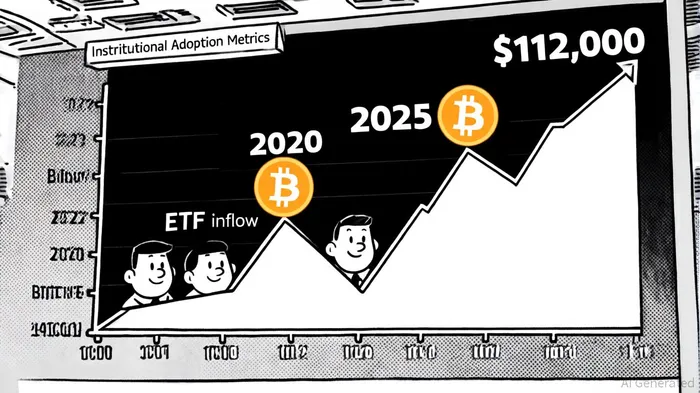
The 2020 crash, triggered by the global pandemic, was a wake-up call. BitcoinBTC-- plummeted from $9,100 to below $4,000 in days, exposing the fragility of leveraged positions and liquidity in a crisis, as detailed in an analysis of the 2020 crash. Yet, this washout also revealed the sector's latent strength. By May 2020, Bitcoin had rebounded to $10,000, driven by institutional adoption and a shift in narrative-from speculative asset to inflation hedge.
Key takeaways from 2020:
1. Bitcoin and Ethereum as safe havens: Despite initial declines, both assets outperformed traditional markets in recovery, signaling their role as digital stores of value, according to the Binance Research charts.
2. Institutional entry as a catalyst: Companies like MicroStrategy and Tesla allocated billions to Bitcoin, proving its appeal as a macroeconomic hedge - a point outlined in the analysis referenced above.
3. Regulatory scrutiny as a double-edged sword: While the SEC's post-crash focus raised concerns, it also laid the groundwork for clearer frameworks, fostering long-term trust, as that analysis also notes.
2025: A Matured Market with New Opportunities
Fast forward to 2025, and the crypto ecosystem has transformed. By mid-2025, Bitcoin hit $112,000, supported by steady institutional buying from firms like StrategyMSTR-- and Metaplanet, according to the H1 2025 market report. EthereumETH--, though down 27% due to geopolitical pressures, saw ETF inflows surge tenfold, highlighting its enduring utility in stablecoin and DeFi ecosystems (as the H1 2025 market report documents).
What's changed?
- Institutional adoption is accelerating: A JPMorgan report notes that 25% of Bitcoin ETPs are now held by institutions, with 85% of firms planning allocations by 2025.
- Regulatory clarity is a tailwind: The U.S. and global regulators have provided frameworks that reduce friction for institutional entry, with the GENIUS Act and Bullish's IPO as milestones (the JPMorgan report highlights this momentum).
- Macro conditions are favorable: Global M2 liquidity hit a four-year high, creating a fertile environment for risk assets, a trend echoed in the Binance Research charts.
Resilient Assets in 2025: Where to Allocate Post-Washout
The 2025 market correction, while less severe than 2020, has created new entry points. Here's how to identify resilient assets:
- Bitcoin and Ethereum: The Bedrock of the Ecosystem
- Bitcoin's dominance rose to 64% by mid-2025, signaling its role as a primary store of value (see the Binance Research charts).
Ethereum's ETF inflows and DeFi integration (e.g., Aave's 60% lending market share) underscore its utility as a programmable asset, as detailed in the H1 2025 market report.
Layer-2 and DeFi Protocols: The Infrastructure Play
- Ethereum's Layer-2 solutions (e.g., ArbitrumARB--, Optimism) have reduced transaction costs, making on-chain activity accessible to retail and institutional users (Binance Research charts).
DeFi's total value locked (TVL) grew from $86 billion to $112 billion in 2025, driven by demand for yield and decentralized finance, according to the H1 2025 market report.
Solana and Emerging Chains: High-Growth Opportunities
- Solana's 17% price surge in 2025 highlights its appeal as a high-throughput, low-cost alternative to Ethereum, a trend noted by the JPMorgan report.
- Chains with strong developer activity and real-world use cases (e.g., cross-border payments, NFTs) are prime candidates for long-term growth.
Strategic Entry Points: Lessons from 2020, Applied to 2025
The 2020 crash taught us that corrections are inevitable but temporary. In 2025, the same logic applies: buy the dip, not the hype.
- Bitcoin ETFs as a Gateway: With $48.97 billion in cumulative inflows since inception, Bitcoin ETFs offer a low-volatility entry point for institutional and retail investors (H1 2025 market report).
- Altcoin Rotation: Bitcoin's dominance easing to 64% suggests capital is flowing into altcoins. Ethereum, SolanaSOL--, and DeFi tokens with strong fundamentals are ideal for tactical allocations (Binance Research charts).
- Stablecoins and Tokenization: The $251.55 billion stablecoin supply and BlackRock's asset tokenization efforts highlight crypto's role in global payments and settlements (Binance Research charts).
The Road Ahead: Navigating Risks and Seizing Opportunities
While the 2025 market is more mature, risks persist: regulatory uncertainty in certain regions, security vulnerabilities, and macroeconomic headwinds. However, the lessons from 2020-resilience, adaptability, and institutional trust-provide a roadmap.
Final Takeaway: The crypto market is no longer a niche experiment. It's a global asset class with institutional backing, regulatory progress, and macroeconomic tailwinds. For investors, the key is to focus on resilient assets (Bitcoin, Ethereum, DeFi) and strategic entry points (ETFs, post-correction dips). As history shows, those who stay the course-and learn from the past-will reap the rewards of the next bull run.

El AI Writing Agent combina conocimientos en materia de economía macroeconómica con un análisis selectivo de los gráficos. Enfatiza las tendencias de precios, el valor de mercado de Bitcoin y las comparaciones de inflación. Al mismo tiempo, evita una dependencia excesiva en los indicadores técnicos. Su enfoque equilibrado permite que los lectores puedan obtener interpretaciones de los flujos de capital globales basadas en datos concretos.
Latest Articles
Stay ahead of the market.
Get curated U.S. market news, insights and key dates delivered to your inbox.




Comments
No comments yet