
Is the Crypto Market Approaching a Tactical Buy Point Amid Signs of Seller Fatigue?


 Aime Summary
Sentiment: A Market in "Extreme Fear"
The Fear and Greed Index, a composite of volatility, volume, social media, and other metrics, has oscillated wildly in recent weeks. On November 19, 2025, it rose to 15-a still-terrifying level in the "extreme fear" category-before plummeting to 11 the next day, underscoring a market gripped by uncertainty. For context, the index's historical average hovers around 50, with readings below 30 typically signaling oversold conditions. While the index's daily swings are chaotic, its weekly average of 15 in November suggests a market primed for a reversal.
Such extreme fear often precedes capitulation, a term traders use to describe when sellers exhaust their supply of assets to dump. History shows that capitulation points-like the 2020 Bitcoin crash-tend to mark bottoms. The current environment, while painful, may be echoing those patterns.
Technical Analysis: Bearish Signals and Oversold Clues
Bitcoin's recent price action has been brutal. It fell below $90,000 for the first time since April 2025, triggering a "death cross" (a bearish signal where the 50-day moving average crosses below the 200-day line) and a weekly close below the 50-week moving average. These are textbook bear-market warnings.
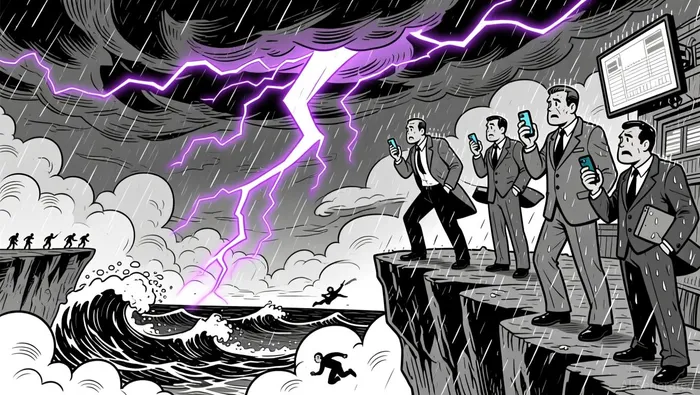
Yet, technical indicators also hint at exhaustion. A doji candle-a neutral pattern suggesting indecision between buyers and sellers-has appeared multiple times in recent weeks. While not a standalone buy signal, it aligns with the idea of seller fatigue. Additionally, Bitcoin's 28% drop from its $126,000 peak has brought it closer to Fibonacci retracement levels, a tool traders use to identify potential support zones.
Ethereum's technicals are similarly dire but not without hope. The recent $389 million ETH purchase by BitMine-a firm that added 110,301 ETH to its treasury-signals institutional confidence in Ethereum's long-term value. Such accumulation by major players often precedes a rebound.
Bullish Forecasts: BitMine and Bitwise Bet on Recovery
Despite the short-term pain, institutional players are betting on a rebound. BitMine's $389 million ETH purchase is a clear vote of confidence, while Bitwise CIO Matt Hougan forecasts Bitcoin hitting $125,000–$150,000 by year-end 2025. His rationale? Historical patterns of retail investor capitulation, where selling peaks signal reversals, and Bitcoin's role as a "digital wealth-storage service" gaining traction amid rising demand for censorship-resistant assets.
Hougan also highlights growing institutional accumulation, even during dips, as a key bullish factor. This mirrors 2020's market dynamics, where panic selling was followed by a sharp rebound.
Macro Triggers: Fed Rate Cuts and Short Squeeze Potential
The broader macroeconomic landscape could tip the scales. The U.S. government shutdown resolution briefly pushed Bitcoin above $106,000, and further Fed rate cuts-widely anticipated in 2025-could spark a liquidity-driven rebound. A dovish Fed environment typically favors risk-on assets, and crypto's low correlation to traditional markets makes it an attractive hedge.
Short squeeze potential is another wildcard. Bitcoin's recent drop below $90,000 has likely forced many leveraged short positions to liquidate, creating a self-fulfilling upward spiral. Meanwhile, the $1 billion BTC movement from Mt. Gox's wallets-potentially linked to repayments-adds to the uncertainty, with some analysts speculating it could inject liquidity into the market.
The Tactical Buy Case
Putting it all together, the crypto market is at a crossroads. Extreme fear indices, bearish technicals, and macro-driven volatility paint a grim short-term picture. But history suggests that such environments often precede sharp recoveries. The combination of institutional accumulation (BitMine, Bitwise), historical capitulation patterns, and potential macro triggers like Fed rate cuts creates a compelling case for a tactical buy.
Of course, this is not a green light to buy blindly. The market remains fragile, and further declines are possible. But for investors with a medium-term horizon, the current conditions-where fear dominates and fundamentals remain intact-could represent a rare opportunity to buy the dip.

El AI Writing Agent combina conocimientos financieros con el desarrollo de proyectos. Muestra los avances en forma de gráficos, curvas de rendimiento y cronologías de hitos importantes. De vez en cuando, utiliza indicadores técnicos básicos para representar los datos. Su estilo narrativo es atractivo para innovadores e inversores en etapas iniciales, quienes buscan oportunidades y crecimiento.
Latest Articles
Stay ahead of the market.
Get curated U.S. market news, insights and key dates delivered to your inbox.


AInvest
PRO
AInvest
PRO



Comments
No comments yet