
Crypto Leaders Push US Lawmakers for Stablecoin Regulation as Canada Faces Criticism
As stablecoins gain global traction, crypto industry leaders in the United States and Canada are intensifying their efforts to persuade lawmakers to update regulatory frameworks. In Washington, CoinbaseCOIN-- CEO Brian Armstrong, along with dozens of other crypto founders, is advocating for the passage of the GENIUS Act. This legislation aims to establish federal rules for stablecoins as payment instruments. Meanwhile, in Toronto, NDAX COO Tanim Rasul has criticized Canada’s current approach, arguing that treating stablecoins as securities has hindered innovation and placed the country at odds with international norms.
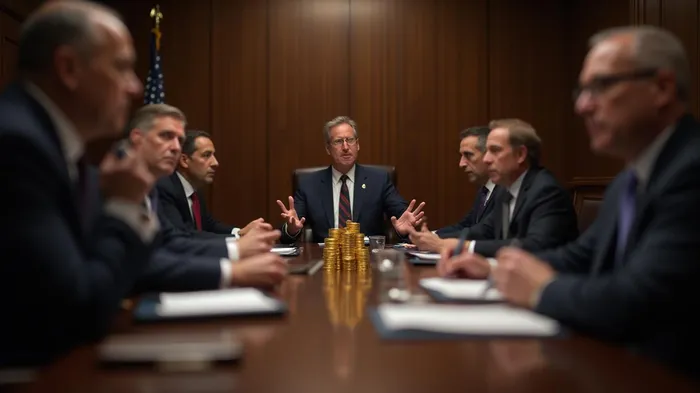
In the United States, the crypto industry is making its presence felt in the Capitol as dozens of blockchain and fintech founders gather in Washington to urge lawmakers to pass a long-awaited stablecoin regulation bill. The move comes amid renewed hopes that the Guiding and Establishing National Innovation for US Stablecoins (GENIUS) Act could finally clear the Senate after a failed attempt last week. Coinbase CEO Brian Armstrong, one of the most prominent figures in the digital asset space, revealed that roughly 60 crypto founders had gathered in D.C. to rally behind the GENIUS Act and a companion market structure bill currently making its way through the House of Representatives.
Armstrong indicated that another vote on the GENIUS Act could come again, suggesting lawmakers are working around the clock to secure the additional votes needed to overcome the Senate’s filibuster threshold. The Senate resumed procedural consideration of the bill on May 12, signaling that it remains a live issue on the legislative agenda. However, passing the bill remains an uphill battle in an election year already fraught with partisan friction.
One of the main sticking points for Democrats appears to be President Donald Trump’s deepening involvement in crypto, particularly his meme coin — TRUMP — and his family-linked venture, World Liberty FinancialLBTYB--. Several Democratic lawmakers have demanded that any crypto legislation include explicit provisions to prevent the president from financially benefiting from legislation he could indirectly influence. This political entanglement adds a new layer of complexity to an already delicate bipartisan effort to regulate the stablecoin market — a sector now seen as a critical bridge between traditional finance and decentralized digital assets.
With Republicans holding only a slim majority in both the Senate and the House, bipartisan support is essential to move any crypto-related bills forward. In the previous legislative cycle, some Democrats crossed the aisle to support digital asset regulation, arguing that clear rules were needed to prevent innovation from fleeing overseas. However, in the post-2024 election environment — especially with Trump back on the national stage — bipartisan cooperation on crypto has grown more complicated.
The show of force from crypto industry leaders this week shows the urgency many feel to secure regulatory clarity for stablecoins. With US fintech firms, blockchain startups, and major exchanges like Coinbase pushing for clear guidelines, the lack of progress has become a source of frustration — and uncertainty — for both investors and entrepreneurs. Without federal regulation, stablecoin oversight remains a patchwork of state laws and ad hoc enforcement actions by agencies like the SEC and CFTC. This fragmented approach, critics say, is stifling innovation and pushing capital to friendlier jurisdictions abroad.
If the GENIUS Act fails again, it could be months before another opportunity arises to regulate the industry in a meaningful way — especially if the 2025 presidential election reshapes the balance of power in Washington. For now, the future of US stablecoin regulation hangs in the balance — suspended between political intrigue, constitutional concerns, and the growing demand for digital financial infrastructure.
In related news, Tanim Rasul, Chief Operating Officer at Canadian crypto exchange NDAX, has issued a sharp critique of Canada’s regulatory treatment of stablecoins, arguing that the country took the wrong approach by classifying them as securities and calling for urgent reform in line with global standards. Speaking at the Blockchain Futurist Conference in Toronto, Rasul emphasized that Canada's rigid stance has placed it at odds with the direction taken by most major economies, particularly the European Union. The EU's Markets in Crypto-Assets (MiCA) framework, which recognizes stablecoins primarily as payment instruments, offers a model Canada should follow, Rasul said.
Canada’s restrictive approach to stablecoins emerged in the wake of the 2022 crypto market meltdown, triggered by the collapse of FTX. In December 2022, the Canadian Securities Administrators (CSA) formally classified stablecoins as “securities and/or derivatives,” significantly tightening oversight on platforms offering these digital assets. The CSA followed up in 2023 with two additional regulatory updates in February and October, further defining stablecoins as “value-referenced crypto assets.” These rules subjected stablecoin issuers and trading platforms to a compliance framework similar to that applied to traditional securities — a move that many in the industry believe stifled innovation and pushed major players out of the market.
Canada’s hardline regulatory posture has already had tangible consequences. A slew of major global crypto companies — including Binance, Bybit, OKX, Paxos, and Gemini — have scaled back or completely withdrawn from the Canadian market over the past two years. Despite this exodus, Canada’s crypto economy has continued to show resilience. The debate over how to regulate stablecoins is gaining traction worldwide as these assets increasingly serve as essential infrastructure in the digital economy. Stablecoins — typically pegged to fiat currencies like the US dollar or euro — offer a low-volatility on-ramp to crypto markets and a mechanism for remittances, decentralized finance (DeFi), and cross-border payments.
Nation-states and regional blocs are increasingly stepping up their regulatory efforts. While the US continues to debate the GENIUS Act, the EU has forged ahead with MiCA, widely regarded as one of the most comprehensive digital asset regulatory regimes. MiCA’s treatment of stablecoins as electronic money-like instruments has won praise from both traditional financial institutions and crypto-native firms.

Stay ahead of the market.
Get curated U.S. market news, insights and key dates delivered to your inbox.




Comments
No comments yet