
Crypto Groups Warn: Conviction Could Criminalize Code Speech


 Aime Summary
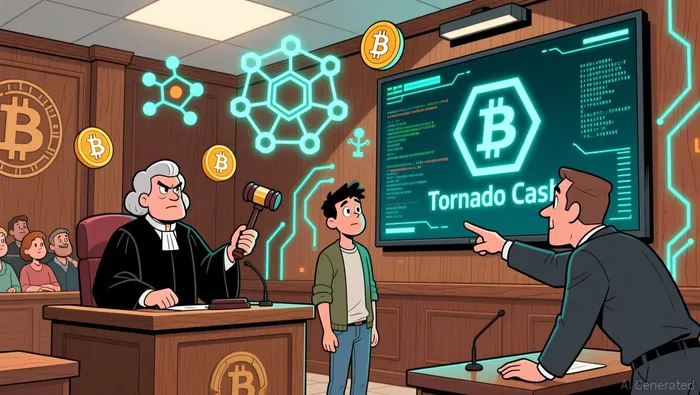
More than 65 cryptocurrency and blockchain advocacy groups have escalated pressure on U.S. President Donald Trump to intervene in the legal case of Roman Storm, a co-founder of the Tornado Cash decentralized finance (DeFi) protocol. The groups, including the Solana Policy Institute, Blockchain Association, and DeFi Education Fund, argue that Storm's conviction for operating an unlicensed money transmittal service undermines First Amendment protections for open-source software development. In a letter dated Nov. 20, the coalition also demanded regulatory clarity on digital assets and called for the dismissal of charges against Storm, who remains free on bail ahead of a scheduled court conference on Jan. 22.
Storm was convicted in August 2023 on one of three charges: conspiracy to operate an unlicensed money transmitting business. The jury deadlocked on two additional counts related to money laundering and sanctions violations according to reports. His legal team contends that Tornado Cash, a privacy-focused tool for obfuscating cryptocurrency transactions, is protected speech under the First Amendment and should not be classified as a financial crime according to the groups. The advocacy groups cited recent Department of Justice (DOJ) guidance, issued earlier this year, which advises prosecutors not to pursue unlicensed money transmitting charges against developers of decentralized software according to the groups. While this policy does not apply retroactively, Storm's defense is expected to reference it in ongoing appeals.
The letter to Trump also outlined broader policy demands, including tax clarity for digital assets and protections for DeFi developers. The groups urged the Treasury and IRS to clarify that staking and mining rewards are taxed only upon sale, not at creation, and to exempt small transactions under $600 from capital gains calculations according to the coalition. Additionally, they called for the Securities and Exchange Commission (SEC) to adopt safe harbor frameworks similar to Commissioner Hester Peirce's proposal, which would allow token projects three years to decentralize without immediate securities registration according to the coalition. These requests align with Trump's campaign promises to position the U.S. as the "Crypto Capital of the World" and his recent pardoning of Binance founder Changpeng Zhao according to the coalition.
The DOJ's stance on the case remains ambiguous. Matthew Galeotti, the acting assistant attorney general for the Justice Department's criminal division, stated in October that "merely writing code, without ill intent, is not a crime" according to reports during a cryptocurrency advocacy summit. However, prosecutors have opposed Storm's motion for acquittal, and the interim U.S. attorney for the Southern District of New York has filed to retry him on the remaining charges according to reports. The tension between prosecutorial independence and political influence highlights the delicate balance the administration must navigate, according to the reports.
The outcome of Storm's case could set a precedent for how U.S. regulators treat open-source software in the crypto space. If the DOJ dismisses the charges, it would reinforce the argument that code is protected speech. A conviction, however, could deter developers from creating privacy-focused tools and deepen regulatory uncertainty. With the crypto industry awaiting clarity on tax policies and enforcement priorities, the administration's response to the coalition's requests will likely shape the sector's trajectory in the coming year.

Conoce rápidamente la historia y el antecedente de varias monedas bien conocidas
Latest Articles
Stay ahead of the market.
Get curated U.S. market news, insights and key dates delivered to your inbox.






Comments
No comments yet