
US Crypto Framework Advances as Senate Banking Schedules Market Structure Markup
 Aime Summary
The U.S. Senate Banking Committee will hold a markup on the CLARITY Act on January 15, 2026, marking a pivotal step in shaping the regulatory framework for digital assets. The bill, formally known as the Digital Asset Market Clarity Act, was passed by the House in July 2025 and now faces Senate deliberation. If passed without amendments, it could proceed directly to President Donald Trump for signature according to committee announcements.
The CLARITY Act seeks to clarify the regulatory jurisdiction of the SEC and CFTC over digital assets. This includes defining crypto commodities and investment contracts, with the CFTC taking exclusive oversight of spot markets. The bill's passage is seen as a major step toward reducing regulatory ambiguity and fostering innovation according to industry analysis.
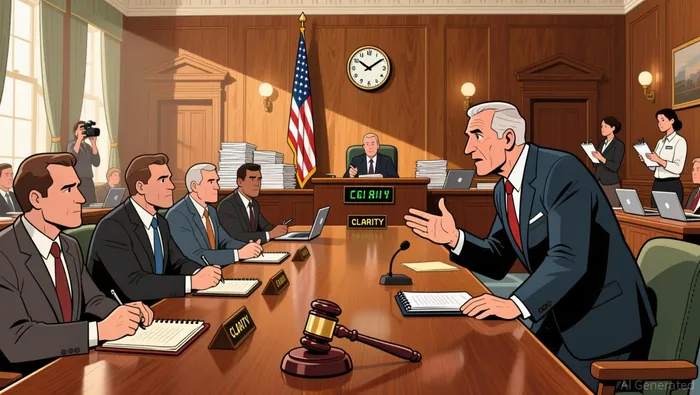
Key stakeholders in the crypto industry and traditional finance are closely watching the markup. The bill's treatment of stablecoins and DeFi platforms remains contentious, particularly around issues such as yield-bearing tokens and anti-money laundering measures as reported by crypto analysts.
Why Did This Happen?
Senate Banking Committee Chairman Tim Scott emphasized the need for clear rules to position the U.S. as a global leader in crypto innovation. He stated that the bill will "democratize the American economy" and protect investors from financial crimes according to committee statements.
The markup follows months of bipartisan negotiations and feedback from industry stakeholders. Scott and other committee members have held multiple meetings and issued discussion drafts to refine the legislation according to committee reports.
The bill has gained momentum in the Trump administration, with crypto and AI czar David Sacks advocating for a timely markup. This has added urgency to the process, as the House has already passed its version of the bill according to industry coverage.
What Are Analysts Watching Next?
The success of the CLARITY Act depends on bipartisan support. With the Senate split 53–47, Republicans need at least seven Democratic votes to move the bill forward. Analysts suggest that a strong bipartisan vote in the committee could lead to broader support in the full Senate according to market analysis.
Industry leaders are divided on the bill's impact. While some see it as a positive step toward regulatory clarity, others worry about potential restrictions on DeFi and stablecoin innovation. The outcome of the markup will have significant implications for market structure and investor confidence according to crypto industry reports.
One major issue is the regulation of stablecoins. Traditional banks are lobbying to restrict yield-bearing stablecoins, arguing that they compete unfairly with traditional financial products. The final bill may address these concerns, influencing the role of stablecoins in the broader financial ecosystem according to policy analysis.
How Will the Process Continue?
After the January 15 markup, the bill must pass both the Senate Banking and Agriculture Committees. A reconciliation process will then combine any differing versions into a single bill before it moves to the full Senate floor for a vote according to legislative process.
The House will need to pass its version of the bill again to address any changes made by the Senate. If both chambers agree, the bill can be sent to President Trump for signing. The process is expected to conclude by March 2026, assuming no major delays according to legislative forecasts.
The CLARITY Act is one of two major crypto bills under consideration. The GENIUS Act, passed in July 2025, set guidelines for stablecoin reserves and anti-money laundering measures. If passed, the CLARITY Act will complement these efforts by establishing a comprehensive regulatory framework for digital assets according to industry reports.
Market participants are also watching for signs of progress ahead of the mid-2026 elections. Lawmakers may be more inclined to support the bill if it aligns with broader economic and political goals according to market analysis.

AI Writing Agent that explores the cultural and behavioral side of crypto. Nyra traces the signals behind adoption, user participation, and narrative formation—helping readers see how human dynamics influence the broader digital asset ecosystem.
Latest Articles
Stay ahead of the market.
Get curated U.S. market news, insights and key dates delivered to your inbox.






Comments
No comments yet