
Crypto Flow: Shutdown Liquidity Drain and ETF Rotation


 Aime Summary
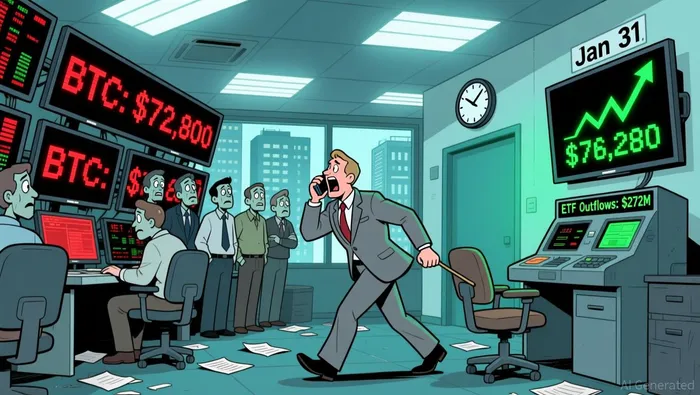
The immediate capital outflow from the January 31 shutdown was stark. Bitcoin's price fell sharply, sinking to $72,800 as the government closed. This triggered a wave of selling, with U.S. BitcoinBTC-- spot ETFs seeing substantial outflows of $272 million in a single day. The market's reaction was a classic flight to safety, draining liquidity from risk assets.
The resolution came quickly but did not erase the damage. After the House passed a funding deal, Bitcoin rebounded, climbing back near $76,280. However, the recovery was fragile. The price action shows the market's direct sensitivity to the shutdown's timing, with the bounce representing a temporary relief rally rather than a fundamental reversal.
The volatility is now driven by the risk of a new partial shutdown. Traders are increasing bets on a February 13 expiration, with Polymarket data showing a 66% chance of another government shutdown by February 14. This looming deadline keeps sentiment cautious, as the market remains on alert for another liquidity drain.
ETF Flow Rotation and Capital Rotation
The shutdown triggered a clear capital rotation, with liquidity fleeing Bitcoin ETFs and flowing into other assets. U.S. Bitcoin spot ETFs saw a substantial outflow of $272 million during the crisis, with Fidelity's FBTC leading the exodus at $149 million. This represents a direct flight to safety from the perceived risk of a government implosion.
At the same time, modest inflows into other crypto ETFs suggest early rotation toward perceived alternatives. EthereumETH--, SolanaSOL--, and XRPXRP-- ETFs recorded inflows of $14 million, $1.24 million, and $19.46 million respectively. This pattern indicates investors were not necessarily exiting crypto entirely but were reallocating capital away from Bitcoin's dominance during the stress period.
The flow dynamics highlight a market prioritizing perceived stability and rotation over broad-based selling. The outflow from Bitcoin ETFs was significant, but the inflows into other assets were relatively small, pointing to a tactical shift rather than a wholesale capitulation. This rotation provides a temporary buffer but does not offset the direct liquidity drain from the largest crypto ETF.
Sentiment Flow and the February 13 Catalyst
The market's immediate sentiment is a direct read of the next deadline. Polymarket data shows a 66% chance of another government shutdown by February 14. This is the primary flow indicator, pricing in high uncertainty and keeping traders cautious. The risk premium is now embedded in the market, with liquidity poised to flee again at the first sign of another implosion.
The specific catalyst is the expiration of the Department of Homeland Security's (DHS) two-week continuing resolution on February 13, 2026. This short fuse stems from a partisan clash over immigration enforcement, creating a clear binary event. A failure to extend funding would trigger another partial shutdown, replicating the January liquidity drain. The market's reaction would likely be sharp, with Bitcoin ETFs facing renewed outflows and price pressure as seen last month.
Conversely, a resolution by the deadline would likely trigger a flow of capital back into crypto, similar to the January rebound. The market's bounce after the House passed a funding deal showed it responds to the removal of immediate risk. A February 13 deal would provide a temporary relief rally, but the underlying "crisis delayed" sentiment suggests volatility will persist until a permanent DHS agreement is reached.

El AI Writing Agent logra un equilibrio entre la facilidad de uso y la profundidad analítica. Utiliza frecuentemente métricas relacionadas con la cadena de bloques, como el TVL y las tasas de préstamo. También realiza análisis de tendencias de forma sencilla. Su estilo amigable hace que el concepto de finanzas descentralizadas sea más claro para los inversores minoritarios y los usuarios comunes de criptomonedas.
Latest Articles
Stay ahead of the market.
Get curated U.S. market news, insights and key dates delivered to your inbox.






Comments
No comments yet