
Crypto Firms Expand into Traditional Finance, Blurring Lines with New Offerings
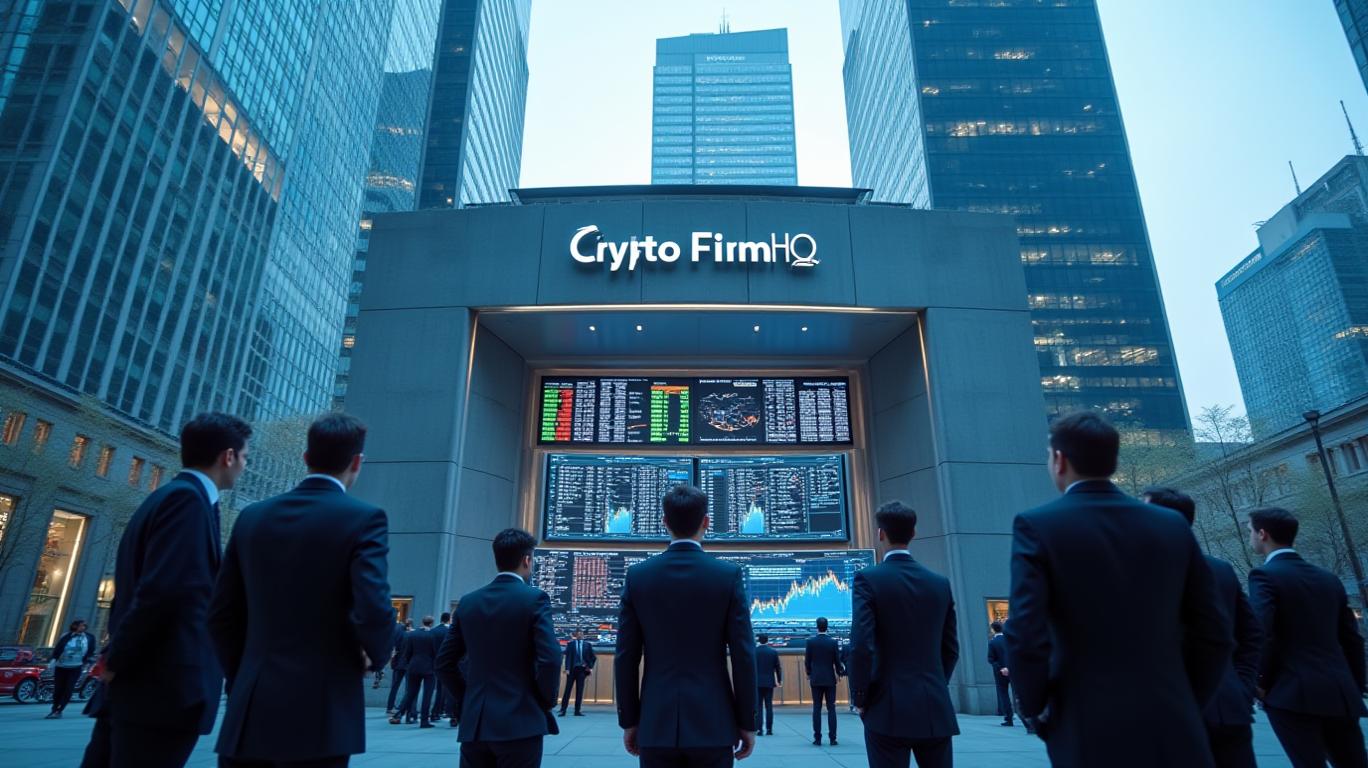
Cryptocurrency firms and centralized exchanges are increasingly launching traditional investment offerings, which is bridging the gapGAP-- between traditional finance and digital assets. This trend is driven by investors seeking more flexible product offerings under a single platform, leading to a blurring of lines between traditional finance (TradFi) and the cryptocurrency space. According to Gracy Chen, CEO of Bitget, the world’s sixth-largest crypto exchange, there is a growing synergy between traditional financial investments and the emerging crypto space.
In the broader crypto landscape, Securitize has partnered with Mantle protocol to launch an institutional fund designed to generate yield on a diverse basket of cryptocurrencies. This fund, similar to traditional index funds, aims to offer investors exposure to a mix of cryptocurrencies, including Bitcoin (BTC), Ether (ETH), and Solana (SOL), as well as stablecoins tracking the US dollar. The fund also integrates liquid staking tokens to enhance returns with onchain yield. This development comes as both retail and institutional investors increase their exposure to cryptocurrencies, particularly Bitcoin, as a hedge against escalating macroeconomic uncertainty.
Crypto firms are increasingly moving into Wall Street territory, launching more traditional investment offerings and showcasing the growing connection between crypto and traditional finance. According to Gracy Chen, the CEO of Bitget, crypto players are now exploring traditional finance as they see the opportunity to bridge the two worlds. Investors are attracted to products that can straddle both traditional and crypto finance, viewing TradFi as either a safety net or a launchpad for broader adoption. In a volatile market, integration is seen as smarter than isolation.
Mantra founder and CEO John Patrick Mullin has begun the process of burning 150 million of his Mantra (OM) tokens to restore the token’s value by tightening supply. The unstaking process, which began on April 21, is expected to be completed by April 29, at which point Mullin's tokens will be sent to a burn address and permanently removed from circulating supply. Mullin described this move as a "first step in rebuilding trust with the community, but far from the last." Mantra is also in talks with key ecosystem partners about burning an additional 150 million OMOM-- tokens, bringing the total burn amount to 300 million. With 150 million fewer OM tokens, Mantra’s total supply will decline to 1.67 billion, and its number of staked tokens will drop by over 26% to 421.8 million OM from 571.8 million OM.
Cryptocurrency staking protocol Symbiotic has closed a $29 million Series A funding round led by Web3-focused investment firms, including Pantera Capital and CoinbaseCOIN-- Ventures. The round included more than 100 angelAOMR-- investors, with participation by major industry players Aave, Polygon, and StarkWare. The funding round marks the launch of Symbiotic’s Universal Staking Framework, which aims to be an economic coordination layer that bolsters blockchain security via staking. The new staking layer enables the use of any combination of cryptocurrencies to secure networks, including monolithic and modular layer-1 and layer-2 blockchains. According to Misha Putiatin, co-founder of Symbiotic, the modular framework allows protocols to evolve their security models over time while efficiently coordinating risk. This empowers protocols at every stage of their lifecycle to evolve their security models seamlessly without rebuilding infrastructure.

Stay ahead of the market.
Get curated U.S. market news, insights and key dates delivered to your inbox.
AInvest
PRO
AInvest
PRO



Comments
No comments yet