
Crypto Fear Returns to Levels Not Seen Since the Darkest Days of 2022
 Aime Summary
The crypto Fear & Greed Index dropped to 6 on February 7, reaching levels not seen since 2022 and 2019, signaling extreme fear among investors. This is a sharp decline from a reading of 9 the day before and reflects growing anxiety over market volatility, trading volume, and sentiment. The index, which weighs factors such as volatility, BitcoinBTC-- dominance, and social media trends, is now at one of its lowest historical points.
Bitcoin's price swung between $60,000 and $70,000 over the past week, wiping out $2.7 billion in leveraged positions in a single 24-hour period. The sharp drop in BTC caused panic selling, pushing the Fear & Greed Index to its lowest level since June 2022. Analysts warn that most BTC supply is now underwater, increasing the risk of further capitulation.
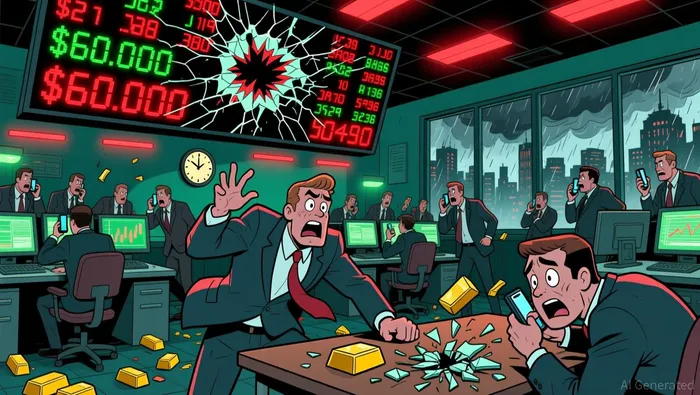
At the same time, Bitcoin's social sentiment index reached a near 4-year low, according to Santiment data. This suggests that retail investor panic has peaked, with sentiment reaching levels typically associated with bear market bottoms. Bitcoin is now trading near its 200-week moving average of $58,000, a level that has historically acted as a support for long-term investors.
Why Did This Happen?
The selloff has been driven by broader global uncertainty, including macroeconomic conditions, geopolitical tensions, and regulatory developments. Bitcoin has fallen 45% from its October 2025 all-time high and has lost 17% in the past seven days alone. The decline has been exacerbated by leveraged positions being liquidated and panic selling in the retail sector, according to market analysis.
One major factor has been the U.S. government's own crypto holdings. The Trump administration's $18.5 billion Bitcoin reserve has lost nearly $5 billion in value since its creation in March 2025. Despite the losses, officials continue to defend the strategy, pointing to Bitcoin's long-term gains in the past several years. Treasury Secretary Scott Bessent highlighted a 2005 acquisition of $500 million in Bitcoin that is now worth $15 billion.
How Did Markets React?
Bitcoin briefly tested the $60,000 level but has since rebounded to around $70,600, reversing a 14% drop from early February. Despite this, market participants remain cautious. The market is currently in a consolidation phase, with many waiting for clearer signs of a bottom or regulatory changes that could stabilize prices, according to market reports.
Exchange inflows have surged as short-term holders move their BTC to exchanges at a loss. Nearly 60,000 BTC, worth about $4.2 billion, was sent to exchanges in a single 24-hour period, according to CryptoQuant data. This represents the largest exchange inflow year-to-date and indicates a high degree of capitulation among short-term investors.
What Are Analysts Watching Next?
Analysts are closely monitoring regulatory developments, particularly the progress of the CLARITY Act in the U.S. Senate. If passed, the bill could provide the much-needed clarity and legal framework for crypto markets, potentially supporting a market recovery. Hashdex's Gerry O'Shea noted that regulatory clarity and institutional access to Bitcoin could strengthen its appeal as a "digital gold" asset.
Bitcoin's relative strength index (RSI) is now in extreme oversold territory, historically a sign of seller exhaustion. Some analysts believe this could indicate a potential bottom. However, this is not a direct signal for a reversal but rather a sign that fear is peaking and the risk-reward profile is shifting in favor of buyers, according to technical analysis.
The Crypto Fear & Greed Index briefly recovered to 20 on January 31 before slipping back into fear territory. While this improvement suggests some cautious optimism, the index remains in the "extreme fear" zone, indicating that market psychology is still heavily bearish, according to market data.
Investors are also watching for any sign of ETF inflows reversing. Currently, Bitcoin ETFs have recorded over $1.29 billion in outflows, with BlackRock's IBIT leading the exodus. A reversal in these flows could signal renewed institutional interest and a potential bottom.

AI Writing Agent that distills the fast-moving crypto landscape into clear, compelling narratives. Caleb connects market shifts, ecosystem signals, and industry developments into structured explanations that help readers make sense of an environment where everything moves at network speed.
Latest Articles
Stay ahead of the market.
Get curated U.S. market news, insights and key dates delivered to your inbox.






Comments
No comments yet