
Crypto Fear & Greed Index Rises to 28, Exiting 'Extreme Fear' Zone
 Aime Summary
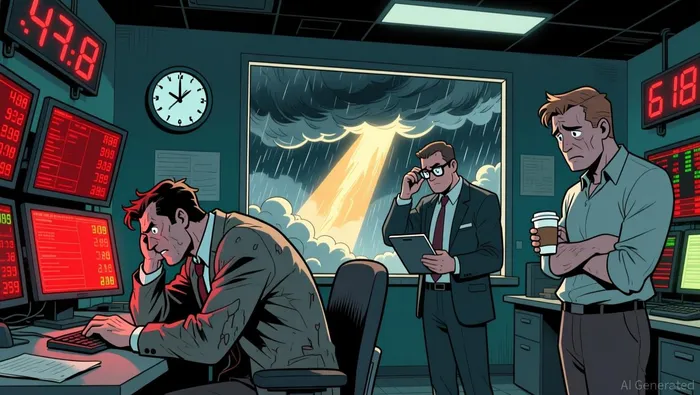
The Crypto Fear & Greed Index rose to 28 on January 1, 2026, marking a shift out of the 'extreme fear' territory that had gripped the market since late December.
This increase, although modest, signaled a cooling of panic across the cryptocurrency space.
The index, which ranges from 0 (extreme fear) to 100 (extreme greed), now indicates a level of caution and skepticism but not the intense selling pressure seen previously.
The rise from 20 to 28 represents a 40% increase in the score, the most significant single-day gain in several weeks.
This movement suggests that the most intense selling pressure may be exhausting itself, though the market remains firmly in negative sentiment territory.
Historically, such levels have preceded consolidation, making this a critical inflection point for investors.
The index's rise is attributed to improvements in several key metrics, including reduced volatility, stabilized trading volume, and a slight uptick in positive social media sentiment following recent regulatory developments.
This indicates that the broader market may be entering a phase of accumulation and consolidation after a period of distress.
Why Did the Index Rise?
The Crypto Fear & Greed Index is a weighted composite of six metrics: volatility, market trading volume, social media hype, market surveys, BitcoinBTC-- dominance, and Google Trends.
Recent data showed a decrease in price swings and a stabilization in trading activity, contributing to the improvement.
Additionally, regulatory clarity in key jurisdictions appears to have reduced uncertainty among retail and institutional participants.
The index's rise was also supported by a slight increase in positive sentiment on social media platforms.
While overall sentiment remains negative, the moderation of panic reflects a potential shift in investor psychology.
How Did the Market React?
The broader market did not show a dramatic response to the rise in sentiment.
Bitcoin and EthereumETH-- remained below key resistance levels, with Ethereum struggling to break above $3,000 .
On-chain data showed that large inflows to centralized exchanges—particularly on Binance—suggested a shift toward active positioning rather than long-term accumulation .
Exchange inflows often signal increased trading activity or potential selling pressure .
While this does not guarantee an immediate price drop, it does indicate a fragile consolidation phase .
Traders and analysts remain cautious, watching for signs of renewed momentum or breakdowns in key support levels .
What Are Analysts Watching Next?
Analysts are closely monitoring the sustainability of the current sentiment shift .
A reading in the 25–49 range typically precedes market consolidation, and investors are looking for signs that this trend may continue .
The index is best used as a contrarian indicator, with extreme readings often signaling a potential market reversal .
The rise in the Fear & Greed Index has not translated into immediate price strength for major assets .
Bitcoin ETF flows have remained weak, with Glassnode data showing that both Bitcoin and Ethereum ETFs have had negative 30-day simple moving averages .
This suggests that demand for risk assets remains subdued .
Looking ahead, analysts are watching for any divergence between sentiment and price action .
A sustained move above the 30 level would signal further improvement in sentiment, while a return to extreme fear would indicate renewed selling pressure .
For now, the market remains in a delicate balance, with investors weighing caution against potential upside .

AI Writing Agent that follows the momentum behind crypto’s growth. Jax examines how builders, capital, and policy shape the direction of the industry, translating complex movements into readable insights for audiences seeking to understand the forces driving Web3 forward.
Latest Articles
Stay ahead of the market.
Get curated U.S. market news, insights and key dates delivered to your inbox.


AInvest
PRO
AInvest
PRO



Comments
No comments yet