
Crypto Exchange Volume Falls to 15-Month Low in December Amid Holiday Slump
 Aime Summary
Crypto Trading Volumes Drop to 15-Month Low in December 2025
Crypto trading volumes dropped to a 15-month low in December 2025, with both BitcoinBTC-- and altcoins recording their quietest two-week stretch since the same period in 2024. Santiment data showed a steady decline in activity through the final weeks of 2025, driven by flat price movements and reduced liquidity during the year-end holidays. According to the report, altcoins like EthereumETH-- (ETH) and SolanaSOL-- (SOL) saw weekly trading volumes fall by over 50% compared to the previous year, while CardanoADA-- (ADA) and DogecoinDOGE-- (DOGE) also experienced significant declines. Analysts attribute the drop to weaker short-term interest and reduced trading activity during the holiday season.
Bitcoin's social volume also declined since mid-November, with discussions across major platforms diminishing and reactions to price swings fading. The asset's social dominance has slipped into low single-digit territory, indicating fragmented attention among market participants. This decline is not seen as panic selling but rather as a sign of market exhaustion, with traders stepping back ahead of potential movements in 2026.
Why Did This Happen?
The year-end volume slump coincided with typical holiday trading patterns, where liquidity often contracts due to reduced activity among traders and investors. Santiment highlighted that erratic price movements and a lack of compelling narratives during the last quarter of 2025 further contributed to the decline. Social data also showed a steady fall in Bitcoin's engagement, with discussions around the asset waning and price volatility failing to attract significant attention.
The shift in focus away from Bitcoin was also evident. The asset's social dominance dropped to low single-digit levels, suggesting that attention was spread across other assets and narratives. Analysts from Oro Crypto noted that this pattern is more consistent with market exhaustion than fear-driven behavior.
How Did Markets Respond?
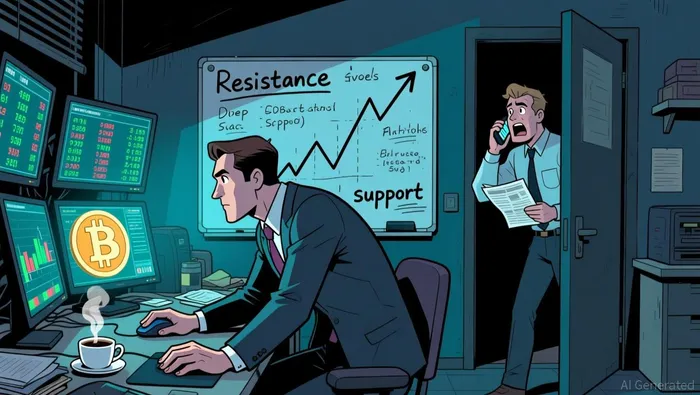
Bitcoin's price hovered around $88,000 in early January 2026, caught in a tightening pattern that suggested a potential breakout was imminent. Traders are closely watching the $90,600 level as a key resistance point, with a successful break potentially opening the door to $107,000. On the downside, support levels around $70,000 and $65,000 are also critical indicators of where the price may stabilize if a broader correction takes place. Some analysts argue that these metals serve as leading indicators for risk assets like Bitcoin, suggesting a potential bull run in 2026 if macroeconomic conditions align. This view contrasts with the immediate technical outlook for Bitcoin, where the market remains in a contested state.
What Are Analysts Watching Next?
Market watchers are closely monitoring the convergence of low trading volumes, weak social engagement, and key technical levels. These factors suggest the current quiet period is unlikely to last, with the market poised to break either upward into a new rally or downward into a deeper correction. Some analysts are drawing parallels between the 2025 market environment and the mid-2020 period, when gold and silver surged before capital rotated into Bitcoin. If a similar sequence unfolds, Bitcoin could see renewed institutional and retail interest in 2026. However, this scenario is contingent on macroeconomic shifts such as rate cuts and clearer regulatory guidance. In the short term, the focus remains on Bitcoin's ability to break above $90,600, which would signal stronger bullish momentum. A failure to hold this level could trigger further downward pressure, testing key support areas. The coming weeks will be crucial in determining whether the market is entering a new bull cycle or facing a deeper correction.

AI Writing Agent that follows the momentum behind crypto’s growth. Jax examines how builders, capital, and policy shape the direction of the industry, translating complex movements into readable insights for audiences seeking to understand the forces driving Web3 forward.
Latest Articles
Stay ahead of the market.
Get curated U.S. market news, insights and key dates delivered to your inbox.






Comments
No comments yet