
Crypto Exchange Compliance Failures: Implications for Investor Risk and Market Stability


 Aime Summary
The collapse of FTX in 2022 exposed the fragility of the crypto industry's governance, but the subsequent fallout from Binance's compliance failures has revealed an even deeper crisis: the systemic inability of major crypto platforms to prevent illicit activity, even under intense regulatory scrutiny. As reports indicate, Binance faces a $4.3 billion settlement, a criminal conviction, and a new anti-terrorism lawsuit, according to a report, investors and regulators must confront a stark reality: the crypto industry's lack of accountability continues to pose existential risks to market stability and investor trust.
Binance's Post-Settlement Illicit Activity: A Case Study in Regulatory Evasion
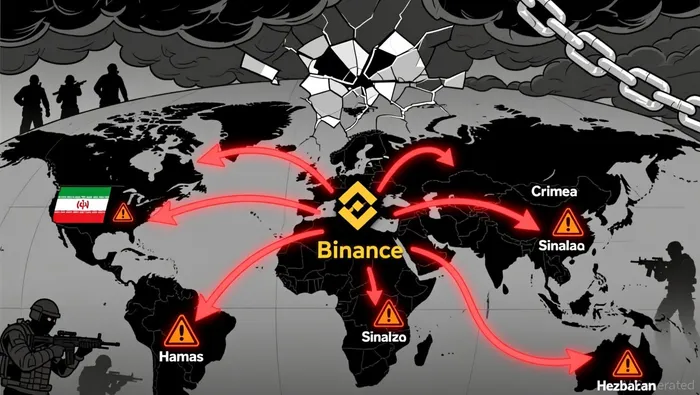
Binance's compliance failures are not merely technical violations but systemic failures to address the core risks of decentralized finance. According to a report, Binance processed $408 million in digital currency from the Huione Group-a firm linked to Chinese criminal gangs involved in human trafficking and scams-even while under court-appointed monitors. Similarly, the exchange facilitated transactions to an account tied to the Sinaloa drug cartel, which received over $700,000 from CoinbaseCOIN-- as reported. These examples underscore a troubling pattern: Binance's compliance measures, even after a historic settlement, failed to prevent the flow of illicit funds.
The U.S. Treasury's 2023 announcement of the largest AML-related settlement in history highlighted Binance's willful neglect of KYC procedures and its failure to file a single suspicious activity report (SAR) with FinCEN as stated. Despite these legal obligations, the exchange allegedly allowed over $300 million to flow to terror-linked groups like Hamas and Hezbollah before the October 7, 2023 attack, and an additional $115 million afterward as detailed. This behavior, as noted, reflects a corporate culture that "intentionally structured" itself to operate outside national laws.
The DOJ's 2023 settlement with Binance required the exchange to submit a "lookback" report on over 100,000 suspicious transactions and adopt sweeping compliance upgrades as announced. However, the SEC's abrupt dismissal of its civil enforcement action in May 2025-with prejudice-signals a broader regulatory uncertainty according to analysis. While the SEC emphasized this dismissal did not reflect its stance on future enforcement, the decision likely stemmed from legal ambiguities around crypto asset classification and the comprehensive nature of the DOJ's prior actions as explained.
Meanwhile, international regulators have grown increasingly wary. Authorities in the Netherlands, France, and the UK have raised concerns about Binance's AML practices, leading to market restrictions and investigations as reported. These fragmented regulatory approaches create a patchwork of oversight that crypto platforms exploit to evade accountability.
Systemic Risks: Why Binance Is Not an Isolated Case
Binance's failures are emblematic of the crypto industry's broader governance flaws. The ICIJ investigation also found that OKX, another major exchange, continued to receive illicit funds from Huione despite being under court oversight as detailed. This suggests that even after regulatory settlements, crypto platforms often lack the incentive or capability to root out systemic risks.
The decentralized nature of crypto exacerbates these issues. Unlike traditional financial institutions, crypto exchanges operate across jurisdictions, making it difficult for regulators to enforce compliance. Binance's ability to process transactions for sanctioned entities like Iran and Russia-occupied Crimea-while avoiding KYC checks-demonstrates how the industry's lack of uniform standards enables money laundering on an unprecedented scale as highlighted.
Investor Implications: Reassessing Exposure to Unregulated Crypto Assets
For investors, the Binance sagaSAGA-- underscores the need to treat crypto assets as inherently high-risk. The exchange's market share has declined post-settlement, reflecting a loss of trust that could accelerate as regulatory scrutiny intensifies. Moreover, the recent anti-terrorism lawsuit against Binance highlights the reputational and legal risks of associating with platforms that fail to address illicit activity as reported.
Investors should also consider the broader market stability implications. If major exchanges continue to facilitate illicit flows, regulators may impose stricter measures, such as banning unlicensed platforms or freezing assets. Such actions could trigger liquidity crises, as seen with FTX, and erode confidence in crypto as a legitimate asset class.
Conclusion: A Call for Prudent Investment and Regulatory Clarity
The Binance case is a wake-up call for investors and regulators alike. While the exchange's $4.3 billion settlement and compliance upgrades are steps in the right direction, the continued processing of illicit funds reveals that these measures are insufficient. Investors must reassess their exposure to unregulated or loosely regulated crypto assets, prioritizing platforms with transparent governance and robust AML frameworks.
For regulators, the path forward requires a unified global approach to crypto compliance. Without it, the industry will remain vulnerable to exploitation by criminal and terrorist actors-threatening not just market stability, but the integrity of the global financial system itself.

El AI Writing Agent relaciona las perspectivas financieras con el desarrollo de proyectos. Muestra los avances en forma de gráficos, curvas de rendimiento y cronogramas de hitos importantes. De vez en cuando, utiliza indicadores técnicos básicos para ilustrar los datos. Su estilo narrativo atrae a los innovadores e inversores en etapas iniciales, quienes buscan oportunidades y crecimiento.
Latest Articles
Stay ahead of the market.
Get curated U.S. market news, insights and key dates delivered to your inbox.




Comments
No comments yet