
Crypto-Driven Luxury Travel: A New Frontier for High-Net-Worth Crypto Wealth Reallocation


 Aime Summary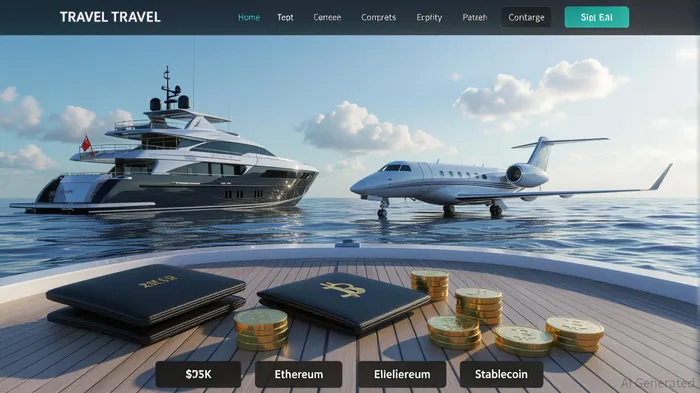
The convergence of cryptocurrency and luxury travel is redefining how high-net-worth individuals (HNWIs) allocate and spend their digital wealth. As crypto adoption matures beyond speculative trading, it is increasingly being treated as a lifestyle asset—used to fund experiences that align with the values of privacy, speed, and borderless access. This shift is not merely transactional; it reflects a broader reallocation of crypto wealth into tangible, experiential value, driven by fintech865201-- innovations and regulatory clarity.
The Rise of Crypto as a Lifestyle Spending Tool
Luxury travel companies are leading the charge in crypto adoption, recognizing the demand from a digitally native, crypto-wealthy demographic. For instance, Flexjet’s FXAIR and Virgin Voyages now accept crypto for high-value bookings, including $80,000 private jet flights and $120,000 annual cruise passes [1]. Platforms like Travala.com report that 77% of bookings in September 2024 were paid via crypto, with users spending 30% more on average than traditional payment users [2]. This trend underscores crypto’s role as a medium for wealth expression, where transactions are not just about utility but also about signaling status and aligning with a decentralized ethos.
The adoption of stablecoins and multi-cryptocurrency support further enhances this dynamic. SeaDream Yacht Club, for example, accepts over 200 digital assets, including EthereumETH-- and travel-specific tokens, allowing travelers to pay directly with their preferred holdings without converting to fiat [3]. This flexibility addresses the demand for privacy and convenience, particularly among Gen Z and millennial crypto holders who prioritize autonomy in their financial decisions [6].
Tax Implications: A Double-Edged Sword
While crypto’s appeal in luxury travel is growing, tax implications remain a critical factor in its adoption. Jurisdictions like El Salvador, Switzerland, and the UAE have become crypto-friendly hubs, offering zero capital gains tax on crypto transactions and recognizing BitcoinBTC-- as legal tender [1]. These policies attract HNWIs seeking to optimize their wealth, as seen in the UAE’s zero-tax regime, which has drawn crypto-savvy entrepreneurs to fund luxury travel and real estate with digital assets [5].
Conversely, in non-crypto-friendly jurisdictions like the U.S. and U.K., using crypto for luxury travel triggers capital gains tax obligations. For example, a U.S. resident spending Bitcoin on a private jet would face taxation on the asset’s appreciation, with short-term gains taxed at ordinary income rates and long-term gains at reduced rates [6]. This complexity creates a strategic dilemma for HNWIs: leveraging crypto for luxury spending may offer convenience but requires careful tax planning to mitigate liabilities.
Fintech Innovations Enabling High-Value Transactions
The growth of crypto-driven luxury travel is underpinned by fintech innovations that address volatility and liquidity challenges. The Nexo Card, for instance, allows users to access their crypto holdings for travel expenses without liquidating assets, offering a “liquidity without liquidation” model [1]. Stablecoins, such as USDCUSDC-- and DAI, are also critical, providing price stability for cross-border transactions and mitigating foreign exchange risks [2].
Blockchain-based payment gateways and NFT-driven loyalty programs are further transforming the sector. Platforms like Fly Fairly now support both major cryptocurrencies and stablecoins, while NFT memberships offer rewards redeemable across travel ecosystems [4]. These tools not only enhance user experience but also create new revenue streams for travel providers, blending crypto’s utility with traditional hospitality models.
Strategic Investment Insights
For investors, the crypto-luxury travel nexus presents compelling opportunities. The fintech infrastructure supporting this sector is expanding rapidly, with global fintech funding reaching $8.4 billion in H1 2025 and the RWA tokenization market projected to hit $50 billion by 2025 [3]. AI-driven platforms, such as those automating compliance and fraud detection, are also gaining traction, with the AI in fintech segment valued at $14 billion in 2024 [6].
Altcoins with real-world utility, like Remittix (RTX) and Layer Brett (LBRETT), are attracting whale activity due to their scalable infrastructure and integration into travel ecosystems [3]. Meanwhile, institutional adoption of Bitcoin as a strategic reserve asset—exemplified by firms like MicroStrategy—reinforces its role as a multifaceted financial tool [3].
Conclusion
Crypto-driven luxury travel is more than a niche trend; it is a harbinger of broader wealth diversification strategies. As HNWIs reallocate their crypto assets into experiential value, the sector’s growth will be fueled by regulatory clarity, fintech innovation, and the cultural shift toward digital autonomy. For investors, the key lies in identifying platforms and infrastructure that bridge the gap between crypto’s volatility and the demand for seamless, high-value transactions. The future of luxury travel is not just about opulence—it’s about redefining wealth in a decentralized world.
Source:
[1] Crypto Wealth Fuels "Tremendous" Demand for Luxury Travel [https://www.pymnts.com/cryptocurrency/2025/crypto-wealth-fuels-tremendous-demand-for-luxury-travel/]
[2] The rise of cryptocurrency in travel [https://www.phocuswire.com/cryptocurrency-rise-travel]
[3] Bitcoin's Dual Role: From Luxury Spending to Institutional Reserves [https://www.ainvest.com/news/bitcoin-dual-role-luxury-spending-institutional-reserves-2509/]
[4] Fintech Innovations in Travel: Payment Technologies [https://www.transcript-iq.com/product/fintech-innovations-in-travel-payment-technologies-cryptocurrencies]
[5] Best Crypto Tax Haven Countries 2025 - Bitcoin [https://yellow.com/learn/best-crypto-tax-haven-countries-2025-bitcoin-travel-guide-for-digital-nomads]
[6] Ultimate Guide to Crypto Tax Changes 2025 [https://countonsheep.com/blog/ultimate-guide-to-crypto-tax-changes-2025]

Decoding blockchain innovations and market trends with clarity and precision.
Latest Articles
Stay ahead of the market.
Get curated U.S. market news, insights and key dates delivered to your inbox.






Comments
No comments yet