
Crypto Developer Lawsuit Dismissed Amid Legal Uncertainty
 Aime Summary
The U.S. Department of Justice faces criticism for continuing legal actions against privacy-focused crypto developers, despite a stated policy shift toward deprioritizing enforcement in the sector. The CLARITY Act seeks to address legal ambiguities for DeFi developers, but its final form remains under negotiation in Congress. Recent actions highlight growing tensions between pro-crypto rhetoric and actual legal enforcement, raising concerns about regulatory clarity for developers and investors. Treasury is implementing measures to support financial institutions in combating illicit finance through innovative tools. Legal actions against developers like Tornado CashTORN-- and Samourai Wallet underscore the risks for open-source developers in the U.S.
The U.S. legal landscape for crypto developers remains uncertain despite the Trump administration's public support for digital assets. Recent enforcement actions against privacy-focused tools, such as those involving Tornado Cash and Samourai Wallet, highlight the contradiction between pro-crypto statements and active prosecutions. Developers continue to operate under the risk of criminal charges, even as the administration has issued memos to reduce regulatory enforcement in the space. This legal ambiguity complicates the development of broader crypto infrastructure and creates uncertainty for investors.
The Department of Justice has faced criticism for its inconsistent enforcement approach, particularly in cases involving non-custodial privacy tools. While the administration has signaled a shift in focus, active legal cases against developers persist, creating a conflict between policy direction and practical outcomes. Critics argue this contradiction undermines investor confidence and makes it difficult for developers to operate without fear of legal repercussions.
To address these concerns, the CLARITY Act is being debated in Congress. The bill aims to provide legal clarity for DeFi developers by clarifying their status and removing the risk of being misclassified as money transmitters. However, the final version of the bill remains under negotiation, with ongoing discussions focusing on stablecoin provisions and liability concerns. The outcome of these negotiations could significantly impact the regulatory environment for non-custodial developers and shape the future of DeFi innovation in the U.S.
What Legal Risks Face Crypto Developers?
Privacy-focused crypto developers face significant legal exposure due to the current enforcement landscape. Recent prosecutions, including those of Tornado Cash and Samourai Wallet developers, underscore the potential for criminal charges under existing anti-money laundering laws. These cases highlight the risks for developers who build non-custodial tools, as they can be targeted for their contributions to privacy-enhancing technologies even as the administration publicly supports crypto innovation.
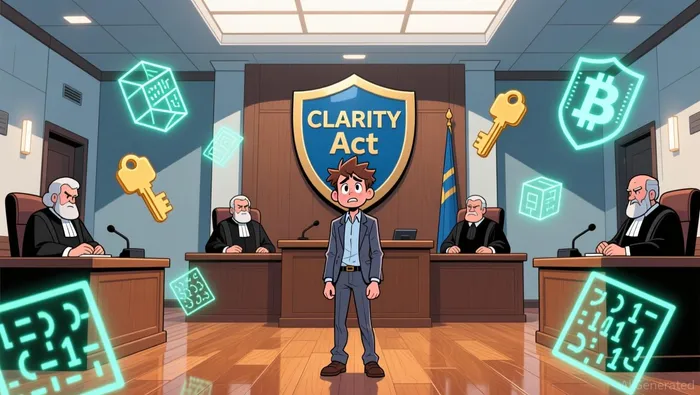
The lack of clear legal protections leaves developers in a vulnerable position. The DOJ's memo on deprioritizing enforcement in the crypto space does not offer binding protections, and developers remain at risk of prosecution for activities that align with broader industry trends. This contradiction has led to calls for legislative action, such as the Blockchain Regulatory Certainty Act (BRCA), which would offer clearer legal boundaries for non-custodial developers. Until such protections are established, developers will continue to operate in a legal gray area, limiting their ability to innovate and invest in the sector.
What Role Does the CLARITY Act Play in Resolving Legal Uncertainty?
The CLARITY Act is a key legislative effort aimed at providing legal clarity for DeFi developers. The bill includes provisions that would remove the risk of securities registration for certain activities, such as running nodes or building self-custody solutions. This move is intended to encourage innovation in the DeFi space by reducing regulatory burdens and providing clearer legal boundaries for developers. However, the final form of the bill remains in flux as negotiations continue in Congress.
One of the most contentious aspects of the CLARITY Act is its treatment of stablecoin yield structures. Industry advocates have pushed for provisions that preserve user-driven rewards while avoiding conflicts with traditional banking regulations. A potential compromise could allow for DeFi platforms to offer rewards without imposing interest-like obligations on developers, which could shift capital from traditional banking to DeFi platforms. The outcome of these negotiations will determine the extent to which the CLARITY Act can provide meaningful legal protections for developers and shape the future of DeFi innovation in the U.S.
How Is the Treasury Addressing Illicit Finance in the Crypto Sector?
The U.S. Department of the Treasury has outlined a multi-year strategy to combat illicit finance in the digital asset space. In 2026, the Treasury plans to implement measures that will assist financial institutions in leveraging innovative tools to detect and prevent financial crimes. These efforts aim to strengthen the financial system by enabling institutions to better detect and respond to illicit activities, including money laundering and fraud.
The Treasury's approach emphasizes the importance of updated regulatory frameworks to address emerging threats posed by financial innovation865039--. The department has highlighted the need for international cooperation and information sharing to combat cross-border illicit finance, particularly in the context of digital assets and decentralized finance. These efforts are part of a broader initiative to modernize regulatory oversight and ensure that the U.S. financial system remains resilient in the face of evolving threats.
Despite these measures, the sector continues to face challenges related to regulatory ambiguity and enforcement inconsistencies. The ongoing legal cases against crypto developers underscore the need for a more coherent and predictable regulatory environment. As the Treasury and Congress continue to explore policy options, the outcome of these efforts will have significant implications for the future of crypto innovation and the broader financial ecosystem.

Stay ahead of the market.
Get curated U.S. market news, insights and key dates delivered to your inbox.


AInvest
PRO
AInvest
PRO



Comments
No comments yet