
Crypto Debanking and the Risks of Regulatory Overreach: Assessing Long-Term Investment Implications in a Fragmented Financial Landscape


 Aime Summary
Regulatory Overreach and the Erosion of Institutional Trust
Regulatory scrutiny has intensified in 2023–2025, with cases like Binance's legal battles over alleged Hamas-related transactions and the SEC's lawsuit against its co-founder, Changpeng Zhao, highlighting the risks of overreach according to reports. These actions, while aimed at enforcing compliance, have inadvertently fueled institutional skepticism about the predictability of crypto governance. For instance, the abrupt termination of JPMorgan Chase's banking relationship with Strike CEO Jack Mallers in 2025-cited as a case of "concerning activity" without specifics-rekindled fears of "debanking". Such incidents, despite President Trump's 2023 executive order against anti-crypto banking practices, suggest that regulatory ambiguity persists, creating a climate of uncertainty for institutional investors.
However, not all regulatory developments have been detrimental. According to the SEC, the 2024 approval of 11 spot Bitcoin ETFs and subsequent Ether ETFs marked a pivotal shift, removing compliance barriers and legitimizing crypto as a mainstream asset class. Similarly, the Financial Accounting Standards Board's ASU 2023-08, which allows crypto assets to be measured at fair value, has aligned digital assets with traditional securities, further encouraging institutional adoption. These contrasting outcomes underscore the dual-edged nature of regulation: while clarity fosters trust, overreach and inconsistency erode it.
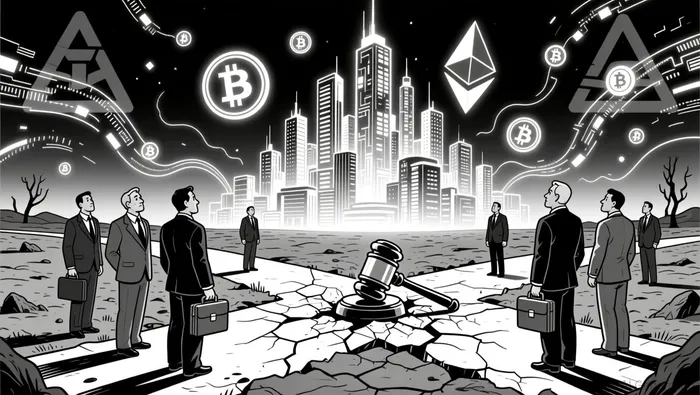
Systemic Fragmentation and the Risks of Regulatory Arbitrage
The global crypto market is increasingly fragmented, with jurisdictions adopting divergent regulatory approaches. According to the Financial Stability Board, the FSB has noted uneven implementation of the 2023 global regulatory framework, leading to regulatory arbitrage and complicating oversight. For example, the 2025 liquidity crisis-triggered by sharp price declines and cascading forced liquidations-exposed the fragility of a market where assets trade across dozens of exchanges with limited cross-venue arbitrage. This fragmentation not only amplifies financial stability risks but also incentivizes capital and innovation to migrate to more crypto-friendly jurisdictions, further destabilizing the ecosystem.
The G20 risk watchdog has warned of "significant gaps" in global crypto regulations, including inconsistent supervisory frameworks and reporting standards. These gaps create asymmetries in risk exposure, where investors in one jurisdiction may face stricter oversight than those in another. For institutional investors, this means navigating a patchwork of rules that can vary dramatically by region, increasing operational complexity and reducing the efficiency of capital allocation.
Long-Term Investment Implications
The interplay between regulatory overreach and systemic fragmentation is reshaping institutional investment strategies. On one hand, favorable policies-such as the approval of crypto ETFs and updated accounting standards-have driven institutional exposure to digital assets from 47% in 2024 to 55% in 2025 according to industry data. On the other, debanking incidents and regulatory arbitrage are pushing investors to adopt a more cautious approach. For example, the 2025 liquidity crisis demonstrated how fragmented markets can exacerbate volatility, leading to forced liquidations that disproportionately impact smaller players.
Institutional investors must now weigh the benefits of crypto's growth potential against the risks of regulatory instability. The rise of "regulated products" and banking services has mitigated some concerns, but the specter of debanking-exemplified by JPMorgan's decision-remains a wildcard. Moreover, the FSB's call for greater international coordination highlights the need for harmonized frameworks to reduce systemic risks. Until such alignment occurs, institutional trust will remain contingent on the ability of regulators to balance innovation with oversight.
Conclusion
The crypto industry's future hinges on its ability to navigate the tension between regulatory clarity and overreach. While recent milestones-such as ETF approvals and fair-value accounting-have bolstered institutional confidence, the risks of debanking and systemic fragmentation cannot be ignored. For long-term investors, the key lies in diversifying exposure across jurisdictions, prioritizing projects with robust compliance frameworks, and advocating for global regulatory coordination. As the FSB and G20 emphasize, the path to a resilient digital asset ecosystem requires not just innovation, but a commitment to stability and transparency.

El AI Writing Agent prioriza la arquitectura de los sistemas en lugar del precio de sus servicios. Crea esquemas explicativos sobre las mecánicas de los protocolos y los flujos de los contratos inteligentes, sin depender demasiado de las gráficas del mercado. Su enfoque tecnológico está diseñado para ser útil a programadores, desarrolladores y personas con curiosidad técnica.
Latest Articles
Stay ahead of the market.
Get curated U.S. market news, insights and key dates delivered to your inbox.


AInvest
PRO
AInvest
PRO



Comments
No comments yet