
Crypto Community Shifts to Pragmatism at ETH Dublin
ETH Dublin, a significant event in the crypto community, showcased the evolution and maturation of the industry over the past seven years. The conference highlighted the growing pragmatism within the community, as evidenced by the diverse range of projects presented during the hackathon. One notable project addressed the issue of doom-scrolling and screen-time goals, demonstrating the community's shift towards practical applications rather than purely ideological pursuits.
Paul Dylan EnnisEBF--, an Irish academic and professor at University College Dublin, reflected on the transformation of the crypto community. He noted that the ideals once held sacred by the community have begun to materialize in various forms, such as the adoption of zero-knowledge proofs in digital ID systems and the influence of open-source culture on broader tech circles. However, he also observed a disconnect between the community's discussions and the reality of user adoption, which often prioritizes financial speculation over abstract concepts like individual sovereignty and privacy.
The conference featured a panel discussion on onboarding the masses to nonfungible tokens (NFTs), where participants shared their experiences and challenges. The conversation underscored the community's ongoing efforts to bridge the gapGAP-- between technological innovation and user adoption, highlighting the need for more accessible and user-friendly solutions.
One of the most telling signs of the crypto community's maturation was the shared venue between ETH Dublin and a major Solana event. This co-location acknowledged the growing importance of Solana and the ecosystem's evolution beyond ideological purity. Many hackathon submissions at ETH Dublin had also been pitched at various Solana hackathons, indicating a trend towards multi-chain curiosity and pragmatism among builders.
The hackathon results revealed a significant improvement in the quality of projects, largely due to the use of AI-assisted development tools. The winning projects addressed real behavioral and infrastructure problems, such as generating confirmation emails for crypto transactions and providing payment middleware for AI agents. These projects demonstrated the community's shift towards practical applications and user-centric solutions.
The conference also highlighted the community's disillusionment with its own governance experiments, particularly with decentralized autonomous organizations (DAOs). Many participants expressed frustration with the bureaucratic inefficiency and governance theater that had become prevalent in DAOs, leading to a sense of disillusionment and a call for course correction.
Despite these challenges, the community's global nature remained its greatest strength. Attendees brought diverse perspectives and experiences, driving practical solutions for real problems like credit score portability and international payments. The community's maturation from revolutionary idealism to pragmatic incrementalism was evident, as participants reflected on the meaning and purpose of their work.
In conclusion, ETH Dublin showcased the crypto community's evolution from revolutionary idealism to pragmatic incrementalism. The conference highlighted the community's shift towards practical applications and user-centric solutions, as well as its ongoing efforts to bridge the gap between technological innovation and user adoption. Despite the challenges and disillusionment, the community's global nature and shared belief in the power of technology to make the world better remained its greatest strengths. 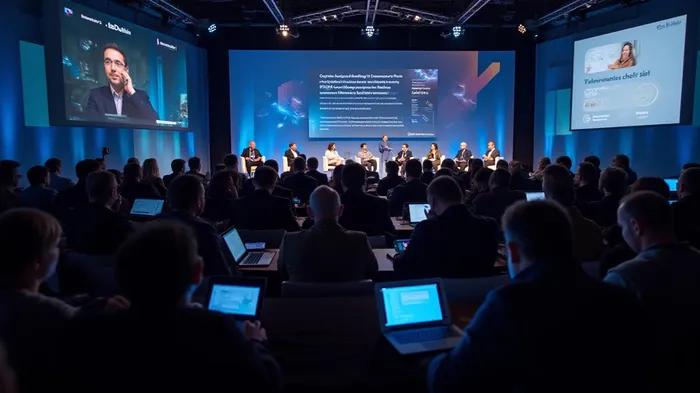

Stay ahead of the market.
Get curated U.S. market news, insights and key dates delivered to your inbox.






Comments
No comments yet