
Crypto Bills Stalled as House Vote Fails 55% to 45%
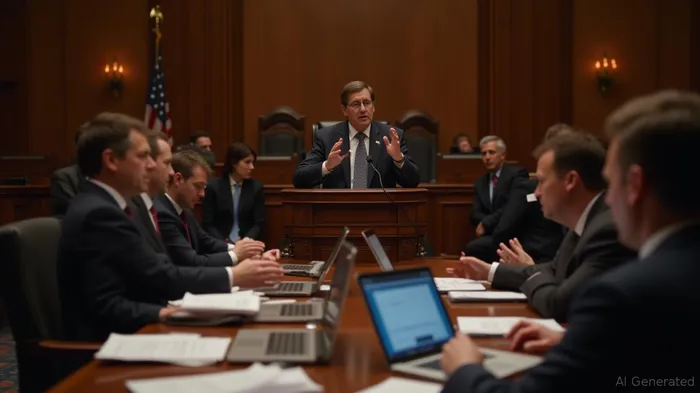
The United States House of Representatives has encountered a significant hurdle in its efforts to legislate three major cryptocurrency bills. A procedural vote aimed at paving the way for discussions on these bills was rejected, with 223 "no" votes against 196 "yes" votes. This failure has effectively stalled the legislative process for these crucial pieces of legislation.
The three bills in question are the National Innovation Guidelines and Establishment for U.S. Stablecoins Act (GENIUS), the Digital AssetDAAQ-- Market Openness Act (Clarity), and a bill spearheaded by House Republican Deputy Chairman Tom Emmer aimed at blocking the direct issuance of Central Bank Digital Currency (CBDC) to individuals. The GENIUS bill, which has already passed the Senate, mandates that stablecoin issuances be fully collateralized by US dollars or similar liquid assets, requires annual audits for issuers with a market capitalization over $50 billion, and establishes rules for overseas stablecoin issuance. The Clarity Act seeks to clarify the regulatory framework for crypto assets by defining the roles and jurisdictions of the U.S. Securities and Exchange Commission (SEC) and the Commodity Futures Trading Commission (CFTC), and requires digital asset service providers to notify individual investors and segregate client funds from company assets. The third bill aims to prevent the direct issuance of CBDC to individuals, reflecting concerns about the potential impact on the digital asset industry.
The procedural vote failed due to opposition from 12 Republicans, including Marjorie Taylor Greene, Chip Roy, Michael Cloud, and Anna Paulina Luna. House Speaker Mike Johnson indicated that some lawmakers had demanded that all crypto bills be merged into a single text, highlighting the deep divisions within Congress on cryptocurrency regulation. This standoff underscores the complex and contentious nature of cryptocurrency regulation in the U.S., with proponents arguing for clear regulations to foster innovation and protect investors, and opponents expressing concerns about potential overreach and the impact on the digital asset industry.
The rejection of the proposal is a setback for advocates of cryptocurrency regulation, who had hoped for much-needed clarity in the sector. The GENIUS Act was seen as a crucial step towards creating a regulatory environment that balances innovation with consumer protection. The Clarity Act was expected to address long-standing issues related to the classification of digital assets and the jurisdiction of regulatory bodies. The Stablecoin Transparency Act was anticipated to provide much-needed guidelines for stablecoins, which have become an integral part of the cryptocurrency ecosystem.
The stalled legislation raises questions about the future of digital asset regulation in the U.S. With the current legislative session nearing its end, it remains uncertain whether these bills will be revisited or if new proposals will be introduced. The cryptocurrency industry continues to evolve rapidly, with new technologies and innovations emerging at a rapid pace. The lack of regulatory clarity could hinder the growth and development of the sector, as businesses and investors grapple with uncertainty and risk.
In conclusion, the rejection of the proposal to discuss three major cryptocurrency bills in the U.S. House of Representatives marks a significant setback for advocates of digital asset regulation. The outcome underscores the complex and contentious nature of cryptocurrency regulation in the U.S. and highlights the need for further debate and negotiation among lawmakers. As the cryptocurrency industry continues to evolve, the lack of regulatory clarity could have far-reaching implications for its growth and development.

Entiende rápidamente la historia y el origen de varias monedas de gran popularidad
Latest Articles
Stay ahead of the market.
Get curated U.S. market news, insights and key dates delivered to your inbox.


AInvest
PRO
AInvest
PRO



Comments
No comments yet