
Crypto Bills Spark Partisan Debate in Congress
In Washington, a contentious debate has erupted in Congress over a trio of Republican-backed bills aimed at reshaping digital asset policy. The proposed legislation, which includes the GENIUS Act, the CLARITY Act, and the Anti-CBDC Surveillance State Act, was introduced in the House of Representatives to address data privacy compliance and future digital currency systems. Republicans argue that these bills are essential for maintaining the US’s competitive edge in financial innovation.
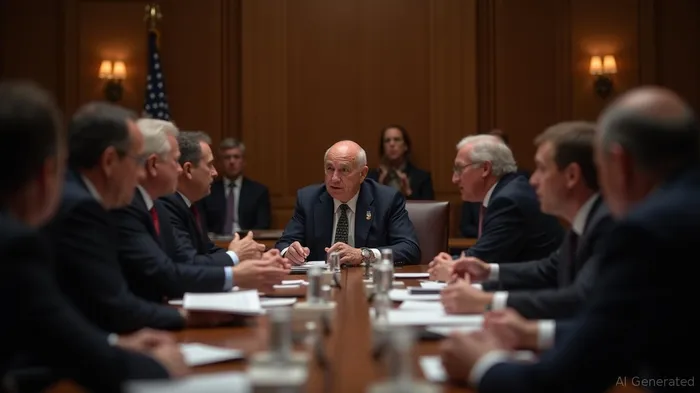
However, the initiative has faced sharp criticism from Democrats, who accuse the GOP of favoring corporate interests over the well-being of everyday Americans. During a heated Rules Committee hearing, Democratic Rep. Jim McGovern denounced the bills as a “crypto giveaway,” asserting that they ignore the risks of crypto-related corruption and are designed to benefit the wealthy at the expense of average investors.
McGovern’s remarks were seen as a direct criticism of President Donald Trump’s increased involvement in the crypto space, including his family-linked company World Liberty Financial and its associated stablecoin USD1, as well as his meme coin, Official Trump. Republicans, on the other hand, defend the bills as a means to future-proof the economy and maintain US competitiveness in the rapidly evolving cryptospace.
The GENIUS Act aims to establish comprehensive federal standards for stablecoin issuers, while the CLARITY Act addresses deficiencies in digital asset market structure. The Anti-CBDC Surveillance State Act seeks to prohibit a US Central Bank Digital Currency, which many Republicans fear could be used to surveil private financial activity. Republicans argue that these bills will advance transparency, offer legal surety, and guard against harm to consumers while also spurring growth in the digital economy.
Critics, however, contend that the legislation does not do enough to tackle fraud and abuse. McGovern and other Democrats argue that the bills open doors to market manipulation and are tilted toward rich insiders rather than average investors. The debate highlights the deep partisan divide in Congress over crypto regulation, with Republicans pushing for innovation and Democrats calling for stronger consumer protections.
Republicans face an uphill battle in advancing the legislation, given their narrow majority in the House and lack of control in the Senate. They may need Democratic support to progress the bills in both chambers, but Democrats are not easily swayed. Representative Maxine Waters and Senator Adam Schiff have expressed concerns about conflicts of interest tied to Trump and the potential for dangerous entanglements between crypto firms and elected officials.
Waters noted that many components of the bill align with the goals of Trump’s crypto-backed ventures, emphasizing that the American people deserve policies that protect their money, not schemes designed to enrich political allies. Some Democrats also argue that the legislation diverts attention from urgent matters, such as preventing national security threats and addressing economic inequality.
Despite the contentious debate, Republicans remain committed to revisiting the crypto package before the August recess, leaving them with just under two weeks to build bipartisan support. The discussion on Monday briefly shifted to the Department of Defense Appropriations Act, highlighting the tension and pressure in the legislative calendar. As the debate continues, the future of these bills remains uncertain, with both sides digging in their heels on the issue of crypto regulation.

Stay ahead of the market.
Get curated U.S. market news, insights and key dates delivered to your inbox.






Comments
No comments yet