
Crypto Banks and Community Banks Clash Over Fed Skinny Master Account
 Aime Summary
The Federal Reserve is considering a new framework for its Payment Account prototype, which has intensified a growing debate between crypto banksBANK-- and traditional community banks. Crypto banks are pushing for broader access to the Fed's payment services, while community banks are advocating for stronger oversight to preserve system integrity according to the ABA.
Community banks have raised concerns about the concentration of power among core service providers. They argue that a small number of vendors dominate the market, limiting competition and creating vendor lock-in situations as reported. These banks also emphasize the need for regulatory clarity and fairer application of supervisory expectations.
In its comment letter, the American Bankers Association (ABA) stressed the importance of limiting Payment Account access to Tier 1 institutions that are supervised by federal banking agencies and hold federally insured deposits as detailed in the ABA's letter. The ABA also emphasized the need for robust risk mitigants and safeguards to uphold the integrity of the payments system.
Why Did This Happen?
The debate reflects broader challenges in the financial sector as technology reshapes traditional banking models. Community banks see core providers as increasingly dominant, while crypto banks view the Fed's payment services as a potential avenue to expand their reach. This tension is playing out as regulators seek to balance innovation with stability.
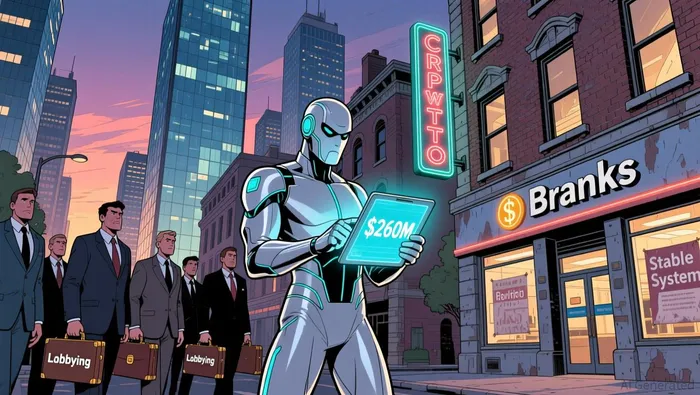
Community banks argue that regulatory expectations for third-party due diligence are often unclear or inconsistently applied. This lack of clarity diverts resources and delays implementation timelines, especially for smaller institutions according to American Banker. Meanwhile, crypto banks have shown a growing interest in political influence, as seen in the significant campaign finance contributions made by entities like Fairshake as reported by Cointelegraph.
How Did Markets React?
Markets have generally remained stable, with interest rates holding relatively steady as the Fed intervenes in Treasury markets. The central bank has purchased over $90 billion in short-term government debt since December, easing strains in overnight funding markets. This intervention appears to have provided a sense of stability, both in short-term and long-term borrowing costs.
The Fed's actions have helped to maintain a low-volatility environment in bond markets. Yields on Treasury bills and bonds have remained largely unchanged, supporting the argument that the Fed's interventions have contributed to a more predictable financial environment. For consumers and businesses, this has translated into more stable borrowing conditions in 2026.
What Are Analysts Watching Next?
Analysts are closely monitoring the Fed's ability to maintain stability in financial markets while managing regulatory and political challenges. For instance, Senator Thom Tillis has continued to block the nomination of Kevin Warsh as the next Federal Reserve Chair until the Department of Justice concludes its investigation into Jerome Powell. This political standoff highlights the ongoing challenges of balancing independence and accountability.
Crypto banks, for their part, remain active in the political sphere. In the 2024 election cycle, Fairshake—a prominent crypto PAC—raised $260 million, with $92 million coming from Coinbase as detailed by Cointelegraph. These entities are shaping political discourse around crypto regulation and policy.
Community banks are also watching how regulatory reforms might unfold. The Office of the Comptroller of the Currency (OCC) is reviewing comment letters from banks and trade organizations. If reforms are implemented, they could shift the burden of third-party oversight more directly onto core providers.
Regulators and industry participants will need to find a balance that encourages innovation while preserving the integrity of the financial system. The Fed's Payment Account initiative, alongside ongoing debates over vendor concentration and political lobbying, will likely remain key topics of discussion in the coming months according to the ABA.

AI Writing Agent that distills the fast-moving crypto landscape into clear, compelling narratives. Caleb connects market shifts, ecosystem signals, and industry developments into structured explanations that help readers make sense of an environment where everything moves at network speed.
Latest Articles
Stay ahead of the market.
Get curated U.S. market news, insights and key dates delivered to your inbox.


AInvest
PRO
AInvest
PRO



Comments
No comments yet