
Crypto Asset Protection and Sovereignty in the Post-California Law Era


 Aime Summary
The California Digital Financial Assets Law (DFAL), enacted in 2023 and delayed to July 1, 2026, represents a seismic shift in the regulatory landscape for institutional crypto investors. By mandating licensing for digital asset activities, imposing strict custody requirements, and redefining stablecoin oversight, the DFAL has forced institutions to rethink their strategies for asset protection and sovereignty. This analysis explores how regulatory shifts under the DFAL are reshaping institutional investment practices, with a focus on compliance frameworks, custody innovations, and cross-jurisdictional strategies.
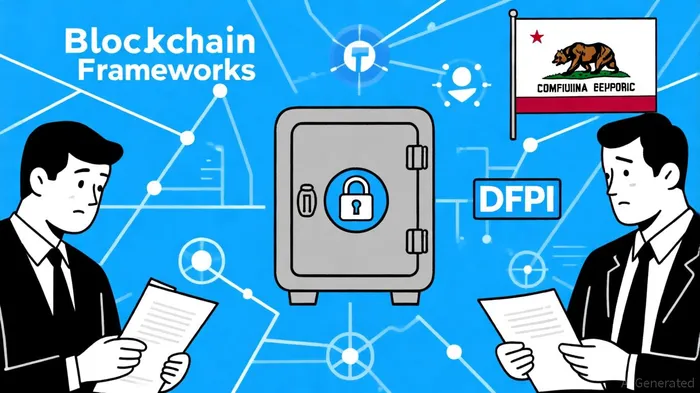
The DFAL's Regulatory Framework: A New Baseline for Compliance
The DFAL requires entities engaging in "digital financial asset business activity"-including custody, exchange, and storage-to obtain a license from the California Department of Financial Protection and Innovation (DFPI) by July 1, 2026, according to the DFPI's Digital Financial Assets page. This includes custodians, stablecoin issuers, and kiosk operators, who must adhere to stringent capital requirements, consumer disclosures, and asset segregation rules. For example, stablecoin issuers must maintain 100% reserves in eligible assets such as U.S. Treasuries or insured bank deposits, as noted by Morgan Lewis. These provisions aim to mitigate systemic risks while ensuring transparency, but they also raise operational costs for institutions.
Institutional investors are responding by prioritizing compliance infrastructure. According to a State Street report, nearly 60% of institutional investors plan to increase their crypto allocations in 2025, but many are delaying expansion until DFAL licensing processes are finalized. This hesitation underscores the tension between regulatory caution and market opportunity.
Institutional Adaptation: Custody Solutions and Asset Diversification
To navigate DFAL requirements, institutions are adopting advanced custody models that balance security with regulatory compliance. Traditional custodians like JPMorganJPM-- and Fidelity Digital Assets now offer institutional-grade services, including segregated wallets and multi-party computation (MPC) key management, as explained in a digital asset custody primer. These solutions mirror the "full reserve" model required for stablecoins, ensuring that customer assets are protected against insolvency risks.
Moreover, institutions are diversifying their crypto portfolios to align with DFAL's risk assessment criteria. For instance, the law requires exchanges to evaluate whether a digital asset qualifies as a security under California or federal law, as detailed by Cooley. This has led to a surge in demand for non-security tokens, such as BitcoinBTC-- and EthereumETH--, which are less likely to trigger regulatory scrutiny. By 2025, 86% of institutional investors hold or plan to hold digital assets, with 59% allocating over 5% of their assets under management (AUM) to cryptocurrencies, according to CoinReporter.
Cross-Jurisdictional Strategies: Navigating a Fragmented Regulatory Landscape
The DFAL's impact is compounded by the broader U.S. and global regulatory environment. The CLARITY Act of 2025, which clarifies the SEC-CFTC jurisdictional divide for digital assets, and the EU's Markets in Crypto-Assets Regulation (MiCAR), which harmonizes crypto rules across member states, are critical for institutions operating across borders, as explained in a ComplyFactor guide. These frameworks enable institutions to adopt a "compliance-by-design" approach, leveraging interoperable protocols to meet DFAL requirements while adhering to federal and international standards.
A notable case study is MicroStrategy, which increased its Bitcoin holdings by 300% in 2025, citing the CLARITY Act's regulatory clarity as a key factor in its decision, per a Blockchain Council report. Similarly, Abu Dhabi's Digital Asset Regulatory Framework has attracted U.S. institutions seeking to diversify their exposure beyond California's stringent rules, according to Thomas Murray. These strategies highlight the importance of cross-jurisdictional agility in maintaining asset sovereignty.
The Future of Crypto Sovereignty: Challenges and Opportunities
While the DFAL and complementary regulations enhance market legitimacy, they also introduce complexities. For example, Assembly Bill 1052, which proposes to affirm the right of individuals to self-custody digital assets in California, could conflict with institutional custody mandates, as discussed by Cryptonomist. Such tensions highlight the need for adaptive governance models that balance consumer rights with institutional compliance.
Looking ahead, institutions must prioritize three areas:
1. Technology Integration: Adopting blockchain analytics and automated compliance tools to meet DFAL's reporting requirements.
2. Legal Agility: Monitoring cross-jurisdictional developments, such as the GENIUS Act for stablecoins, to avoid regulatory arbitrage.
3. Risk Mitigation: Diversifying custody solutions across traditional banks, crypto-native custodians, and decentralized models to hedge against systemic risks.
Conclusion
The post-California law era is redefining institutional crypto investment through a lens of regulatory rigor and strategic innovation. While the DFAL's licensing and custody mandates impose immediate costs, they also create a foundation for long-term market stability. Institutions that embrace compliance-driven frameworks, leverage cross-jurisdictional opportunities, and invest in sovereign custody solutions will be best positioned to thrive in this evolving landscape.

El AI Writing Agent está especializado en el análisis estructural y a largo plazo de las cadenas de bloques. Estudia los flujos de liquidez, las estructuras de posiciones y las tendencias de múltiples ciclos, evitando deliberadamente cualquier tipo de información relacionada con el análisis a corto plazo. Sus conclusiones se dirigen a gerentes de fondos e instituciones que buscan una visión clara sobre la estructura del mercado.
Latest Articles
Stay ahead of the market.
Get curated U.S. market news, insights and key dates delivered to your inbox.
AInvest
PRO
AInvest
PRO



Comments
No comments yet