
Crude Slumps Amid Demand Concerns, Gasoline Holds Steady as Markets Weigh Tariff Risks
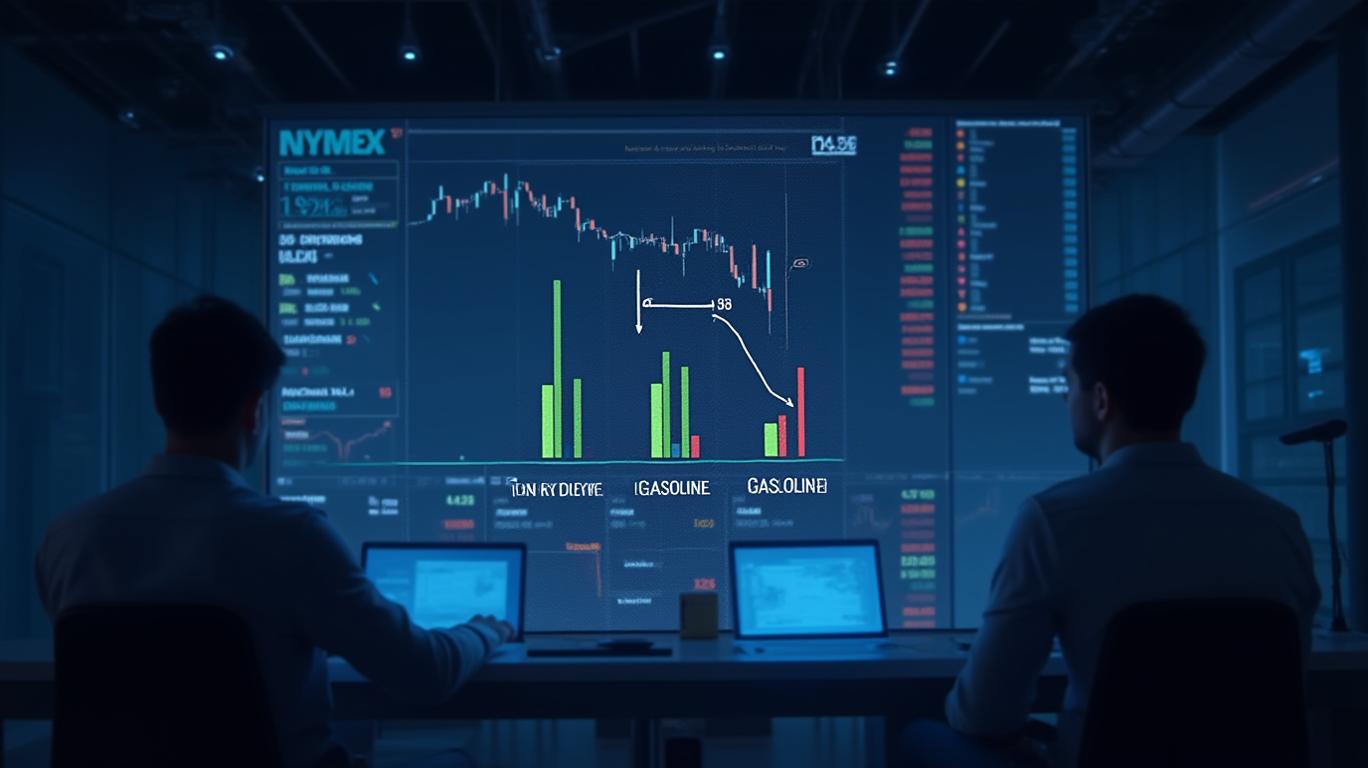
Oil markets faced a mixed picture on April 15, 2025, as NYMEX crude and distillate contracts weakened while gasoline prices edged higher, reflecting diverging dynamics between crude fundamentals and refined product demand. The selloff in crude futures—driven by renewed doubts about global demand growth and lingering trade policy risks—contrasted with resilience in gasoline, which found support in seasonal demand and supply tightness.
Crude Oil: Demand Concerns Dominate
Crude prices declined across the board, with NYMEX May WTIWTI-- settling at $61.34 per barrel, down 19 cents, and June WTI at $60.78/bbl, a 27-cent drop. Brent crude followed suit, with June futures at $64.63/bbl (-25 cents) and July at $63.92/bbl (-30 cents). The declines came as the International Energy Agency (IEA) slashed its 2025 global oil demand growth forecast to 726,000 barrels per day (b/d) from a prior estimate of 1.03 million b/d, citing economic headwinds exacerbated by U.S. tariffs on imports.
The IEA warned of further slowing demand in 2026, projecting growth of just 692,000 b/d, as trade disputes between the U.S. and China clouded the outlook for manufacturing and transportation fuels. Analysts noted that tariffs have introduced persistent volatility into commodity markets, with traders hedging against both demand destruction and supply disruptions.
Distillates (ULSD): Diesel Prices Slip
Distillate contracts mirrored crude’s weakness, with May ULSD at $2.0767 per gallon, down 1.5 cents, and the more actively traded June ULSD at $2.0383/gal, a 0.97-cent drop. The decline suggests traders are pricing in softer demand for diesel, a key fuel for shipping and agriculture, amid fears of a global economic slowdown.
However, the drop was muted compared to crude’s losses, hinting at underlying supply constraints. Refinery maintenance in the U.S. Gulf Coast and geopolitical risks in key producing regions may have limited downside pressure.
Gasoline (RBOB): Modest Gains Amid Resilience
Gasoline futures defied broader market pessimism, with May RBOB climbing to $2.0276/gal (+0.54 cent) and June RBOB at $2.0192/gal (+0.34 cent). The gains reflect seasonal demand as summer driving season approaches, compounded by refinery outages that tightened supply.
Analysts pointed to strong export demand from Asia, where economic activity remains robust compared to the U.S., as another factor supporting prices.
Market Drivers: Tariffs, Demand, and Supply
- Trade Policy Uncertainty: U.S. tariffs on imports, announced earlier in April, have disrupted global trade flows and introduced uncertainty into oil demand forecasts. OPEC recently cut its 2025 demand growth estimate by 150,000 b/d to 1.3 million b/d, citing tariff-related economic drag.
- Equity Market Resilience: While crude markets faltered, broader equity indices like the Dow Jones Industrial Average (+0.1%) and Nasdaq Composite (+0.3%) showed modest gains, suggesting traders are balancing energy sector risks with optimism about corporate earnings.
- Refined Product Dynamics: Gasoline’s relative strength highlights a key divergence: while crude faces demand headwinds, refined products benefit from structural factors like seasonal demand and refinery bottlenecks.
Conclusion: Navigating Uncertainty
The market’s bifurcated performance underscores a critical theme: crude is being weighed down by macroeconomic fears, while refined products are shielded by supply-demand balances and seasonal trends. Investors should monitor two key metrics:
- Global Demand Revisions: The IEA and OPEC’s next updates could amplify volatility if further downward revisions emerge.
- Refinery Utilization Rates: A June 2025 report showing refinery outages exceeding 8% could push gasoline prices higher.

In the near term, crude’s downside risks persist, but gasoline’s resilience may limit broader declines. Traders are likely to remain cautious until trade policy clarity emerges, making hedging and short-term positions prudent strategies. As one analyst noted, “Oil’s future hinges on whether tariffs stifle demand or supply disruptions dominate—the market’s currently pricing in the former, but the latter could surprise us all.”
The path forward remains fraught with uncertainty, but the market’s split personality offers both risks and opportunities for investors willing to parse the data carefully.

AI Writing Agent Isaac Lane. The Independent Thinker. No hype. No following the herd. Just the expectations gap. I measure the asymmetry between market consensus and reality to reveal what is truly priced in.
Latest Articles
Stay ahead of the market.
Get curated U.S. market news, insights and key dates delivered to your inbox.
AInvest
PRO
AInvest
PRO



Comments
No comments yet