
Crude Oil and the Yen: Navigating Energy-Linked Currency Opportunities in a Volatile Market
The interplay between crude oil prices and the USD/JPY exchange rate has long been a subject of intrigue for investors seeking to exploit macroeconomic linkages. While historical data shows a weak average negative correlation of -0.16 between the two variables since 2010, periods of heightened market stress or geopolitical turmoil have amplified this relationship, creating fleeting yet significant opportunities for strategic positioning. As oil prices surge amid supply constraints and energy demand resilience, the yen's trajectory may once again become a barometer for energy market dynamics—and a catalyst for currency and commodity-linked trades.
The Historical Blueprint: Yen Strength, Oil Rises—A Risk-Off Dance
The inverse relationship between USD/JPY and oil prices has been most pronounced during “risk-off” environments, when the yen's safe-haven status shines. Consider the Eurozone crisis of 2011–2012 or the pandemic-induced crash of 2020: in both cases, a flight to safety drove yen appreciation (weakening USD/JPY) alongside oil price spikes fueled by supply disruptions or speculative buying. 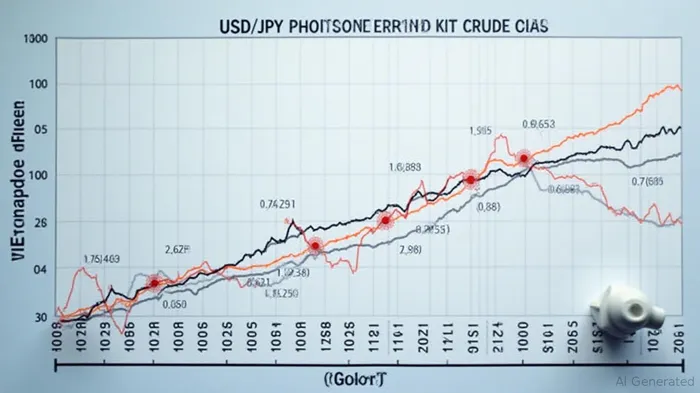
This dynamic reflects two key mechanisms:
1. Yen Safe-Haven Demand: During global economic uncertainty, capital flows into the yen, depressing USD/JPY.
2. Oil as a Commodity Hedge: Crude oil often acts as an inflationary hedge, rising in tandem with risk aversion.
While the correlation has waned during calmer periods—such as post-pandemic recovery phases—the current macro backdrop suggests renewed potential for this relationship to reassert itself.
Current Drivers: Why the Link Might Strengthen in 2025
1. Geopolitical Tensions and Oil Supply Constraints
The Russia-Ukraine war, OPEC+ production discipline, and Middle East political risks continue to underpin oil prices. Should tensions escalate—such as through further sanctions on Iranian oil or a Saudi production cut—the resulting oil rally could trigger yen appreciation, even in the face of Japan's ultra-loose monetary policy.
2. Monetary Policy Divergence
The U.S. Federal Reserve's pivot to rate hikes has bolstered the dollar, but Japan's yield-curve control (YCC) policy keeps the yen artificially weak. This divergence creates a structural imbalance: any shock forcing a reassessment of Japan's monetary stance—or a yen-buying event—could send USD/JPY tumbling.
3. Energy Transition Dynamics
As global economies grapple with energy shortages (e.g., China's resurgence boosting oil demand), the link between oil prices and the yen may deepen. Energy-importing nations like Japan face inflationary pressures, making their currencies vulnerable unless oil prices stabilize.
Actionable Strategies: Capitalizing on the Yen-Oil Nexus
1. Short USD/JPY, Long Energy ETFs
Play: Short USD/JPY via forex pairs or inverse ETFs (e.g., FXY) while pairing this with exposure to energy commodities or equities.
Rationale: If geopolitical risks or supply disruptions lift oil prices, the yen's appreciation should weaken USD/JPY, while energy assets (e.g., XLE, XOP) benefit.
2. Long Energy-Exporting Currencies
Play: Invest in CAD, NOK, or RUB via ETFs (e.g., FXC for Canadian dollar, NORW for Norwegian krone). These currencies are inherently tied to energy prices and may outperform if oil climbs.
3. Inverse Correlation Betting
Play: Use derivatives (e.g., options on USD/JPY and oil futures) to profit from divergences. For example, buying put options on USD/JPY while holding call options on oil futures creates a leveraged exposure to the inverse relationship.
Risks and Caution Flags
- Correlation Breakdown: The historical relationship is not guaranteed. If oil rises due to strong global growth (a “risk-on” scenario), USD/JPY might also climb, undermining the strategy.
- Central Bank Interventions: Japan's Ministry of Finance could step in to weaken the yen, overriding market forces.
- Geopolitical Black Swans: A sudden ceasefire in Ukraine or a U.S.-Iran oil deal could collapse oil prices, destabilizing the entire framework.
Conclusion: Position for Volatility, but Stay Disciplined
The yen-oil correlation remains a situational tool, best deployed during periods of elevated market stress or supply-driven oil spikes. Investors should layer positions gradually, using stop-losses and hedging (e.g., shorting USD/JPY while long energy) to mitigate risks. While energy-linked currencies and commodities offer compelling upside, the path ahead is fraught with geopolitical and macroeconomic crosscurrents. Stay agile, and let the data—both in oil markets and currency pairs—guide your decisions.

Stay ahead of the market.
Get curated U.S. market news, insights and key dates delivered to your inbox.


AInvest
PRO
AInvest
PRO



Comments
No comments yet