
U.S. Crude Oil Inventory Decline: Navigating Market Volatility and Sector Impacts
 Aime Summary
The U.S. crude oil market is experiencing a pivotal shift as recent inventory data from the Energy Information Administration (EIA) reveals a sharp decline in commercial crude oil stocks. For the week ending July 11, 2025, inventories fell by 3.9 million barrels to 422.2 million, a level 8% below the five-year average for this time of year. This development, coupled with geopolitical tensions and production disruptions, has triggered a cascade of implications for energy markets and broader economic sectors.
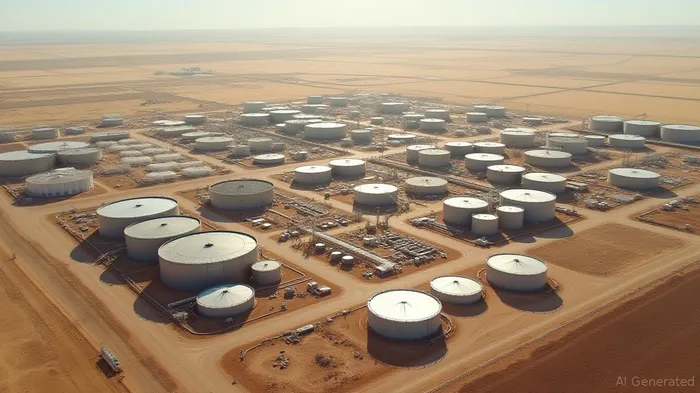
The Inventory Drawdown: A Tipping Point?
The EIA's latest report underscores a tightening supply-demand balance. While gasoline and distillate inventories saw modest increases, distillate stocks remain 21% below the five-year average, signaling sustained industrial and transportation demand. The Strategic Petroleum Reserve (SPR) also reported a marginal decline, holding 402.7 million barrels as of July 11—up from 373.7 million a year prior but down from the previous week's 403.0 million.
This inventory contraction has directly influenced crude prices. WTIWTI-- and Brent crude surged by over 6% in the past five sessions, with WTI hitting $77.42 per barrel and Brent reaching $81.43. The rise was fueled by a combination of factors:
- Geopolitical risks: Israel's pre-emptive strike on Hezbollah and Libya's oil field closures disrupted global supply chains.
- OPEC+ dynamics: Uncertainty over production quotas has kept markets on edge.
- Refinery activity: U.S. refineries operated at 93.9% capacity, processing 16.8 million barrels per day.
Sector-Specific Impacts
- Energy Producers: The inventory draw has bolstered crude prices, directly benefiting oil producers. Companies like ExxonXOM-- (XOM) and ChevronCVX-- (CVX) are likely to see improved margins as higher prices offset recent production cuts. Investors should monitor exploration and production (E&P) stocks for volatility, particularly as producers adjust drilling budgets in response to price swings.
Refiners and Midstream Operators: Refineries are operating near full capacity, but profit margins remain under pressure due to the cost of crude inputs. Midstream firms, such as pipeline operators, could benefit from increased throughput as demand for refined products (e.g., diesel) outpaces crude supply.
Automotive and Consumer Sectors: Higher fuel costs pose a risk to consumer spending. Automakers like General MotorsGM-- (GM) and FordF-- (F) may face reduced demand for gas-guzzling vehicles, while electric vehicle (EV) adoption could accelerate. Investors should weigh the long-term implications of energy costs on discretionary spending.
Financial Markets: Rising crude prices have reignited inflation concerns. While the Federal Reserve has historically focused on core inflation, sustained price spikes could force a reassessment of monetary policy. The July 30 FOMC meeting will be critical in determining whether rate cuts or hikes are on the table.
Strategic Adjustments for Investors
The current market environment demands agility. Here's how investors can position portfolios:
- Energy Exposure:
- Equities: Overweight energy ETFs like the Energy Select Sector SPDR (XLE), which tracks major producers and refiners.
- Commodities: Consider long positions in crude oil futures or leveraged ETFs like the United States OilUSO-- Fund (USO) for short-term volatility.
Hedging Inflation Risks:
- Invest in Treasury Inflation-Protected Securities (TIPS) or inflation-linked bonds to offset potential rate hikes.
Diversify into sectors less sensitive to fuel costs, such as healthcare or utilities.
Short-Sector Plays:
- Underweight automakers and airlines, which face margin compression from higher fuel costs.
Monitor the agricultural sector, as energy-linked fertilizer costs could impact food prices.
Geopolitical Contingencies:
- Allocate to gold or safe-haven assets to hedge against market turbulence.
- Track OPEC+ meetings and U.S.-China trade developments for early signals of supply shocks.
The Road Ahead
The EIA's data highlights a fragile balance in the crude market. While the recent inventory draw suggests tightening conditions, the long-term outlook remains clouded by global economic uncertainties. The EIA's Short-Term Energy Outlook (STEO) forecasts a gradual decline in U.S. production to 13.3 million barrels per day by late 2026, driven by reduced drilling activity. Meanwhile, geopolitical risks—such as the Israel-Iran ceasefire and Libya's production shutdown—add layers of complexity.
Investors must remain vigilant. Key watchpoints include:
- Upcoming EIA reports: Weekly inventory changes will remain a barometer for market sentiment.
- OPEC+ Output Decisions: Any production cuts or extensions could amplify price swings.
- Federal Reserve Policy: Inflation-linked crude prices may influence the Fed's rate trajectory.
Conclusion
The U.S. crude oil inventory drawdown of July 2025 is a harbinger of a volatile market phase. While energy producers and refiners stand to gain in the short term, broader economic sectors face headwinds. A diversified strategy that balances energy exposure with inflation hedges and sector rotations will be critical for navigating this landscape. As the market grapples with geopolitical and supply-side uncertainties, proactive portfolio adjustments will separate resilient investors from those left scrambling.
Key Takeaway: Position for energy gains but hedge against inflationary spillovers. Diversify across sectors and stay attuned to policy developments.

Stay ahead of the market.
Get curated U.S. market news, insights and key dates delivered to your inbox.
AInvest
PRO
AInvest
PRO



Comments
No comments yet