
Crude Calculus: Navigating Oil's Volatile Crossroads in 2025
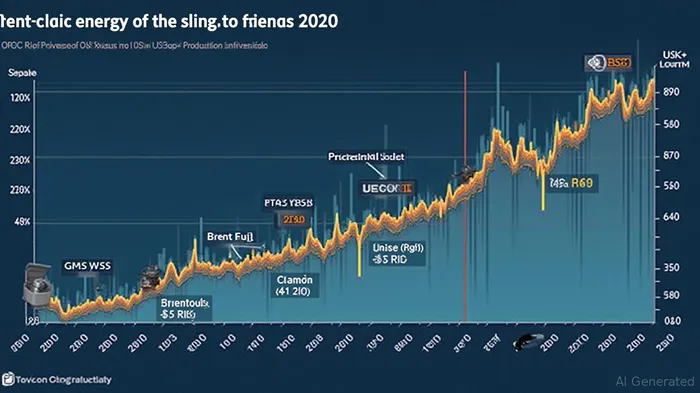
The global crude oil market is at a crossroads. As of July 7, 2025, Brent crude settled at $68.30 per barrel, a 2.5% weekly gain fueled by a temporary ceasefire between Iran and Israel and strong U.S. summer driving demand. Yet beneath this short-term rebound lies a deeper struggle between geopolitical risks, oversupply pressures, and shifting producer strategies. For investors, the path forward requires parsing these conflicting forces to determine whether crude's recent uptick is a fleeting blip or a harbinger of stabilization.
Geopolitical Risks: A Fragile Calm
The July 7 price rise was partly driven by the temporary ceasefire between Israel and Iran, which alleviated fears of supply disruptions in the Strait of Hormuz. However, the deal's fragility underscores a persistent risk. Should hostilities reignite, prices could spike sharply—a scenario investors should hedge against. Meanwhile, broader geopolitical shifts, such as China's renewed openness to U.S. ethane imports, are reshaping trade flows. The Commerce Department's July 2 reversal of export restrictions to China, for instance, could boost ethane prices and support U.S. shale producers tied to natural gas byproducts.
OPEC+'s Supply Play: A Delicate Balance
OPEC+'s recent decision to boost production by 548,000 barrels per day (b/d) in August—and hints of further hikes in September—reflects a strategic pivot. The group aims to reclaim market share by flooding the market, a move that could test crude's $66-per-barrel support level in the coming weeks. This aggressive stance clashes with the EIA's forecast of a $58-per-barrel average in 2026, suggesting long-term downward pressure. Investors should monitor OPEC+ compliance rates closely; any slippage in production targets could limit the supply-driven downside.
U.S. Shale: The Cost Conundrum
The EIA projects U.S. crude production will dip to 13.3 million b/d by late 2026, as drillers in high-cost basins like the Bakken and D-J face breakeven prices exceeding $70—a level crude has struggled to sustain. In contrast, the Permian Basin's lower-cost operations (breakeven around $50-$60) position it as the sector's backbone. This divergence creates a bifurcated landscape: Permian-focused firms (e.g., Pioneer Natural Resources, Devon Energy) may outperform peers exposed to marginal plays.
Investment Implications: Short-Term Caution, Long-Term Opportunism
- Short-Term (1-3 Months): Expect volatility. OPEC+'s supply hikes and U.S. tariff delays (postponed to August) could push prices toward $66. Traders might consider inverse ETFs like DNO or short positions in energy-heavy ETFs such as XLE if downside risks materialize.
- Long-Term (6-12 Months): The $58-$60 zone may attract buyers, especially if U.S. production declines accelerate. Investors should favor high-margin, low-cost producers and avoid leveraged firms reliant on high oil prices.
- Strategic Hedge: Allocate a small portion to geopolitical risk insurance via USO (a crude oil ETF) or options contracts, given the Iran-Israel stalemate's unpredictability.
The Bottom Line
Crude's 2025 journey is a tale of competing forces: geopolitical tailwinds, OPEC's supply siege, and shale's cost constraints. While the current $68 handle offers a respite, the path to $58 remains littered with risks. Investors seeking stability should focus on resilience—whether through low-cost producers or hedging tools—while preparing for the market's next swing.
Data as of July 2025. Past performance does not guarantee future results.

Stay ahead of the market.
Get curated U.S. market news, insights and key dates delivered to your inbox.






Comments
No comments yet