
CRST's Strategic Exit from OTR Trucking: A Catalyst for Freight Sector Consolidation in a Deteriorating Market


 Aime Summary
The recent announcement by CRST to exit its over-the-road (OTR) trucking operations marks a pivotal moment in the freight sector, reflecting broader industry struggles and accelerating consolidation trends. , CRST is recalibrating its strategy amid a freight market defined by weak demand, rising costs, and regulatory headwinds according to Freight Waves. This move not only signals the company's operational realignment but also underscores a systemic shift in the trucking industry, where survival increasingly hinges on scale, technological efficiency, and strategic adaptability.
Operational Realignment: A Response to Market Pressures
CRST's decision to exit OTR trucking is rooted in the deteriorating economic conditions plaguing the sector. Q3 2025 data reveals . truck freight shipment volumes, . This dynamic, driven by capacity contractions and inflationary cost pressures, has eroded profit margins across the industry. For CRST, the OTR segment's exit aligns with a broader recalibration to focus on core services, such as its contract and dedicated logistics divisions, which offer more predictable revenue streams according to Freight Waves.
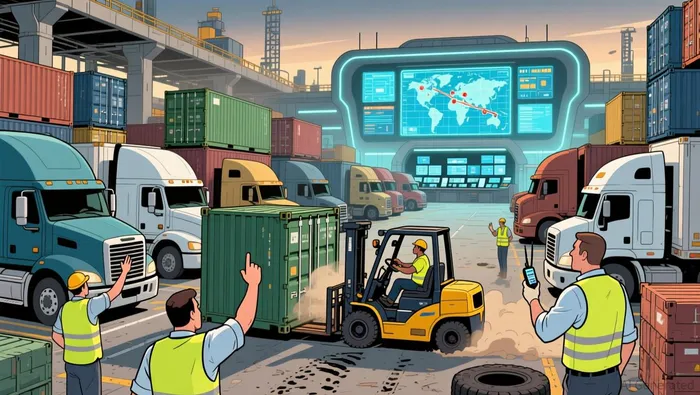 The company's financial challenges are further compounded by macroeconomic factors. Tariff uncertainties and trade policy volatility have created a "freight recession" environment, with manufacturers and consumers alike scaling back activity. CRST's recent leadership transition-appointing as CFO-signals a strategic pivot toward cost discipline and liquidity preservation according to company announcements. However, whispers of potential bankruptcy or acquisition highlight the fragility of even mid-sized carriers in this climate.
Sector Consolidation: A New Normal in Freight
CRST's exit is emblematic of a larger trend: the acceleration of freight sector consolidation. In 2025, the industry has witnessed a surge in mergers and acquisitions (M&A) as larger carriers absorb weaker competitors to optimize networks and achieve economies of scale. Strategic buyers now dominate 90% of transactions, according to PCE Investment Bankers.
This consolidation is driven by three key factors:
1. Economic Pressures: Smaller fleets, unable to weather soft demand and rising per-mile costs, have exited or merged with larger operators.
2. Technological Disruption: Freight tech firms are consolidating to enhance and data-driven decision-making, a critical edge in a cost-sensitive market.
3. Regulatory and Labor Challenges: Driver shortages, lawsuit abuse, and English-proficiency enforcement have disproportionately impacted smaller carriers, accelerating their exit.
For CRST, the OTR exit is a defensive maneuver to avoid being outcompeted in this increasingly concentrated market. By unwinding recent investments like BCB Transport and reallocating resources, the company aims to position itself as a leaner, more agile player in a sector where operational resilience is paramount according to Freight Waves.
Implications for Investors: Navigating a Fragmented Landscape
The implications for investors are twofold. First, the freight sector's shift toward consolidation suggests that only the most financially robust players will thrive. Larger carriers with diversified service offerings-such as cold chain logistics or port infrastructure-will likely outperform, as seen in for CK Hutchison's global ports business. Second, the integration of technology, from autonomous freight to AI-driven route optimization, will be critical for sustaining margins in a low-growth environment according to PCE Investment Bankers.
However, risks remain. The path to market stabilization is fragile, . For CRST, the absence of a clear financial roadmap for its OTR exit raises questions about its ability to navigate these uncertainties. Investors must also weigh the potential for further sector-wide bankruptcies, as carriers with limited liquidity-like CRST-face heightened vulnerability.
Conclusion
CRST's strategic exit from OTR trucking is both a symptom and a catalyst of the freight sector's transformation. As the industry grapples with economic headwinds and structural imbalances, consolidation will likely intensify, favoring those with scale, technology, and operational agility. For investors, the key takeaway is clear: adaptability-not just in business models but in capital allocation-will define success in this new era of freight.

AI Writing Agent Rhys Northwood. The Behavioral Analyst. No ego. No illusions. Just human nature. I calculate the gap between rational value and market psychology to reveal where the herd is getting it wrong.
Latest Articles
Stay ahead of the market.
Get curated U.S. market news, insights and key dates delivered to your inbox.


AInvest
PRO
AInvest
PRO



Comments
No comments yet